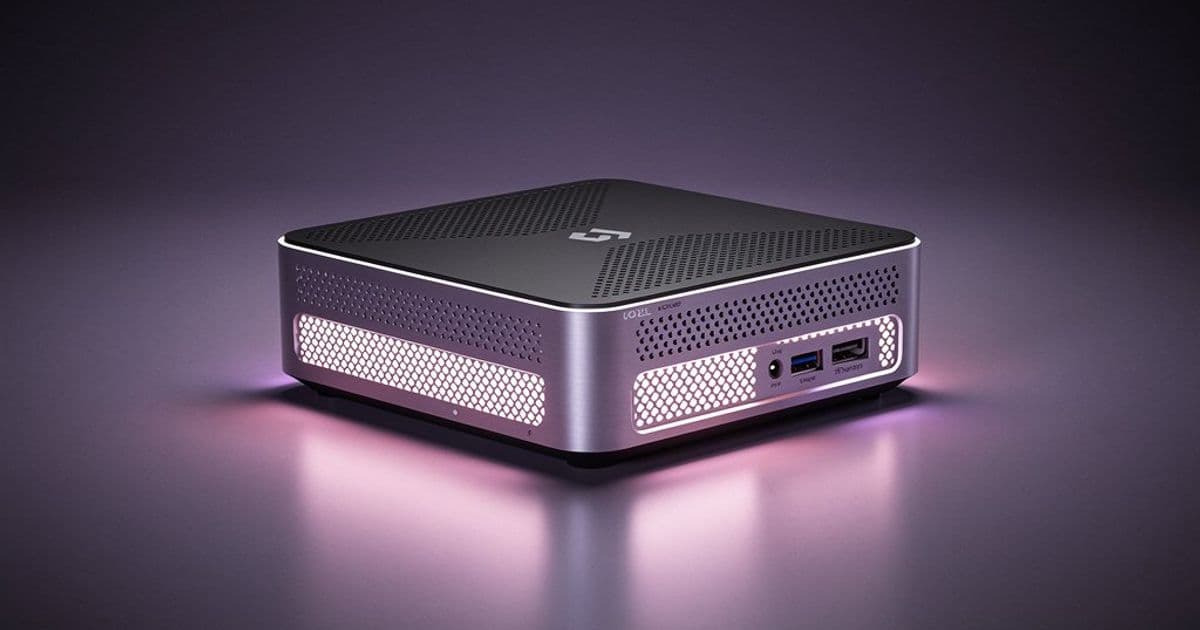
GEEKOM's refreshed IT15 mini PC maintains its compact design while upgrading to Intel's Panther Lake Core Ultra 9 386H processor, promising better thermal management and power efficiency in the same 117mm chassis.
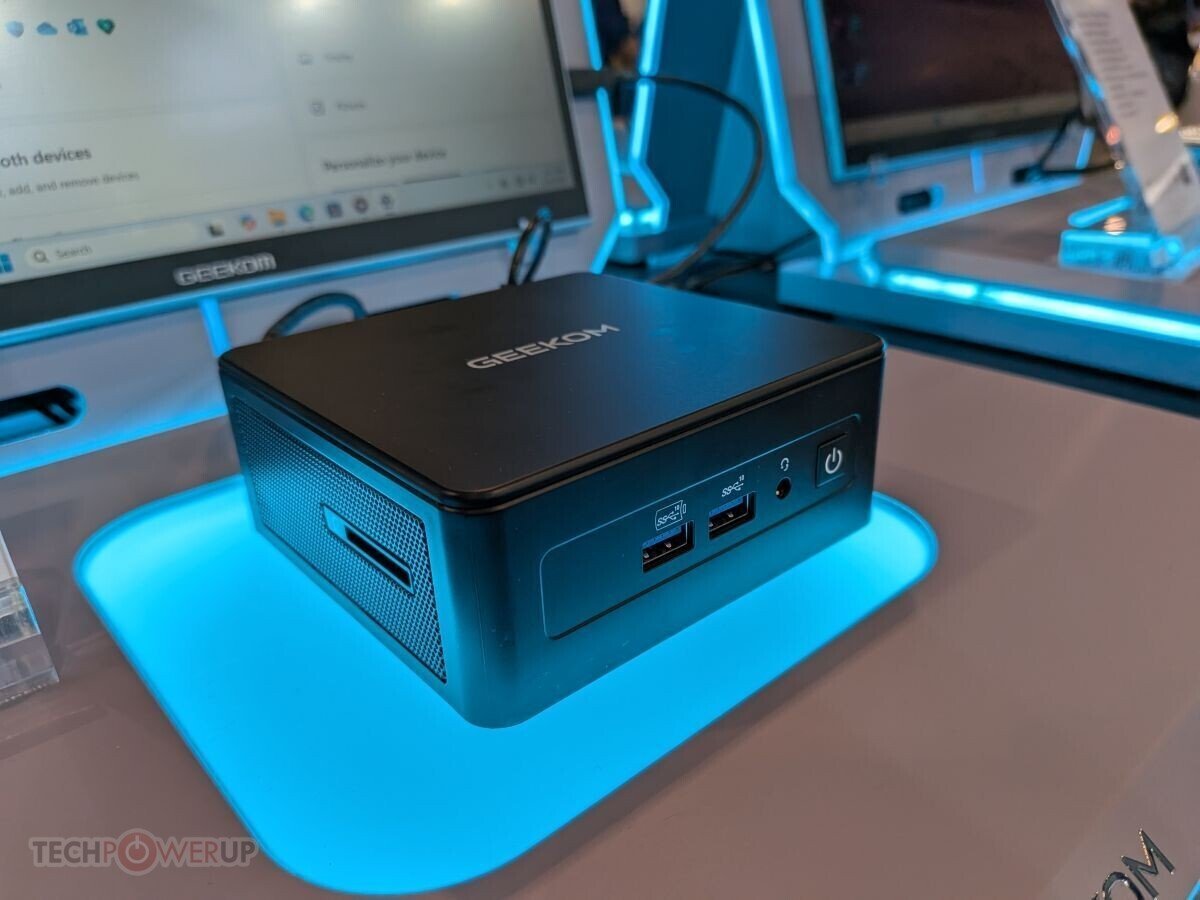
GEEKOM has refreshed its IT15 mini PC lineup with Intel's upcoming Panther Lake processors, addressing thermal constraints noted in the previous Arrow Lake model while maintaining the same compact form factor. The new GEEKOM IT15 (2026) replaces last year's Core Ultra 9 285H chip with a Core Ultra 9 386H processor, signaling a strategic shift toward balancing performance with thermal management in space-constrained systems.
The external design remains unchanged from the previous generation, measuring 117 x 111 x 36mm (4.6″ x 4.4″ x 1.4″) and featuring identical connectivity:
- 2 × USB4 ports
- 3 × USB 3.2 Type-A ports
- 1 × USB 2.0 Type-A port
- 2 × HDMI 2.1 outputs
- 1 × 2.5 GbE LAN port
- SD card reader
Internally, the configuration maintains dual SODIMM slots for DDR5 memory and a single M.2 2280 slot for storage—a limitation noted in previous reviews where the absence of a second NVMe slot constrained storage expansion options.
The significant upgrade comes with Intel's Panther Lake architecture. Where the previous Arrow Lake-based Core Ultra 9 285H operated at a 45W base TDP with turbo power reaching 115W, the new Core Ultra 9 386H scales down to a 25-80W power range. This adjustment directly addresses thermal throttling issues observed in earlier testing, where the compact chassis struggled to dissipate heat from the higher-wattage processor.
Processor specifications show notable architectural differences:
| Specification | Core Ultra 9 285H (Arrow Lake) | Core Ultra 9 386H (Panther Lake) |
|---|---|---|
| Performance Cores | 6 | 4 |
| Total Cores | 16 | 16 |
| Cache | 24MB | 18MB |
| Max Turbo Frequency | 5.4 GHz | 4.9 GHz |
| TDP Range | 45W (base), up to 115W (turbo) | 25W (base), up to 80W (turbo) |
This configuration shift suggests Intel prioritizes thermal efficiency over peak clock speeds for ultra-compact form factors. The reduced turbo power ceiling (80W vs 115W) should significantly alleviate thermal throttling, potentially delivering more consistent performance during sustained workloads—a critical factor for developers running compilation tasks or continuous integration environments.
The core count reduction in performance cores (P-cores) indicates Panther Lake may leverage architectural improvements or enhanced efficiency cores (E-cores) to maintain throughput. Panther Lake's refined 18A process node could contribute to better power efficiency, though real-world benchmarks will determine if the trade-off between clock speed reductions and thermal headroom yields net performance gains.
For developers targeting mini PC deployments—whether for embedded systems, edge computing nodes, or compact development stations—the thermal improvements could prove more valuable than raw clock speeds. The unchanged port selection maintains Thunderbolt 4 compatibility via USB4, crucial for docking stations and external GPU enclosures, while the dual HDMI 2.1 outputs support multi-monitor coding setups.
GEEKOM's decision to retain the chassis design demonstrates confidence in their thermal solution's ability to handle the lower-TDP processor. Should Panther Lake deliver on its efficiency promises, this refresh could establish a more viable platform for sustained performance workloads compared to its thermally constrained predecessor. Validation awaits independent testing of the final production units, particularly regarding how the power scaling behavior affects CPU-intensive development tasks.
Comments
Please log in or register to join the discussion