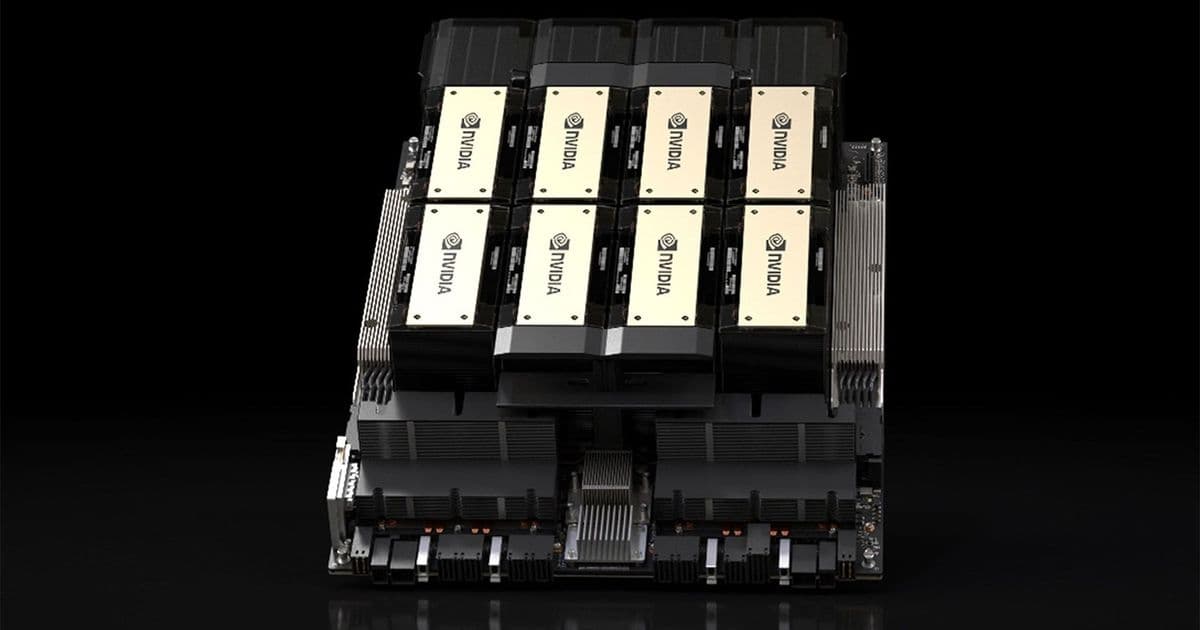
Three months after receiving export approval, Nvidia has not sold a single H200 GPU to China as geopolitical tensions and Beijing's strategic hesitation continue to block the company's market reentry.
Three months after receiving export approval from the White House, Nvidia has not sold a single H200 GPU to China, according to a U.S. Commerce official who testified before the House Foreign Affairs Committee.
The revelation came during a hearing where Assistant Secretary for Export Enforcement David Peters confirmed that no H200 sales have been approved since President Trump's administration reversed course on export restrictions for the high-performance AI chip.
When Representative Sydney Kamlager-Dove (D-Calif.) asked about the number of H200 GPUs approved for sale to China, Peters stated plainly: "My understanding is that so far, none."
This represents a significant setback for Nvidia's ambitions in the world's second-largest economy. The company had been preparing to ship 82,000 AI GPUs to China just two weeks after the White House announcement, signaling strong initial confidence in the market's receptivity.
However, the path to market has proven far more complicated than Nvidia anticipated. As soon as Washington gave the green light, Beijing immediately called for emergency meetings with its largest tech companies to assess demand for the H200. A month later, Chinese authorities told these companies to pause purchases while the central government deliberated on how to handle imports of these powerful American GPUs.
China faces a strategic dilemma. On one hand, the government wants domestic companies to purchase locally manufactured semiconductors to support its nascent semiconductor industry. Chinese officials claim domestic chips can already match the performance of Nvidia's restricted H20 and RTX Pro 6000D GPUs. On the other hand, China needs its AI firms to remain competitive with Western counterparts, which requires access to the most advanced AI chips available.
The result has been a cautious approach from Beijing, with H200 purchases limited to "special circumstances" that appear to restrict sales primarily to university research and development laboratories rather than commercial AI companies.
Adding to the complexity, the U.S. has implemented stringent requirements for export licenses, making it difficult for organizations to acquire the quantities they need. These additional regulatory hurdles have created a bottleneck that neither Nvidia nor its potential Chinese customers have been able to navigate successfully.
Nvidia CEO Jensen Huang has not given up hope. He made a high-profile visit to China in late January, though without clear meetings with state authorities. The trip ended without any concrete progress, confirming that Beijing has yet to make final decisions on H200 import approvals.
The situation highlights the increasingly complex geopolitical landscape surrounding semiconductor trade. What began as a straightforward approval process has evolved into a multi-layered negotiation involving national security concerns, economic competition, and technological sovereignty.
President Trump is scheduled to visit China in March for discussions with Chinese President Xi Jinping, though it remains unclear whether semiconductor trade will be on the agenda. The outcome of these talks could potentially break the current impasse, but for now, Nvidia's most advanced AI GPUs remain effectively locked out of the Chinese market despite official U.S. approval.
The stalled H200 sales represent more than just a missed revenue opportunity for Nvidia. They underscore the growing difficulty of conducting business in an era where technology, national security, and international relations are increasingly intertwined. For a company that once commanded 95% of China's AI GPU market before the April 2025 export restrictions, the current zero sales figure marks a dramatic reversal of fortunes that shows no signs of reversing in the near term.
As both nations continue to grapple with the strategic implications of AI chip exports, the H200 saga serves as a case study in how quickly the semiconductor industry's global supply chains can be disrupted by shifting geopolitical priorities.
Comments
Please log in or register to join the discussion