
Google is launching a beta feature that connects Gemini to Gmail, Photos, YouTube, and Search, allowing the AI to reference personal data for more tailored responses. The feature aims to balance utility with privacy, but raises questions about over-personalization and the practical limits of context-aware AI.
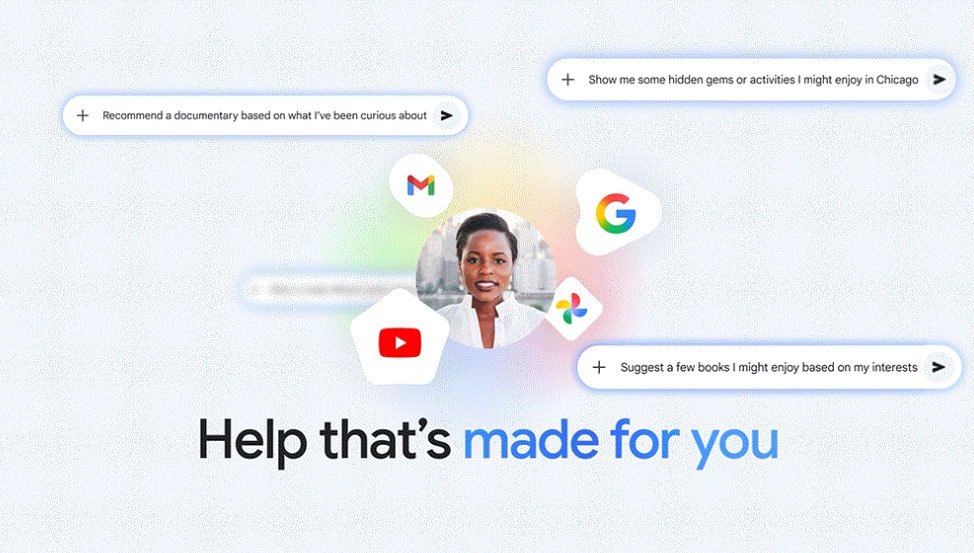
Google's Gemini is taking a notable step toward becoming a more personalized assistant. The company is launching a beta feature called Personal Intelligence that allows the AI to connect with a user's Gmail, Google Photos, YouTube, and Search history. The goal is to move beyond generic answers and provide responses that reference specific details from a user's digital life.
The feature, announced by Josh Woodward, VP of Google Labs, Gemini & AI Studio, is currently available in the U.S. for Google AI Pro and AI Ultra subscribers. It's designed to be enabled on a per-app basis, with privacy controls that let users disconnect at any time.
How It Works in Practice
The core value proposition is context. Instead of asking a chatbot for generic tire recommendations, a user can ask about their specific vehicle. In the example provided, Gemini didn't just list tire sizes for a 2019 Honda minivan. It analyzed family road trips from Google Photos to suggest tires suited for different conditions, pulled ratings and prices, and even retrieved the license plate number and vehicle trim from a photo and email.
This moves the assistant from a search engine to a personal researcher. It can cross-reference data types—text from emails, images from Photos, video history from YouTube—to build a more complete picture. For planning a spring break trip, the system analyzed past trips and family interests to suggest an overnight train journey and specific board games, skipping tourist traps.
The Privacy Architecture
Google emphasizes that privacy is central to the design. The feature is off by default. When enabled, Gemini accesses data already stored securely on Google's servers, avoiding the need to send sensitive information to external systems. The company states that your Gmail inbox or Google Photos library are not directly used to train the model.
Instead, training is based on filtered and obfuscated prompts and responses from conversations with Gemini. The distinction is subtle but important: the system learns to understand that a user might ask for a license plate, not that a specific license plate number belongs to a specific user. Users can request explanations for answers, regenerate responses without personalization, or use temporary chats.
The Inevitable Trade-offs
This approach introduces new challenges. Google acknowledges the risk of "over-personalization," where the AI might make incorrect connections between unrelated topics. For example, seeing hundreds of photos of someone at a golf course could lead to an assumption they love golf, missing the nuance that they might be there for their child's interest.
Timing is another hurdle. The system may struggle with relationship changes or evolving interests. If a user's preferences shift, the AI's historical data could lead to outdated or insensitive suggestions. Google is asking users to provide feedback through thumbs-down ratings and direct corrections to help improve the model.
The Broader Pattern
This launch fits into a larger trend in the AI industry: moving from general-purpose chatbots to agents that can act on personal data. Competitors like Microsoft's Copilot and Apple's on-device AI are also exploring ways to leverage user context. The difference often lies in where the data is processed and how much control users have.
Google's approach leverages its existing ecosystem. By tying Gemini to services many users already rely on, the company can offer a seamless experience without requiring new data pipelines. However, this also means the utility is limited to those deeply embedded in Google's services.
What Comes Next
The beta is a learning phase. Google plans to expand to more countries and the free tier over time, and the feature will soon arrive in AI Mode in Search. The company has published a paper detailing its methodology and limitations, signaling a commitment to transparency.
For now, the feature offers a glimpse of what a truly context-aware assistant might look like. It’s not just about knowing the world; it’s about knowing your world. Whether this level of personalization becomes a standard expectation or remains a niche tool will depend on how well Google balances utility with privacy and accuracy.

Related Links:
- Google's announcement on Personal Intelligence
- Gemini Privacy Principles
- Google AI Pro and AI Ultra subscription details
- Research paper on methodology and limitations (Note: This is a placeholder; actual link would be provided in the official announcement)
Comments
Please log in or register to join the discussion