GitAgent introduces an innovative approach to AI agent development by leveraging git repositories as the foundation for defining, versioning, and running AI agents. This open standard aims to bring the familiar workflows of software development to the world of AI agents, offering framework-agnostic compatibility and built-in compliance features.
The emergence of GitAgent represents a significant shift in how AI agents are developed, deployed, and maintained. By treating AI agent definitions as version-controlled git repositories, GitAgent bridges the gap between traditional software development practices and the rapidly evolving field of AI agent frameworks.
At its core, GitAgent proposes that an AI agent should be defined through a structured file system within a git repository, including configuration files, core instructions, skills, tools, knowledge bases, and memory systems. This approach allows developers to leverage existing git workflows—branching, merging, pull requests, and version control—to manage AI agents in a familiar environment.
The architecture is built around three essential files: agent.yaml for configuration, SOUL.md for core identity and purpose, and SKILL.md for capabilities. Additional optional components include RULES.md, INSTRUCTIONS.md, tools/, skills/, knowledge/, memory/, hooks/, and compliance/ directories, each serving specific purposes in agent definition and operation.
One of the most compelling aspects of GitAgent is its framework-agnostic nature. The same agent definition can be exported to multiple AI frameworks including Claude Code, OpenAI Agents SDK, CrewAI, OpenClaw, Nanobot, Lyzr, and GitHub Models. This portability addresses a significant pain point in the AI agent ecosystem, where developers often face lock-in to specific frameworks and ecosystems.
The implementation of version control for AI agents introduces several novel concepts. "Human-in-the-Loop for RL Agents" allows agents to create branches and pull requests when learning new skills or writing to memory, requiring human review before integration. 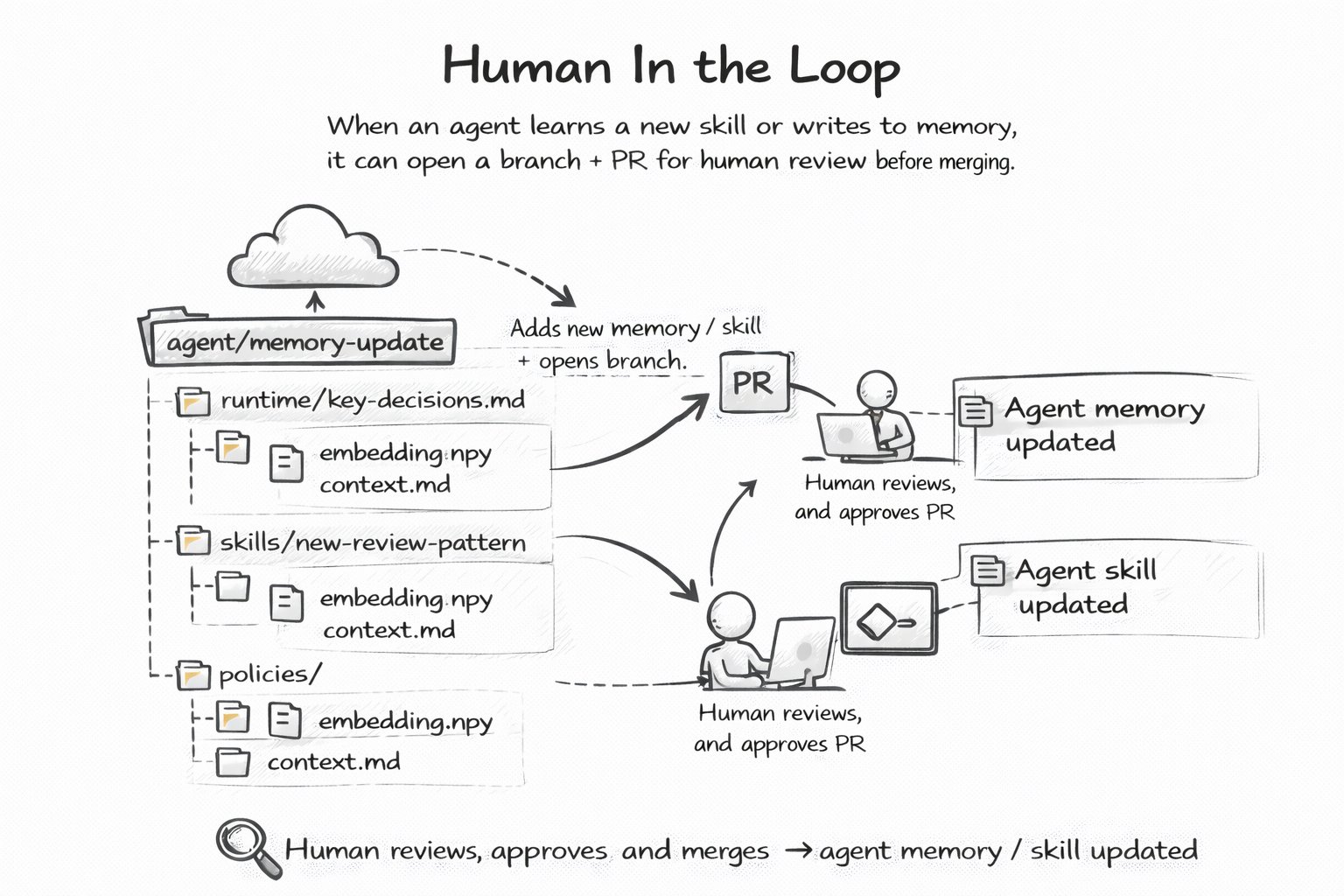
"Live Agent Memory" persists execution state across sessions through a memory/runtime folder containing dailylog.md, key-decisions.md, and context.md files. 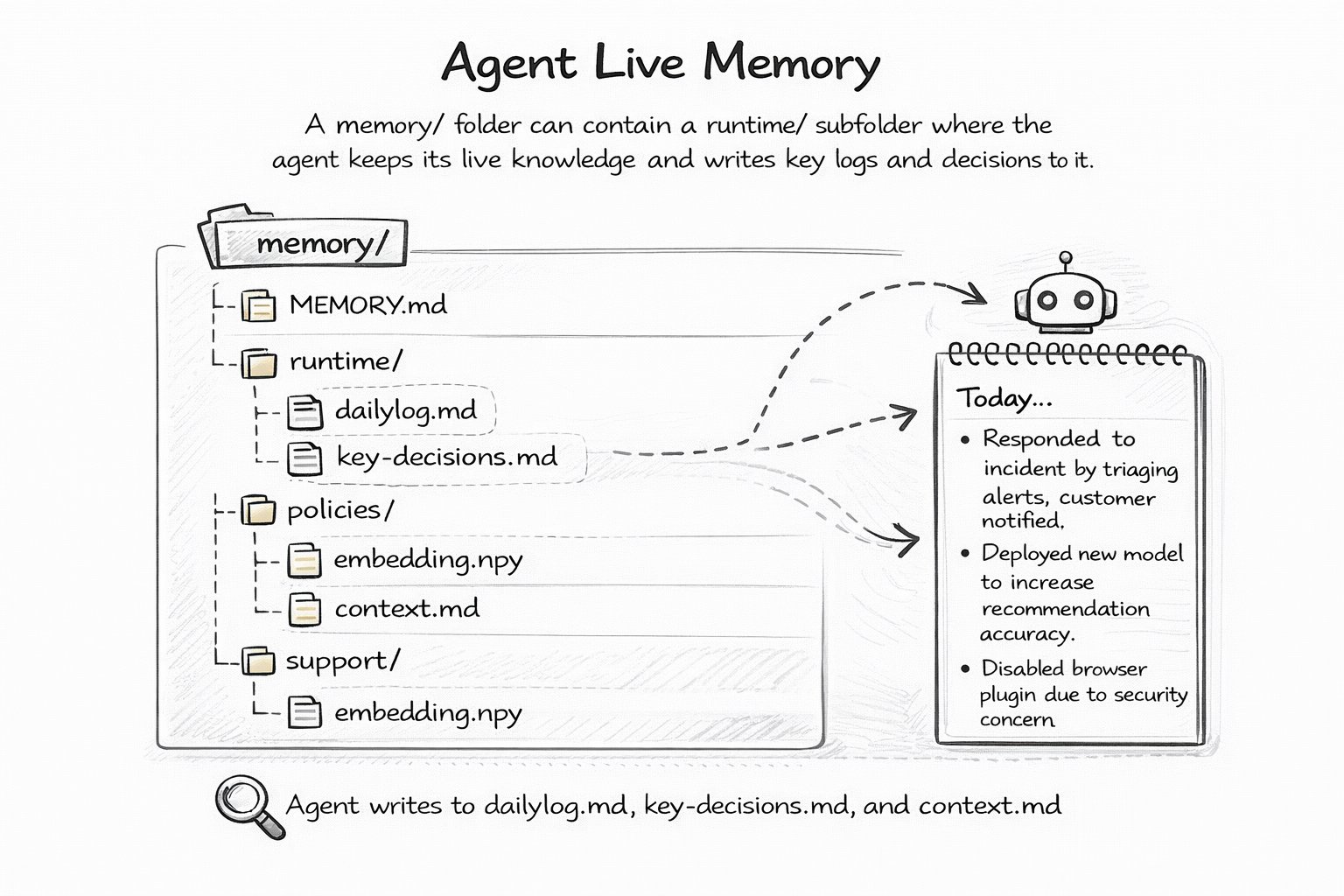
"Agent Versioning" leverages git's commit history to enable rollbacks of broken prompts or bad skills, providing a full undo history for agent evolution. 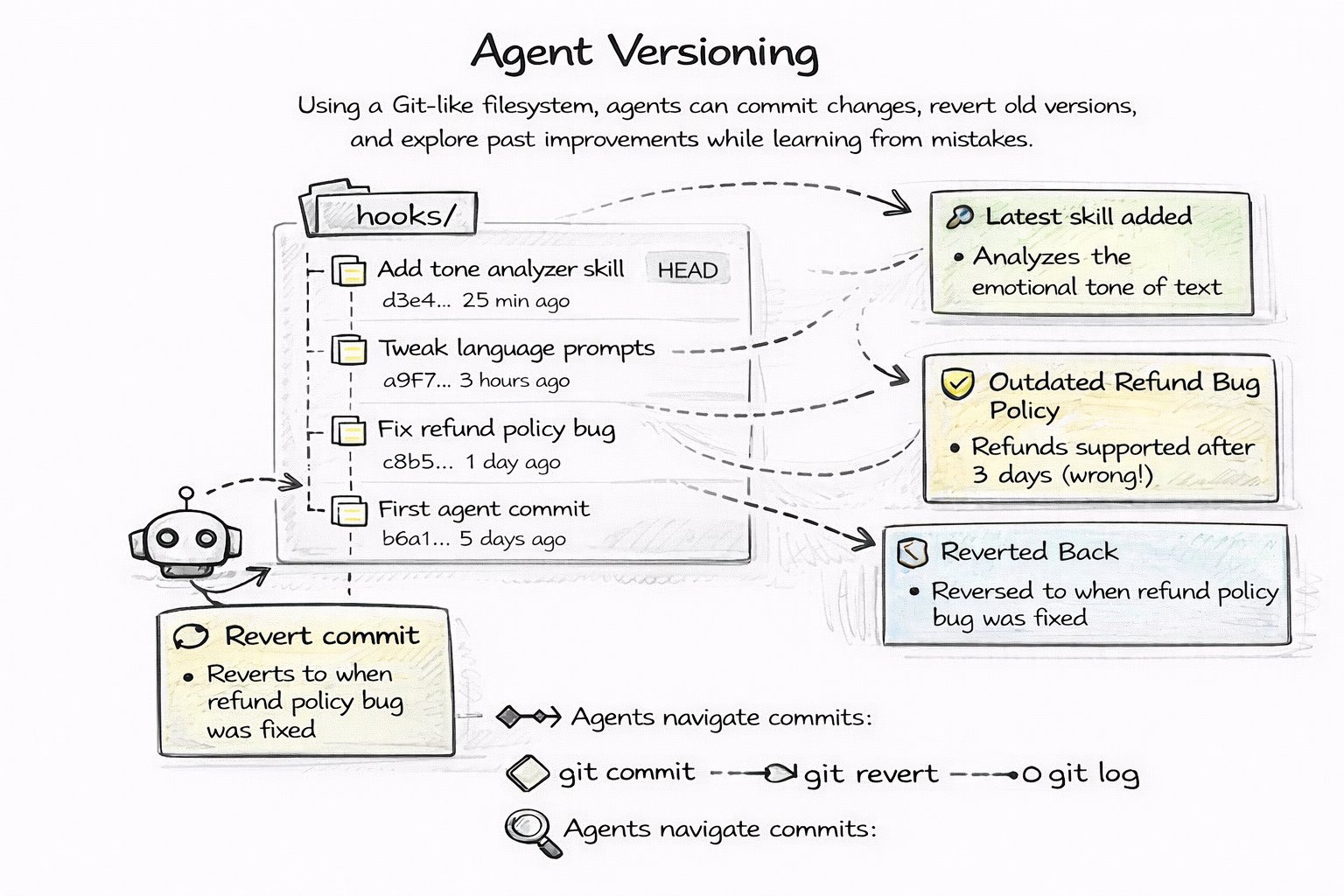
GitAgent also introduces interesting approaches to state management and compute. With "Stateless Compute, Git as State," agents run in ephemeral compute environments while committing every meaningful event to runtime branches, creating full audit trails, enabling deterministic replay, and facilitating failure recovery through git history. 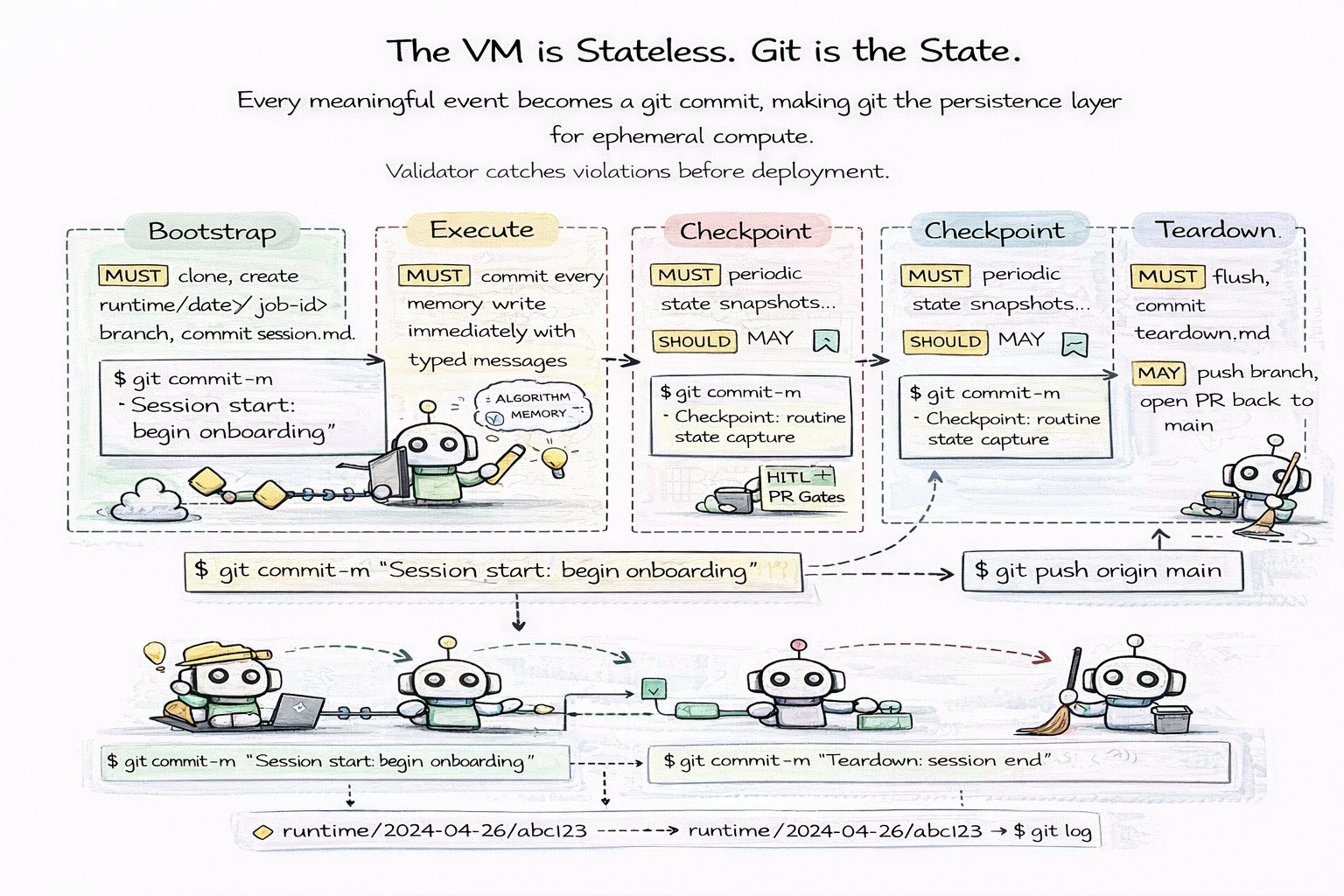
The framework emphasizes collaboration through "Shared Context & Skills via Monorepo," where components placed at the root are automatically shared across all agents in a monorepo. "Branch-based Deployment" allows promoting agent changes through environments using git branches, mirroring traditional software deployment practices.
For organizations in regulated industries, GitAgent offers built-in compliance features. The framework includes support for FINRA, SEC, and Federal Reserve regulations, with audit logging, supervision, and model risk management capabilities. The "Segregation of Duties (SOD)" principle prevents single agents from controlling critical processes end-to-end, defining roles with conflict matrices and handoff rules.
The GitAgent CLI provides comprehensive tools for building, validating, running, and shipping agents. Commands like init, validate, run, export, import, install, skills, audit, and info cover the entire agent lifecycle. The CLI supports various adapters for different AI frameworks, making it a versatile tool for developers working with multiple ecosystems.
Despite its innovative approach, several questions remain about GitAgent's adoption and long-term viability. The framework's complexity might present a steep learning curve for developers accustomed to simpler AI agent tools. While the git-native approach offers familiar workflows, it may also introduce unnecessary overhead for straightforward agent use cases.
The framework's compliance features, while valuable for regulated industries, might be excessive for organizations operating in less constrained environments. The additional layers of governance could slow down development cycles in fast-paced startup environments where agility is prioritized over strict compliance.
Another consideration is the potential for fragmentation in the AI agent ecosystem. With multiple frameworks and approaches emerging, developers may face challenges in choosing the right tool for their specific needs. GitAgent's comprehensive approach might be overkill for simple use cases, while its specialized compliance features may not address the needs of all regulated industries.
The success of GitAgent will likely depend on its ability to demonstrate clear advantages over existing solutions, build a strong community of adopters, and maintain compatibility with evolving AI frameworks. The framework's open standard approach and multi-framework support position it well for broad adoption, but it will need to prove its value in real-world applications beyond theoretical benefits.
For developers interested in exploring GitAgent, the project is available on GitHub at https://github.com/Lyzr/gitagent with comprehensive documentation and examples. The framework's CLI can be installed via npm, and it offers templates for getting started with minimal, standard, or full agent configurations.
As the AI agent landscape continues to evolve, GitAgent's git-native approach represents an interesting convergence of traditional software development practices and cutting-edge AI technology. Whether it becomes the dominant paradigm for AI agent development remains to be seen, but its innovative approach to version control, collaboration, and compliance certainly warrants attention from developers and organizations building AI-powered systems.
Comments
Please log in or register to join the discussion