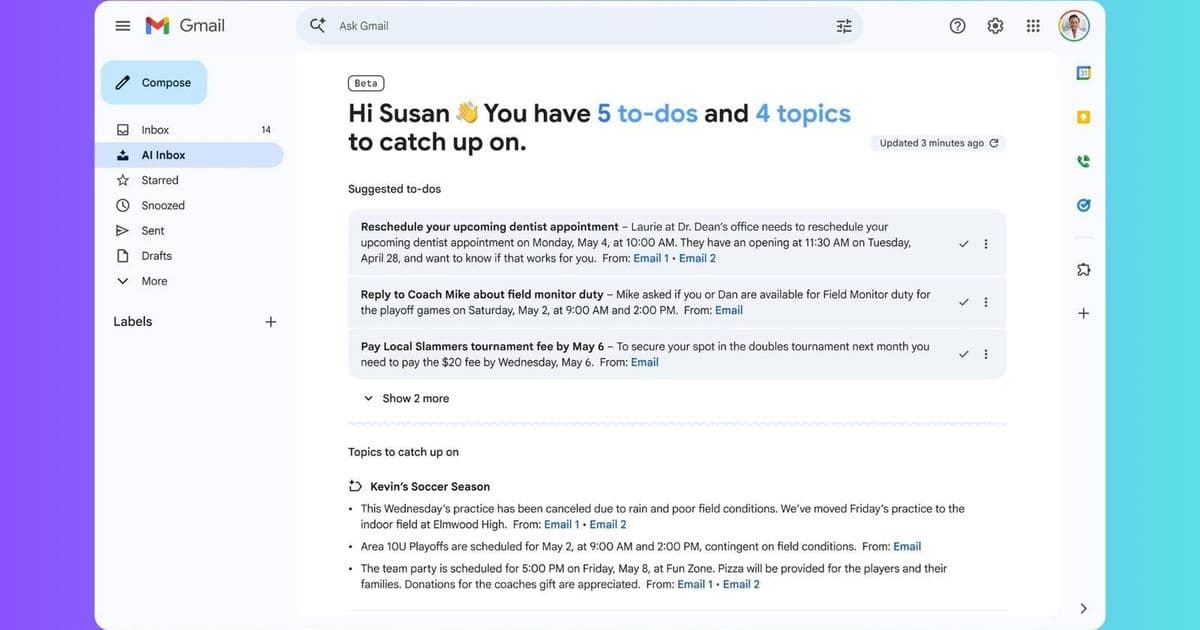
Google's new AI-powered inbox features offer personalized briefings and interactive cards for key emails, but access is limited to the $250/month AI Ultra tier in the US, raising questions about value and privacy.
Google is rolling out impressive new AI features for Gmail that could revolutionize how we manage our inboxes, but there's a significant catch: these tools are currently locked behind the company's premium AI Ultra subscription, which costs a staggering $250 per month in the United States.
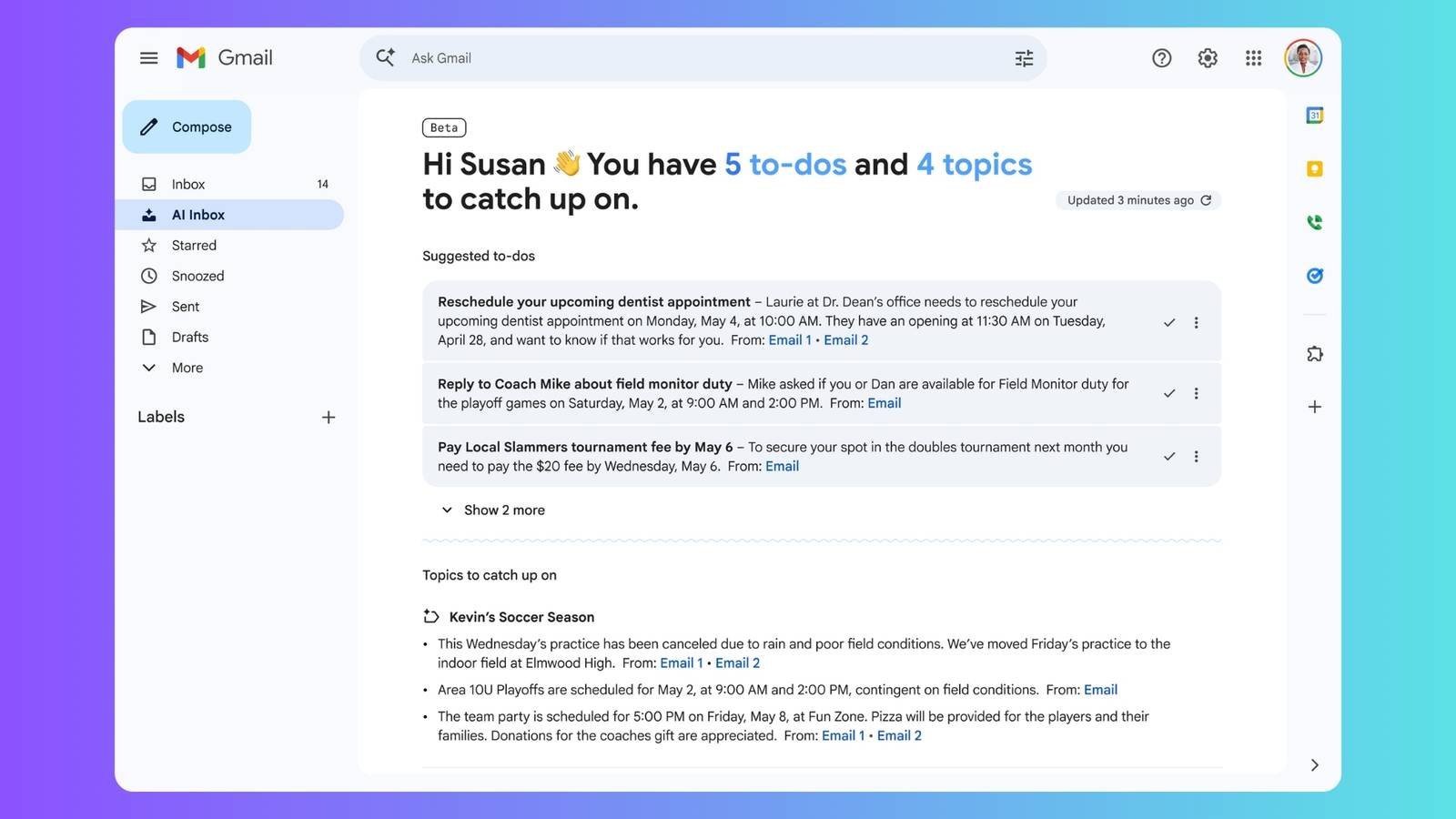
The new AI Inbox functionality promises to be genuinely useful for anyone drowning in email overload. The system creates personalized briefings that pull together key tasks and highlights important emails related to upcoming bills, doctor's appointments, or vacations. All of this information appears in easy-to-view interactive cards alongside your regular inbox, making it much simpler to parse through a messy inbox and focus on what actually matters.
These features represent exactly the kind of practical AI application that could make a real difference in daily productivity. Instead of manually searching through hundreds of emails to find that one important message about a flight confirmation or a bill payment, the AI does the heavy lifting for you. The interactive cards provide at-a-glance access to the information you need without requiring you to dig through your entire email history.
However, the $250 monthly price tag for AI Ultra puts these features firmly out of reach for most users. That's $3,000 per year, which is more than many people pay for their entire technology budget. The subscription tier does include other perks like higher Gemini usage limits, more advanced AI models, 30TB of cloud storage across Google services, and access to YouTube Premium and Google Home Premium Advanced, but the cost remains prohibitive for individual users.
There's hope on the horizon, though. Google is expected to bring these AI Inbox features to more affordable subscription tiers in the future, possibly including the $20/month AI Pro tier. This would make the technology accessible to a much broader audience and could significantly improve email management for millions of users.
Even if the price becomes more reasonable, there's another concern that gives many users pause: privacy. The AI Inbox requires deep access to personal information, analyzing the content of your emails to identify important tasks and create meaningful briefings. For sensitive communications about medical appointments, financial matters, or personal relationships, giving an AI system this level of access can feel uncomfortable.
The tension between convenience and privacy is becoming increasingly common as AI features become more sophisticated. While the ability to automatically surface important information from your inbox is undeniably useful, it requires trusting Google with intimate details about your life and schedule. This trade-off is something every user will need to evaluate based on their own comfort level and needs.
For now, most Gmail users will have to wait and see whether these features trickle down to more affordable tiers or if Google develops alternative ways to provide AI-powered email management without the premium price tag. The technology itself shows promise, but the current implementation highlights the ongoing challenge of balancing innovation with accessibility in the AI era.
The rollout of these features also raises broader questions about the future of email and digital communication. As AI becomes more capable of understanding and organizing our digital lives, traditional interfaces may evolve significantly. The inbox as we know it could transform from a simple list of messages into a dynamic, AI-curated dashboard that anticipates our needs and surfaces relevant information automatically.
Whether Gmail's AI Inbox becomes a mainstream feature or remains a premium offering will likely depend on how Google balances the costs of development and infrastructure with user demand and privacy concerns. For now, it remains an intriguing glimpse of what's possible when AI meets everyday productivity tools, even if most of us can't afford to experience it firsthand.
Comments
Please log in or register to join the discussion