
College graduates across the United States are expressing growing skepticism toward artificial intelligence, booing commencement speakers who praise the technology. This backlash reflects emerging market concerns about AI's economic viability and impact on employment, potentially affecting semiconductor investments and development priorities in the coming years.
The recent commencement season has revealed an unexpected development in the artificial intelligence narrative: a growing student skepticism toward AI hype that may signal broader market cooling in the semiconductor sector. Across multiple universities, including the University of Arizona, University of Central Florida, and Middle Tennessee State University, students have booed speakers who presented positive views on artificial intelligence, reflecting concerns about how the technology will impact their future job prospects.
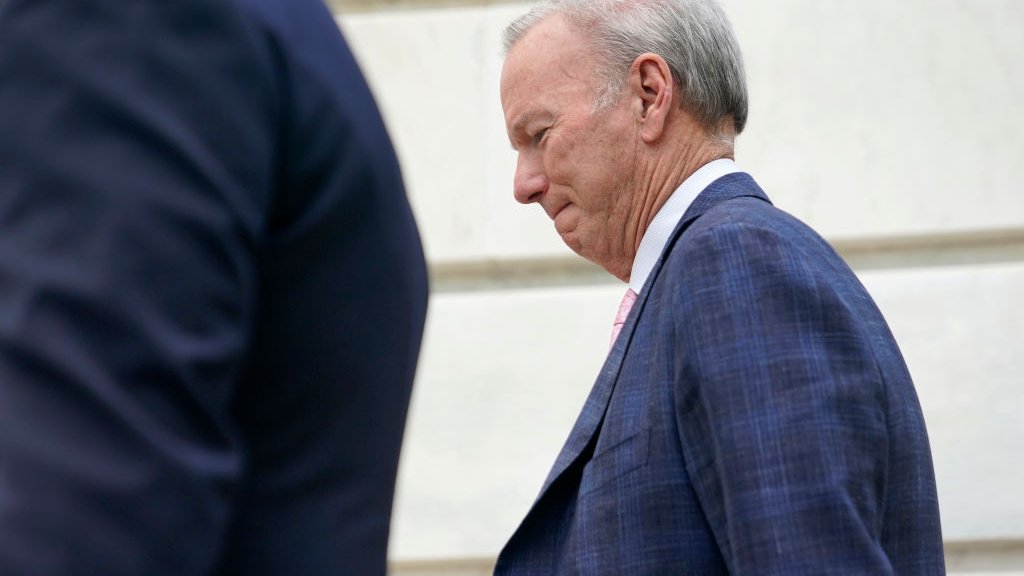
Former Google CEO Eric Schmidt faced particularly vocal opposition during his commencement address at the University of Arizona. When Schmidt described AI as comparable to "a seat on a rocket ship" and suggested students could "assemble a team of AI agents to help you with the parts you could never accomplish on your own," the audience responded with audible hostility. The former tech executive was forced to pause his speech, acknowledging the students' fears that "their future has already been written."
This student backlash represents a significant shift from the widespread enthusiasm that has characterized AI discussions over the past 18 months. Since the launch of ChatGPT in November 2022, AI development has been characterized by unprecedented investment, with global semiconductor companies allocating substantial resources to AI chip production. NVIDIA, for example, has seen its market valuation increase by approximately 240% since January 2023, driven largely by AI chip demand.
The student protests may indicate that the market is beginning to reassess AI's economic viability. While AI has generated significant excitement, actual productivity gains have been limited. A survey of U.S. business executives earlier in 2024 reported minimal productivity improvements from AI implementation so far, despite Microsoft's prediction that AI will replace every white-collar job within 12-18 months.
This skepticism could have profound implications for the semiconductor industry. AI chips, particularly those using advanced process nodes like 3nm and 4nm, have driven much of the recent growth in the foundry sector. TSMC, Samsung, and Intel have collectively invested over $100 billion in expanding AI chip manufacturing capacity since 2023. If market sentiment continues to cool, these investments may face diminishing returns, potentially leading to an oversupply of specialized AI hardware.
The student protests also highlight a critical disconnect between tech industry leaders and the workforce that will implement AI technologies. While industry figures like Schmidt present AI as an inevitable force that "will shape the world," graduates are expressing legitimate concerns about job displacement and economic uncertainty. This tension may influence policy decisions around AI regulation and workforce development, further affecting market dynamics.
Interestingly, the backlash appears focused on AI's economic impact rather than the technology itself. Schmidt's acknowledgment of AI's negative consequences—such as how "the same tools that connect us also isolate us" and have "degraded the public square"—resonated with students, suggesting that a more balanced approach to AI development might receive greater acceptance.
As the semiconductor industry continues to invest heavily in AI hardware, the student protests serve as an early warning signal about potential market saturation. The industry may need to shift from pure AI hype to demonstrating concrete value propositions, particularly in terms of productivity improvements and job creation, to maintain investor and public confidence.
The coming quarters will be critical in determining whether this student skepticism represents a temporary market correction or the beginning of a more fundamental reassessment of AI's economic impact. For semiconductor manufacturers, understanding and addressing these concerns will be essential to maintaining the growth trajectory that has characterized the AI era to date.
 (Image credit: Getty Images)
Comments
Please log in or register to join the discussion