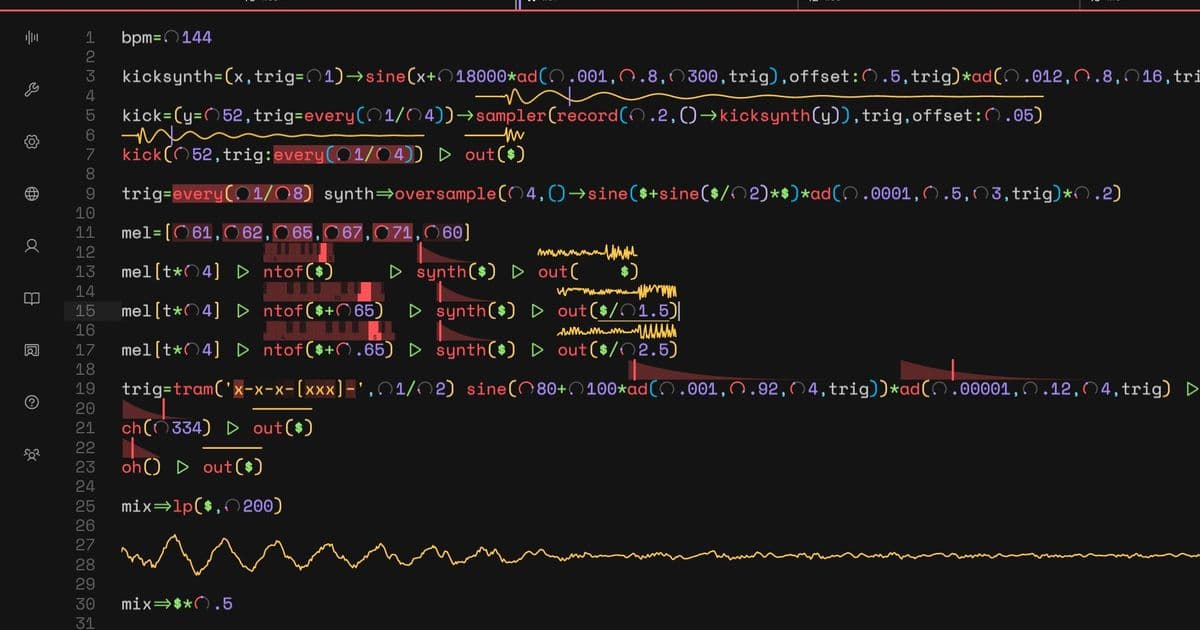
Loopmaster launches a browser-based audio programming platform that eliminates installation barriers while providing powerful tools for electronic music creation and sound design.
Loopmaster has entered the audio programming landscape with a browser-based environment that aims to make sound creation more accessible without sacrificing power or functionality. The platform combines live coding capabilities with visual feedback and built-in digital signal processing tools, all running directly in the browser through WebAssembly technology.
At its core, Loopmaster offers real-time audio coding where changes to code are immediately audible as users type. This approach removes the traditional compile-and-test cycle that has historically made audio programming challenging for newcomers. The platform includes built-in synthesizers, effects, filters, and sequencing tools, creating a complete production environment within a web browser.
"The most intuitive audio programming environment I've used. The live coding experience is incredible," said Carl C., an electronic music producer who has tested the platform.
What sets Loopmaster apart from traditional audio programming environments is its visual feedback system. The editor includes widgets that display waveforms, envelopes, and triggers, allowing users to understand their audio creations visually. This bridges the gap between code and sound, making abstract audio concepts more concrete and approachable.
The sequencing functionality enables users to arrange their code in a timeline to create complete songs, turning code snippets into structured musical compositions. This feature appeals to both programmers who want to create music and musicians who want to explore algorithmic composition.
"Finally, a tool that makes audio programming accessible. The visual feedback helps me understand what I'm creating," noted Sam R., a sound designer who has experimented with the platform.
Browser-based execution eliminates installation requirements, making Loopmaster immediately accessible to anyone with a modern web browser. This approach removes the friction of downloading and installing complex audio software, potentially expanding the audience for audio programming to include casual creators and educators.
Built with modern web technologies, Loopmaster is open source and extensible, inviting contributions from the developer community. The platform includes features for community engagement, allowing users to create artist pages, share their audio code, and remix others' work. This collaborative approach mirrors successful creative platforms like GitHub but with a focus on audio creation.
"I love being able to experiment with sounds directly in the browser. No setup, just pure creativity," said Jordan K., a music technologist familiar with the platform.
The emergence of Loopmaster reflects a broader trend of moving complex creative tools to the browser, enabled by advances in web technologies like WebAssembly. This shift democratizes access to powerful tools that were previously limited to desktop applications with significant installation requirements.
For those interested in exploring audio programming without committing to complex software installations, Loopmaster offers an entry point that combines the flexibility of code with the immediacy of visual feedback. The platform's combination of educational potential and creative tools positions it as both a learning resource and a production environment for electronic music and sound design.
To experience Loopmaster, users can visit the official website and start coding immediately without registration or installation. The platform includes tutorials and examples to help newcomers get started, along with a gallery of community creations for inspiration.
The development team has indicated they are seeking support to continue expanding the platform's capabilities, suggesting potential future developments in collaborative audio programming and enhanced toolsets for professional sound design.
Comments
Please log in or register to join the discussion