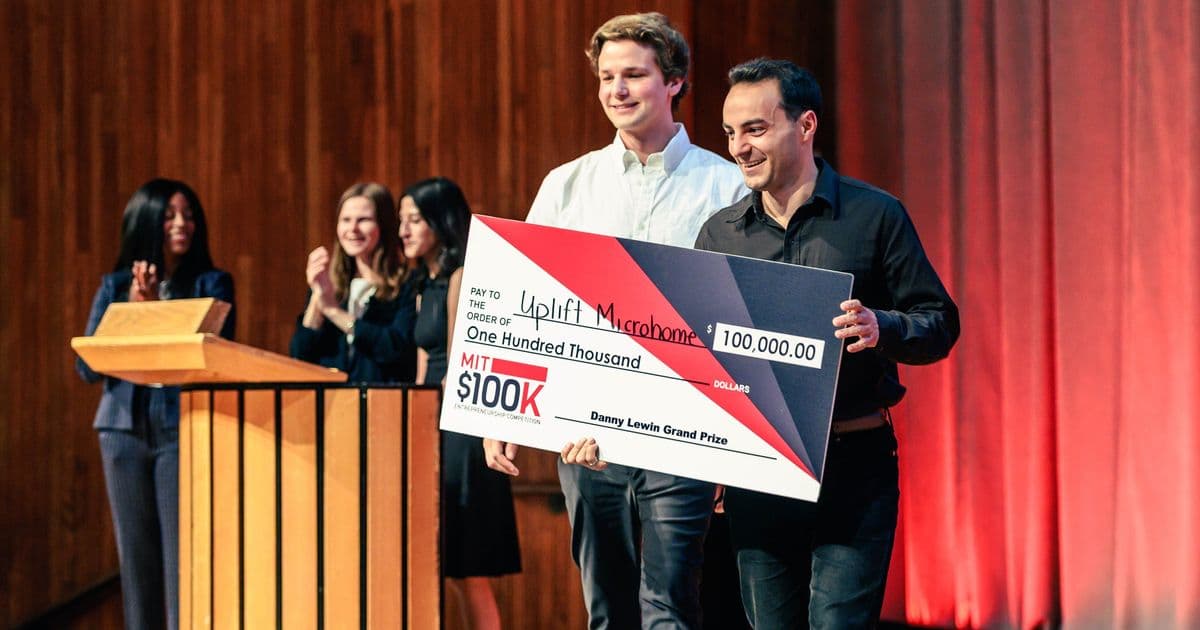
Uplight Microhome's modular, self-contained housing units could revolutionize disaster response by providing dignified, deployable housing in hours rather than months.
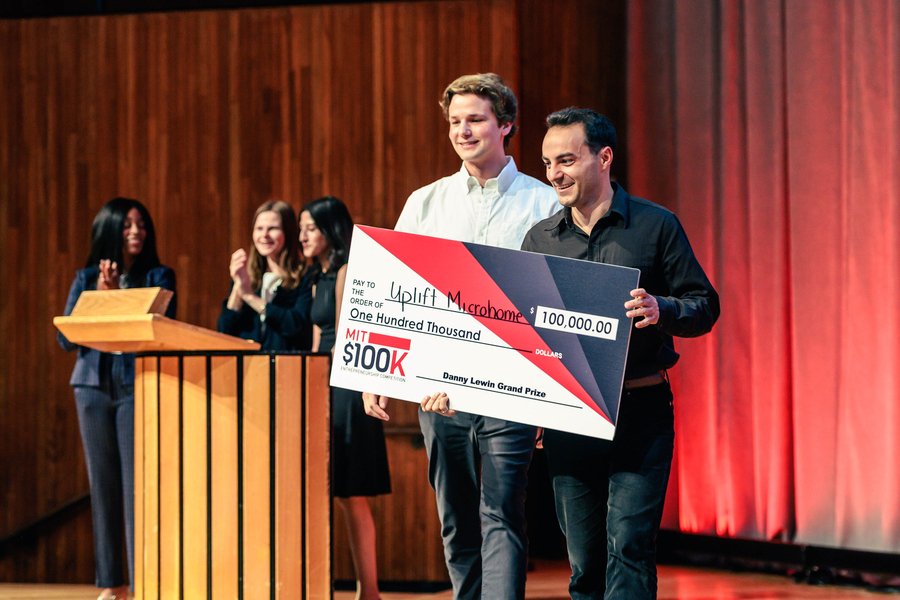
The MIT $100K Entrepreneurship Competition has crowned Uplight Microhome as its 2026 winner, recognizing the startup's innovative approach to emergency housing. Founded by Charlie Nitschelm and Trevor O'Leary, Uplift Microhome addresses a critical gap in disaster response: the lack of dignified, affordable housing for millions of Americans displaced by natural disasters each year.
The core problem Uplight Microhome tackles is staggering. According to co-founder Charlie Nitschelm, it takes an average of four months for FEMA to deploy single-use housing after a disaster. This delay means that less than 1% of disaster survivors actually receive physical homes, with most receiving only financial assistance to find their own solutions. The Department of Homeland Security has specifically recommended providing more cost-effective housing alternatives that allow survivors to stay close to their communities.
Uplift's solution is a system of reusable, modular housing units designed for rapid deployment. Each unit contains its own power system with batteries and water reservoir, making them completely self-contained and capable of operating off-grid. This self-sufficiency eliminates the need for extensive utility connections that traditional emergency housing requires.
The technical approach behind these homes addresses multiple deployment challenges. The units can be transported on standard tractor trailers and deployed using a forklift, significantly simplifying logistics. Perhaps most impressively, the homes feature self-leveling bases that allow them to be placed on uneven terrain without extensive site preparation. This capability dramatically reduces deployment time and cost.
"We've designed these units to be economically recoverable, refurbishable, and redeployable," explains O'Leary. "The goal is to create a circular system where each unit can serve multiple disaster response cycles, making the long-term cost significantly lower than current single-use solutions."
The company has already built a prototype and projects manufacturing costs similar to the cheapest tractor trailer units. The marginal cost of reusing each unit is expected to be an order of magnitude less expensive than current emergency housing solutions. This economic model could transform how governments and organizations approach disaster response housing.
Beyond disaster response, Uplight Microhome has identified several additional markets for their technology, including combating housing insecurity, providing housing for seasonal workers, and serving as temporary accommodations during construction projects. The company plans to manufacture its homes in the United States to ensure quality control and rapid deployment capabilities.
The competition itself represents a significant milestone for the startup. Selected from over 80 applications, Uplight Microhome was one of seven finalists who pitched their ideas at the final event held in MIT's Kresge Auditorium. The year-long competition process includes multiple stages, from initial pitching to acceleration support, culminating in the final pitch event.
The MIT $100K Entrepreneurship Competition has a long history of supporting innovative startups, with past participants including notable companies like HubSpot, Akamai, and Lightmatter. Beyond the financial prize, winners receive mentorship from venture capitalists, serial entrepreneurs, corporate executives, and attorneys, along with prototype funding and business plan feedback.
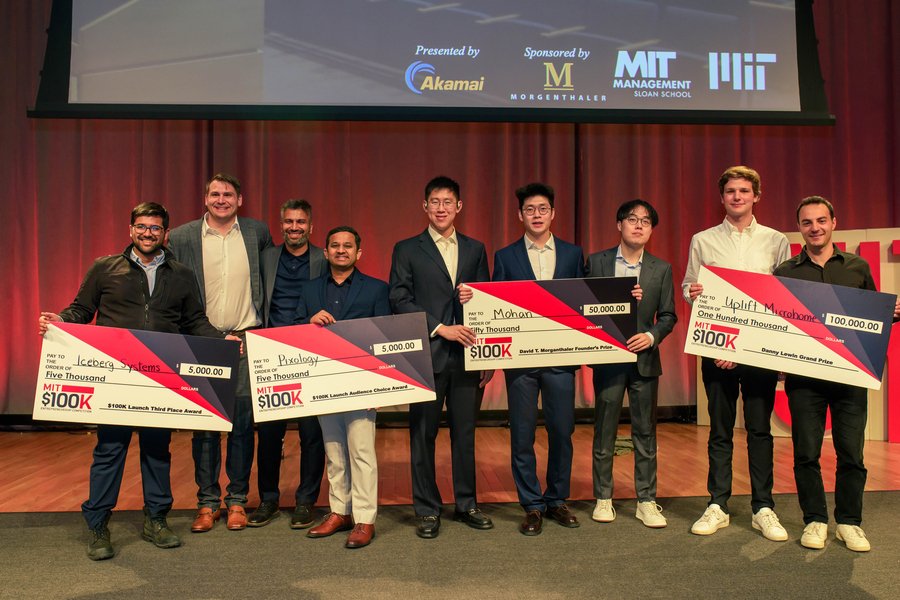
Other winners in this year's competition included:
- Mohan (second place, $50,000): Using generative AI to map Earth's subsurface for mining applications
- Iceberg Systems (third place, $5,000): Developing autonomous AI agents to predict economic risk cascades
- Pixology (Audience Choice, $5,000): Creating AI-generated sports content for monetization
The emergence of Uplight Microhome comes at a critical time, as climate change increases the frequency and severity of natural disasters worldwide. Traditional emergency housing solutions have struggled to scale quickly and cost-effectively, leaving millions without adequate shelter during their most vulnerable moments. By providing a system that can be deployed in hours rather than months, Uplight Microhome offers not just a product, but a new paradigm in disaster response.
The company's focus on reusability and circularity also addresses the environmental concerns associated with single-use emergency housing. Most current solutions end up in landfills after a single deployment, creating additional waste and environmental damage. Uplight's approach could significantly reduce this environmental impact while providing better outcomes for disaster survivors.
As the company moves forward with manufacturing and deployment plans, the success of the MIT $100K competition provides both validation and resources. The challenge now will be scaling production while maintaining quality control, establishing relationships with emergency management agencies, and developing the logistical networks required for rapid deployment across the country.
The potential impact extends beyond the United States as well. Many countries face similar challenges with disaster response housing, and Uplight Microhome's modular, self-contained approach could be adapted to various international contexts. The company's focus on dignified housing also addresses the often-overlooked human dignity aspect of disaster response.
In a field where innovation is often slow and incremental, Uplight Microhome represents a significant leap forward in emergency housing technology. By combining practical engineering solutions with a deep understanding of the human needs of disaster survivors, the company has created a product that not only addresses a critical need but does so in a way that is economically viable and environmentally sustainable.
The MIT $100K competition has once again demonstrated its ability to identify and support startups that tackle significant challenges with innovative solutions. Uplight Microhome's win highlights the growing importance of technology in addressing humanitarian crises, particularly in the face of increasing climate-related disasters.
As the company begins its journey post-competition, the question will be whether they can successfully navigate the challenges of scaling their innovative solution. If they succeed, Uplight Microhome could fundamentally change how we approach disaster response housing, providing millions of displaced individuals with the dignity and stability of a real home when they need it most.
Comments
Please log in or register to join the discussion