Greg Kroah-Hartman's AI fuzzing tools continue to identify and help fix critical Linux kernel bugs, with two dozen more fixes implemented over the weekend.
Greg Kroah-Hartman, Linux's second-in-command and primary stable maintainer, continues to leverage AI-assisted tools to uncover and fix Linux kernel bugs. The system, known as 'gkh_clanker_t1000' with occasional assistance from 'gkh_clanker_2000', represents a significant advancement in automated kernel testing and bug detection.
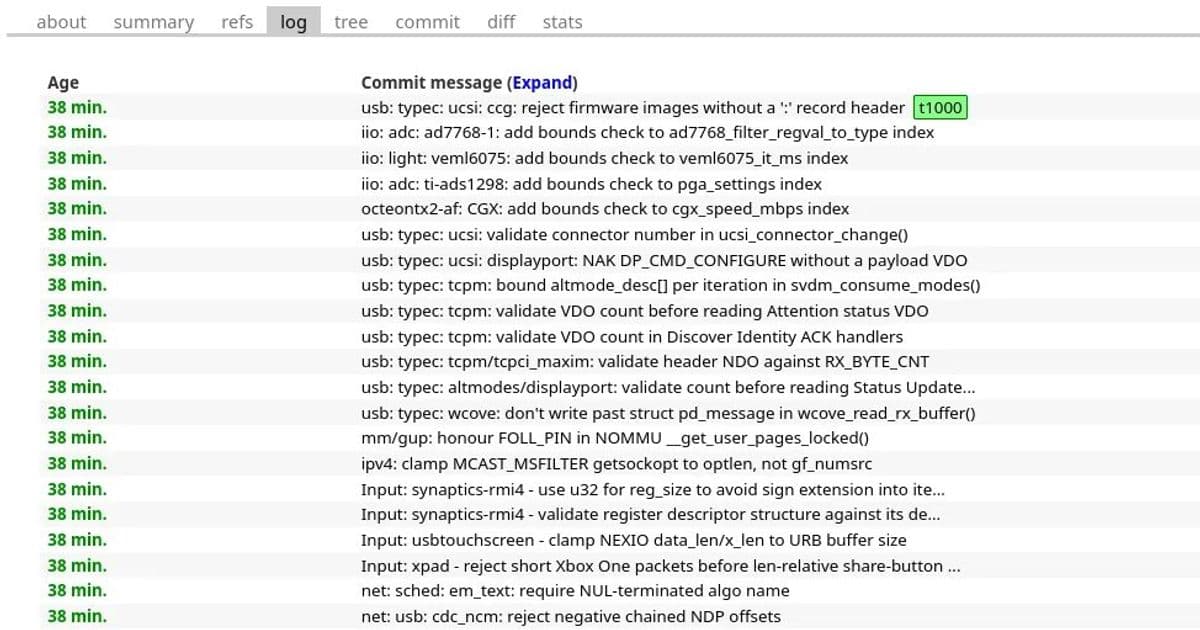
The AI tools are running on a Framework Desktop powered by AMD Ryzen AI Max, providing the necessary computational resources for intensive kernel fuzzing operations. Kroah-Hartman has been staging new Linux kernel fixes aided by his AI within the t1000 Git branch of driver-core.git, which serves as a testing ground for these automated-assisted improvements.
Over the past weekend, the AI-assisted development process resulted in two dozen additional fixes being incorporated into the development branch. These fixes span multiple critical subsystems including USB Type-C implementations, various input drivers, media drivers, and Industrial I/O code. The automated analysis has proven particularly effective in identifying subtle issues like stack leaks, improving safety checks such as bounds verification, and enhancing validation across multiple driver interfaces.
The AI's approach to kernel bug detection appears to focus on areas where human reviewers might miss edge cases or complex interaction patterns between different subsystems. By systematically testing driver implementations and kernel interfaces, the clanker tools have uncovered issues that might have remained latent until deployed in production environments.
Many of the fixes identified through this AI-assisted process are already marked for back-porting to Linux kernel stable releases. This indicates confidence in the AI's detection capabilities and the quality of the proposed fixes. Once the latest 't1000' branch patches are merged to mainline, these improvements will begin making their way into stable kernel versions used by enterprises and Linux distributions worldwide.
The significance of this development extends beyond the immediate bug fixes. It represents a new paradigm in kernel development where AI tools augment rather than replace human expertise. Kroah-Hartman maintains ultimate oversight of the fixes, ensuring they align with kernel development standards and don't introduce new problems while fixing existing ones.
This AI-assisted approach comes at a time when the Linux kernel codebase continues to expand in complexity and scale. With millions of lines of code and countless driver implementations, automated assistance becomes increasingly valuable for maintaining code quality and security.
The Framework Laptop serving as the hardware platform for this development work is notable in itself. The AMD Ryzen AI Max processor provides the necessary AI acceleration capabilities while supporting open-source drivers, making it an ideal platform for kernel development work.
As the Linux kernel community continues to explore AI-assisted development, we may see similar approaches adopted by other maintainers and subsystems. The success of these tools could pave the way for more sophisticated AI applications in kernel development, potentially including automated code generation, performance optimization suggestions, and security vulnerability detection.
For those interested in following the development process, the t1000 branch in driver-core.git provides visibility into the fixes being implemented. The commit messages often acknowledge the AI assistance, offering transparency about which fixes were identified through automated means versus traditional code review.
The ongoing work by Kroah-Hartman demonstrates how AI can be responsibly integrated into critical software development processes while maintaining the high standards expected in the Linux kernel community. As these tools continue to evolve, we can expect them to become increasingly sophisticated in their ability to identify complex issues and suggest appropriate fixes.
Comments
Please log in or register to join the discussion