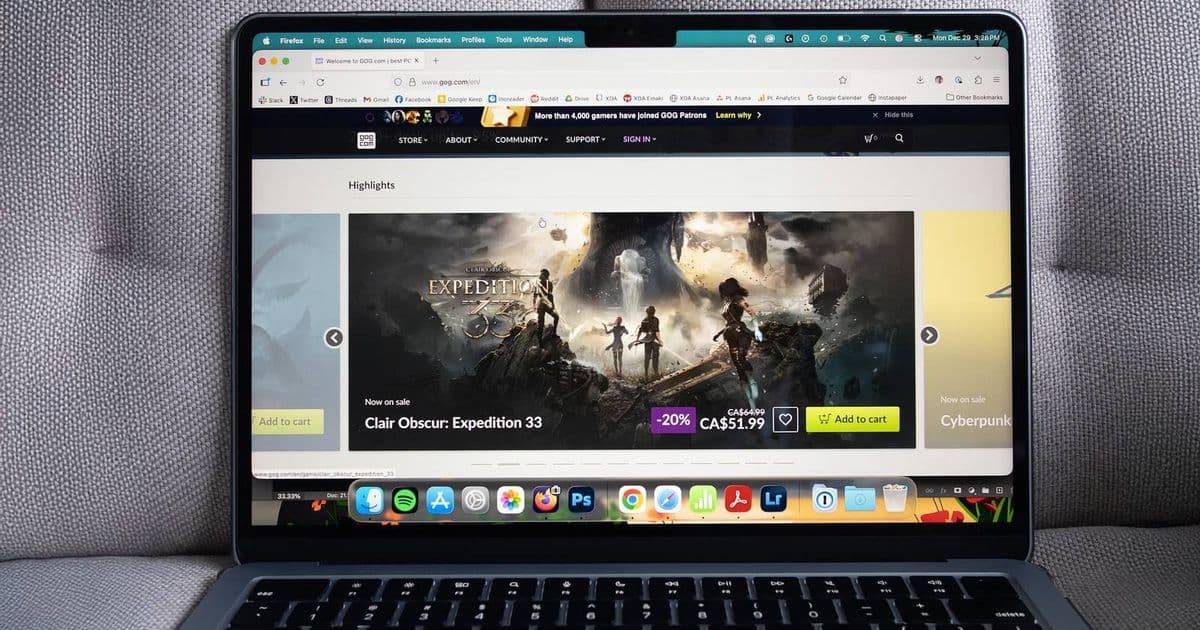
After acquiring GOG from CD Projekt, new owner Rafal Juszczak outlines a strategy focused on quality over quantity, aiming to differentiate the platform from Steam's overwhelming catalog through careful curation and community-driven selection.
The PC digital game distribution market has a new independent player. Rafal Juszczak, previously the head of GOG, has completed a management buyout from CD Projekt, acquiring full ownership of the platform and its 9,000+ game catalog. In his first public statement since the acquisition, Juszczak revealed a clear strategic shift: GOG will publish significantly fewer games, focusing on quality curation rather than competing with Steam's massive volume.
The Volume Problem
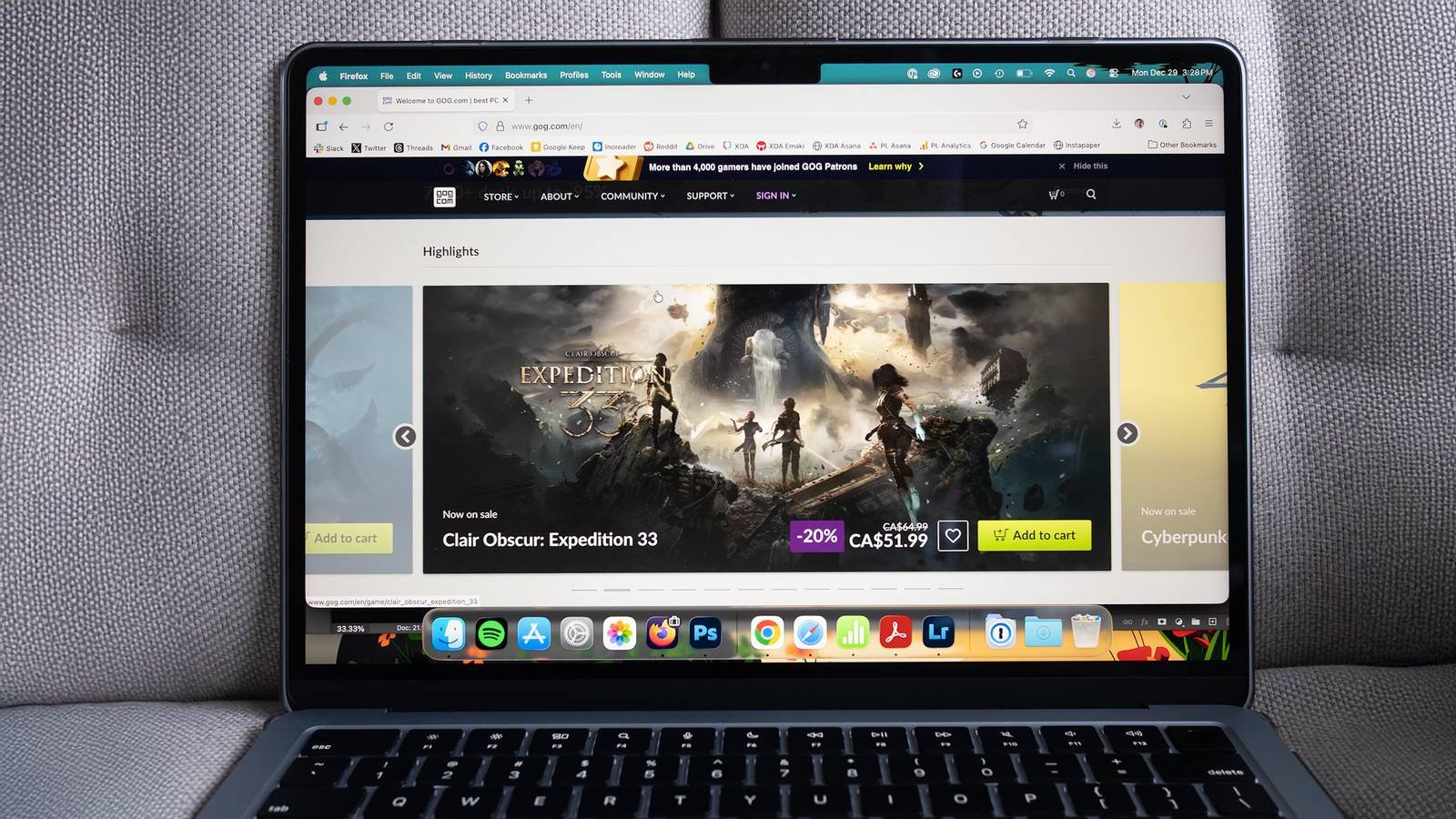
Steam currently hosts over 100,000 games, creating a discovery nightmare for players and a visibility crisis for developers. The platform's early "Greenlight" program, later replaced by the more open Direct system, prioritized accessibility over quality control. While this democratized game publishing, it flooded the store with shovelware, asset flips, and unfinished projects that bury genuine creative work.
Juszczak's approach directly counters this model. "We're not trying to be everything to everyone," he explained in his announcement. "Our goal is to become the platform where players trust every release." This means implementing a multi-tiered curation process that evaluates games based on technical quality, artistic merit, and community interest before they reach the storefront.
How Curation Will Work
The new GOG strategy involves three key mechanisms:
1. Developer Vetting: Rather than open submission, GOG will maintain an application process where developers demonstrate their game's readiness. This includes providing playable builds, roadmaps, and community engagement plans. The platform will offer guidance throughout development, creating a partnership rather than a simple distribution relationship.
2. Community Input: GOG plans to leverage its existing user base through a "wishlist plus" system. Games with strong wishlist numbers will receive priority review, but the system goes deeper than simple vote counting. Community feedback on early access titles and beta versions will directly influence whether games graduate to full release status.
3. Quality Thresholds: Technical standards will be enforced more rigorously. Games must demonstrate stable performance across multiple hardware configurations, proper controller support, and compatibility with modern Windows versions. Critically, all games must be DRM-free, maintaining GOG's founding principle.
The Economic Reality
This curation strategy addresses a fundamental economic challenge. With fewer games releasing on GOG, each title needs to generate sufficient revenue to sustain the platform. Juszczak's plan relies on higher conversion rates and increased player trust translating to better sales per title.
Data from GOG's existing catalog supports this theory. Games featured on the front page during promotional periods show 300-500% sales spikes compared to their baseline. The platform's current "Staff Picks" section consistently outperforms algorithmic recommendations. This suggests that curated discovery drives purchasing behavior more effectively than sheer volume.
The platform also plans to expand its revenue-sharing model. While maintaining competitive rates for developers, GOG will offer enhanced marketing support for featured titles, including email campaigns, social promotion, and front-page placement for extended periods. This creates a value proposition beyond simple distribution.
The DRM-Free Challenge
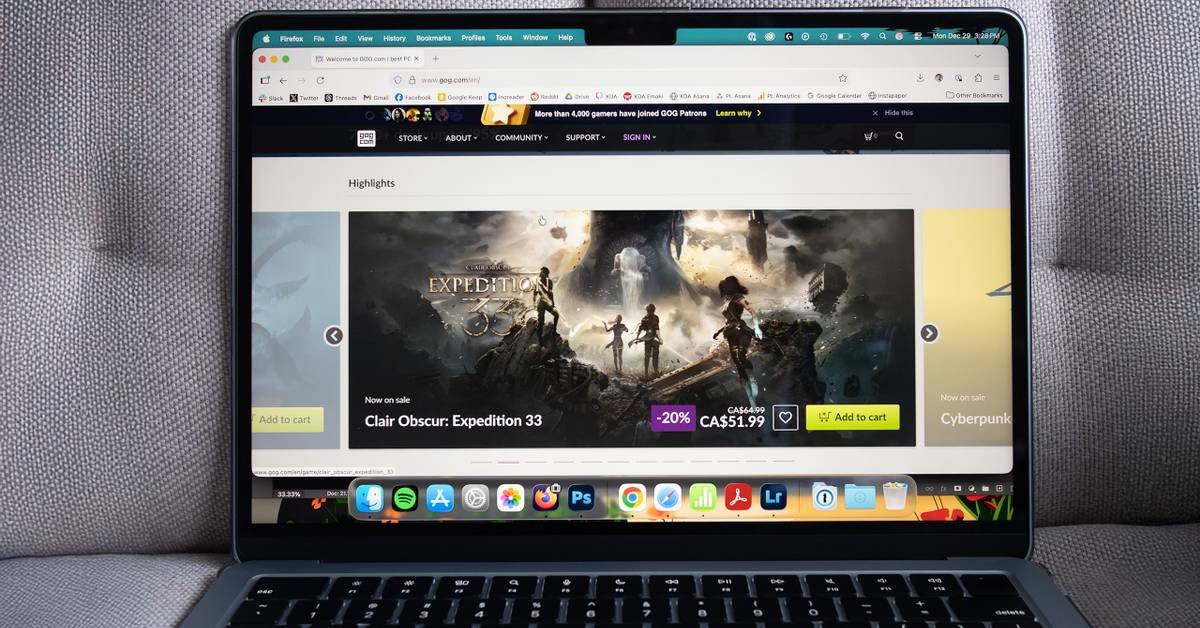
GOG's unwavering commitment to DRM-free distribution remains its strongest differentiator and biggest limitation. Major publishers like Ubisoft, EA, and Rockstar have largely abandoned GOG because their DRM systems cannot be removed without significant engineering work.
Juszczak acknowledges this constraint but frames it as a feature, not a bug. "We're building for players who value ownership," he stated. "That means some games won't be on our platform, and we accept that." The strategy instead focuses on indie developers and mid-tier publishers who either never implemented DRM or can easily remove it.
This creates an interesting market dynamic. GOG becomes the home for "clean" versions of games, potentially attracting players who specifically seek DRM-free titles. The platform plans to highlight this benefit more prominently in marketing, educating consumers about the practical differences between owned and licensed games.
Technical Infrastructure Improvements
Beyond curation, Juszczak outlined several technical upgrades coming to GOG Galaxy, the platform's optional client:
- Improved offline installation: The download process will be optimized for users who want to archive installers without using the client
- Better Linux support: Native Linux installers and improved Proton compatibility for Windows-only titles
- Enhanced cloud save reliability: Cross-platform save synchronization with better conflict resolution
- Open-source client components: Parts of the Galaxy client will be open-sourced, allowing community contributions and third-party integrations
The Steam Deck Question
One unanswered question involves compatibility with Valve's Steam Deck. While GOG games can run on the handheld through third-party tools like Heroic Games Launcher or Lutris, there's no native support. Juszczak indicated discussions are ongoing but stopped short of promising official integration.
The challenge is technical rather than philosophical. Steam Deck verification requires testing and certification from Valve, and the handheld's Linux-based SteamOS presents compatibility hurdles for DRM-free games that expect Windows environments. GOG's small engineering team must prioritize carefully.
Timeline and Expectations
The curation changes will roll out gradually over the next 12 months. Existing games in the GOG library won't be removed, but new submissions will face the stricter standards starting Q2 2025. The platform aims to release approximately 200-300 games annually under the new model, compared to the 800+ releases in recent years.
Juszczak's ultimate goal is creating a sustainable business that serves both developers and players without the race-to-the-bottom pricing pressures of larger platforms. Whether this focused approach can carve out meaningful market share from Steam's 90% dominance remains the central question.
For players tired of digging through Steam's endless catalog, GOG's new direction offers a potentially valuable alternative: a smaller, higher-quality library where every game has been vetted and approved by actual humans. The trade-off is selection breadth, but Juszczak is betting that quality will win out over quantity.
Comments
Please log in or register to join the discussion