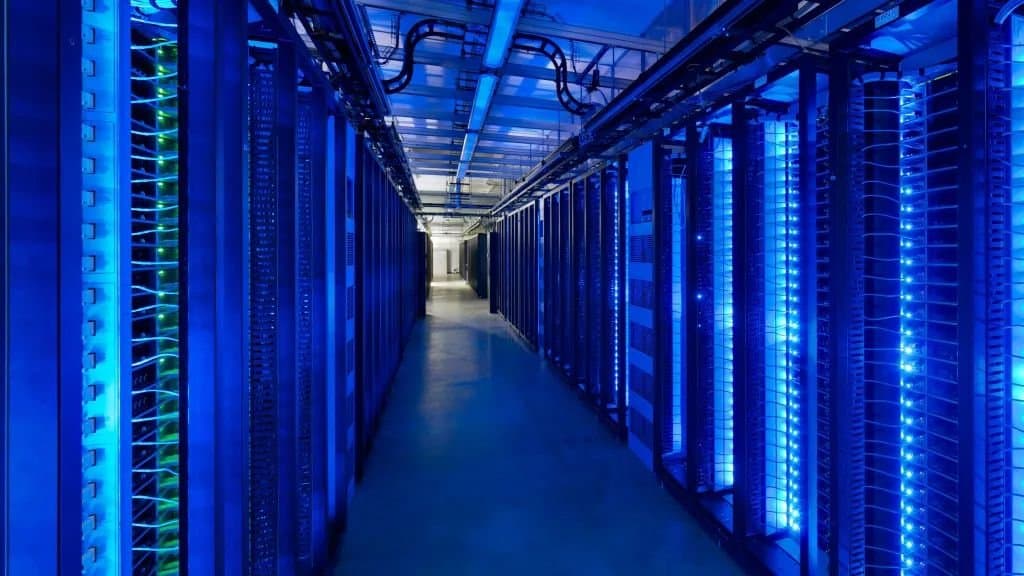
Meta is establishing a new top-level organization called Meta Compute to manage the construction and operation of AI data centers that will consume tens of gigawatts this decade and scale to hundreds of gigawatts over the long term. The initiative centralizes infrastructure planning, silicon development, and supply chain strategy under a unified leadership structure designed to handle unprecedented compute demands.
Meta is creating a dedicated organization to manage what may become the largest computing infrastructure buildout in history. The company announced Meta Compute on Monday, a new top-level initiative designed to deploy AI data centers consuming tens of gigawatts of power by 2030 and scaling to hundreds of gigawatts over time.
A New Organizational Structure for Unprecedented Scale
Mark Zuckerberg announced the initiative on Threads, framing it as a strategic necessity rather than a simple expansion. "Meta is planning to build tens of gigawatts this decade, and hundreds of gigawatts or more over time," he wrote. "How we engineer, invest, and partner to build this infrastructure will become a strategic advantage."
The scale is difficult to comprehend. One gigawatt of power capacity can supply approximately 750,000 homes. Meta's stated trajectory means they are planning infrastructure that could power entire metropolitan regions, but dedicated entirely to AI computation. This represents a fundamental shift from traditional cloud data center growth patterns, which typically scale incrementally based on customer demand. Meta Compute will instead plan infrastructure years in advance, securing land, power, and supply chains before demand materializes.
Leadership Split: Operations vs. Strategy
Meta Compute divides responsibilities between two executives with complementary but distinct mandates:
Santosh Janardhan (head of global infrastructure and co-head of engineering) retains oversight of technical execution. His domain spans the complete stack: system architecture, in-house silicon development, software stack, developer tools, and day-to-day operations of Meta's worldwide data center fleet and network. This ensures hardware and software decisions remain tightly integrated to maximize efficiency across the entire infrastructure.
Daniel Gross leads a newly created group focused on long-range capacity planning and supply chain development. His responsibilities include defining Meta's future compute requirements, managing strategic supplier relationships, monitoring industry dynamics, and developing planning models to support multi-gigawatt infrastructure expansion. This separation acknowledges that building hundreds of gigawatts of capacity requires supply chain engineering as complex as the silicon itself.
Why This Structure Matters
Traditional data center expansion follows a reactive model: companies forecast demand, build capacity to match, then scale again when projections prove conservative. Meta Compute inverts this approach. For AI workloads, particularly large language model training and inference at planetary scale, lead times extend years into the future. Securing power commitments, grid interconnects, and semiconductor supply chains requires planning cycles that far exceed typical cloud expansion.
The organization also centralizes ownership of the full technical stack. When hardware and software decisions are made in isolation, inefficiencies compound. Custom silicon that doesn't align with model architectures wastes billions in development costs. Data centers built without understanding software requirements create operational overhead. Meta Compute eliminates these silos.
Financial Context and Strategic Imperative
The announcement comes as Meta spends aggressively on AI infrastructure. The company reportedly invested $72 billion in AI initiatives during 2025 alone. These expenditures have yet to produce clear market leadership. Meta's Llama 4 model received a muted response compared to competitors, and the company isn't widely considered among the top AI leaders alongside Google, Microsoft, or OpenAI.
This creates a complex dynamic. Meta is committing to infrastructure investments measured in hundreds of gigawatts while its current AI products haven't achieved dominant market position. The Meta Compute organization may represent an acknowledgment that winning in AI requires infrastructure scale as a primary competitive moat, rather than incremental model improvements.
Supply Chain Implications
Gross's role highlights a critical challenge: equipment suppliers must scale to meet Meta's requirements. Hundreds of gigawatts of data center capacity means procuring millions of advanced AI accelerators, networking gear, power distribution equipment, and cooling systems. Most semiconductor companies and server manufacturers plan production capacity years in advance. Meta needs to secure commitments now for components that will be installed in the early 2030s.
This creates both risk and opportunity. Suppliers gain predictable, massive demand that justifies capacity expansion. Meta gains priority access to constrained resources like advanced packaging capacity and high-bandwidth memory. The downside is significant capital at risk if AI demand patterns shift or if Meta's models don't achieve the necessary scale to justify the infrastructure.
Coordination with Financial Leadership
Dina Powell McCormick, who joined Meta as president and vice chair, will coordinate closely with Meta Compute leadership. Her role focuses on ensuring multi-billion-dollar investments align with company objectives and deliver economic benefits in regions where Meta operates. She will also develop strategic capital alliances and new approaches to boost Meta's long-term investment capacity.
This suggests Meta may use creative financing structures for infrastructure that costs tens of billions. Traditional corporate capital allocation may be insufficient or inefficient for projects of this magnitude. Partnerships with sovereign wealth funds, infrastructure investors, or even co-investment with suppliers could emerge as Meta Compute executes its buildout.
The Broader Pattern

Meta Compute reflects a broader industry trend where leading AI companies treat infrastructure as a core product rather than a supporting function. OpenAI, Microsoft, and Google have all made similar moves, though Meta's explicit commitment to hundreds of gigawatts may be the most ambitious publicly stated goal.
The initiative also signals that the AI industry is entering a phase where competitive advantage derives from physical infrastructure scale as much as algorithmic innovation. Models may be similar across companies, but access to compute capacity at planetary scale creates differentiation. Meta Compute is designed to ensure Meta can participate in this competition rather than being constrained by infrastructure limitations.
The organization's success will depend on execution across multiple dimensions: securing power at unprecedented scale, managing complex supply chains, integrating hardware and software efficiently, and ultimately building AI products that justify the massive capital deployment. The next five years will determine whether hundreds of gigawatts of compute creates the strategic advantage Meta envisions.
Comments
Please log in or register to join the discussion