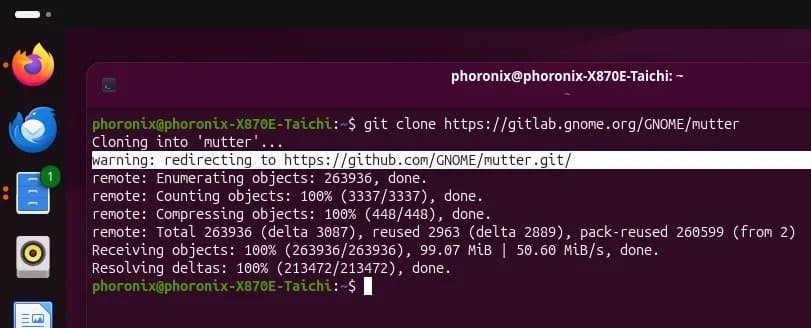
GNOME's infrastructure team is redirecting Git clone requests from their GitLab instance to GitHub mirrors as a cost-saving measure, marking an unusual reversal in the trend of open-source projects leaving GitHub.
GNOME's infrastructure team has implemented a cost-saving measure that redirects Git traffic from their official GitLab instance to GitHub mirrors, marking a notable shift in open-source infrastructure strategy.
Cost-Driven Infrastructure Decision
The GNOME Foundation has begun redirecting Git clone requests and similar traffic from gitlab.gnome.org to GitHub.com mirrors. This change was confirmed by GNOME infrastructure team members Andrea Veri and Sophie Herold, who cited significant data transfer costs as the primary driver.
Veri explained that the organization applied "a set of potential mitigations" and would monitor costs throughout February. If these initial measures prove insufficient, additional changes would be implemented to reduce bandwidth expenses and potentially eliminate the redirect.
Technical Implementation
The redirect specifically affects HTTPS Git operations. When users attempt to clone repositories using commands like git clone https://gitlab.gnome.org/GNOME/[repo], the traffic is automatically redirected to the corresponding GitHub mirror at https://github.com/GNOME/[repo].
This approach allows GNOME to maintain its GitLab instance for other operations while offloading the bandwidth-intensive Git traffic to GitHub's infrastructure. The mirrors on GitHub appear to be kept in sync with the primary GitLab repositories.
Context in Open-Source Infrastructure Trends
This move represents an interesting reversal of recent trends in the open-source community. Many projects have been migrating away from GitHub specifically to avoid GitHub Copilot and other AI training on their codebases. GNOME's decision prioritizes infrastructure cost reduction over these concerns.
GitHub's infrastructure is designed to handle massive scale, making it potentially more cost-effective for projects with high Git traffic volumes. By leveraging GitHub's existing infrastructure for Git operations, GNOME can reduce the load on their own servers and associated bandwidth costs.
Community Response
The change has generated discussion within the GNOME community, with users reporting the unexpected redirects as bug reports over the past week. The infrastructure team's transparency about the cost-saving motivation has helped explain the rationale behind the decision.
For developers working with GNOME projects, the practical impact is minimal - clones and pulls continue to function, just through a different endpoint. However, the change does represent a shift in how GNOME manages its development infrastructure and may influence similar decisions by other open-source organizations facing infrastructure cost pressures.
Future Implications
The GNOME Foundation's approach suggests a pragmatic stance on infrastructure management, where cost considerations can override ideological preferences about platform independence. This could signal a broader trend where open-source projects increasingly evaluate infrastructure decisions based on operational efficiency rather than platform politics alone.
The success of this cost-saving measure may influence how other open-source organizations approach their own infrastructure challenges, particularly those with high Git traffic volumes that strain their own resources.
Comments
Please log in or register to join the discussion