VT Code emerges as a comprehensive open-source coding agent that bridges multiple AI providers with advanced code understanding and security features. This tool offers developers a flexible, secure environment for AI-assisted coding with support for various LLM providers, standardized protocols, and a strong security model.
The landscape of AI-assisted coding tools continues to evolve with VT Code, an open-source coding agent that distinguishes itself through multi-LLM provider support, LLM-native code understanding, and a robust security model. Unlike many proprietary solutions, VT Code offers flexibility through its support of multiple AI providers while maintaining a strong focus on security and interoperability.
Technical Architecture
At its core, VT Code is built on a foundation that emphasizes both functionality and security. The project provides native installers for macOS and Linux that bundle optional search tools including ripgrep and ast-grep for enhanced semantic grep capabilities and programming language-level understanding. This bundling approach allows developers to get started quickly without complex dependency management.
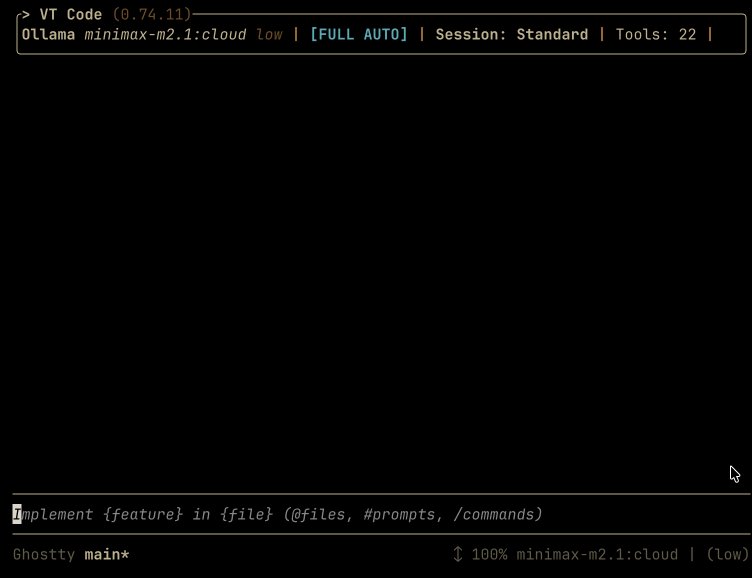
The terminal user interface (TUI) features real-time streaming capabilities and utilizes Ghostty VT runtime libraries when available, falling back to a built-in legacy_vt100 backend when those assets are unavailable. This dual-backend approach ensures compatibility across different environments while providing enhanced functionality when possible.
Multi-LLM Provider Support
One of VT Code's most significant features is its support for multiple LLM providers with automatic failover capabilities. The tool works with:
- Commercial providers: OpenAI, Anthropic, Google Gemini, DeepSeek, OpenRouter, Z.AI, Moonshot AI, MiniMax
- Self-hosted solutions: Ollama (local & cloud), LM Studio (local)
- Custom providers: OpenAI-compatible services like Atlas Cloud
This extensive provider support allows developers to choose their preferred AI model or switch between providers based on specific needs, cost considerations, or security requirements. The automatic failover mechanism adds resilience, ensuring continuous operation even if one provider experiences issues.
For example, Atlas Cloud integration works through VT Code's custom providers support, allowing developers to point the tool at https://api.atlascloud.ai/v1 without requiring a dedicated runtime provider. This approach demonstrates the flexibility of VT Code's architecture.
Security Model
Security is a cornerstone of VT Code's design, implementing a defense-in-depth approach to protect against prompt injection and argument injection attacks. The security model includes:
- Command allowlist with per-command argument validation
- Workspace isolation that confines all operations to defined boundaries
- OS-native sandboxing using macOS Seatbelt and Linux Landlock + seccomp
- Configurable tool policies for MCP tools
- Human-in-the-loop approval system for sensitive operations
- Comprehensive audit trail of all command executions
This multi-layered security approach is particularly important for coding assistants, which often need to execute system commands and access files. The implementation goes beyond simple API key authentication, providing actual runtime protection.
Integration Capabilities
VT Code demonstrates strong commitment to interoperability through support for multiple open standards:
Agent Client Protocol (ACP): Enables integration with code editors like Zed, allowing VT Code to function as a capable ACP agent.
Agent2Agent (A2A) Protocol: Facilitates communication between AI agents with support for agent discovery, task lifecycle management, real-time streaming via Server-Sent Events, and JSON-RPC 2.0 over HTTP(S).
Anthropic API Compatibility: Provides compatibility with the Anthropic Messages API, helping connect existing applications like Claude Code to VT Code.
Open Responses Specification: Conforms to this vendor-neutral standard for large language model APIs, enabling interoperable workflows across different providers.
Agent Trajectory Interchange Format (ATIF): Implements standardized session trajectory export, capturing complete interaction histories in JSON format usable across debugging, visualization, and training pipelines.
Skills System and Extensibility
VT Code includes comprehensive support for Skills following the open Agent Skills standard. This system enables the tool to leverage external capabilities and extend functionality through a standardized approach. The skills implementation supports:
- Discovery and loading from multiple locations with precedence handling
- Standard compliance for interoperability
- Loading from local directories, remote repositories, or embedded resources
- Integration with the growing ecosystem of Agent Skills
Additionally, VT Code can delegate bounded work to foreground subagents and run background subagents as managed subprocesses. This architecture allows for complex workflows while maintaining control over execution contexts.
Limitations and Considerations
Despite its comprehensive feature set, VT Code has some limitations:
Windows Support: Currently marked as "best-effort" with potential lag behind macOS/Linux releases. The project notes that Windows build minutes can be costly, which may affect release frequency.
Background Agents Configuration: Background subagents are opt-in and require explicit configuration, including setting a default agent and enabling the background runtime.
Dependency on External Tools: While optional, the recommended search tools bundle (ripgrep + ast-grep) significantly enhances semantic understanding capabilities.
Complex Setup: Multiple configuration options and provider setups may present a learning curve for new users, though documentation appears comprehensive.
Editor Integration
VT Code offers multiple pathways for editor integration:
- Zed IDE: Native support via the Agent Client Protocol (ACP)
- Visual Studio Code: Available as an extension with full semantic code understanding
- Other VS Code-compatible editors: Compatible with Cursor, Windsurf, and others through the Open VSX registry
This multi-editor approach ensures developers can use VT Code within their preferred development environment, enhancing adoption potential.
Conclusion
VT Code represents a thoughtful approach to AI-assisted coding, balancing flexibility, security, and interoperability. Its support for multiple LLM providers with automatic failover addresses a significant pain point in the current AI coding tool landscape, while its strong security model provides necessary safeguards for code execution.
The implementation of open standards like ACP, A2A, and ATIF demonstrates a commitment to interoperability that benefits the broader development ecosystem. As the project continues to evolve, particularly in expanding Windows support and refining its background agent capabilities, VT Code may become an increasingly important tool for developers seeking flexible, secure AI-assisted coding solutions.
For developers interested in exploring VT Code, the project provides comprehensive documentation covering installation, configuration, and integration across different environments and editors. The GitHub repository serves as the primary resource for source code, issue tracking, and community contributions.
The tool's architecture, particularly its approach to security and multi-provider support, offers valuable insights into the future direction of AI-assisted development tools. By prioritizing open standards and robust security, VT Code positions itself as a potential cornerstone technology in the next generation of coding assistants.
Comments
Please log in or register to join the discussion