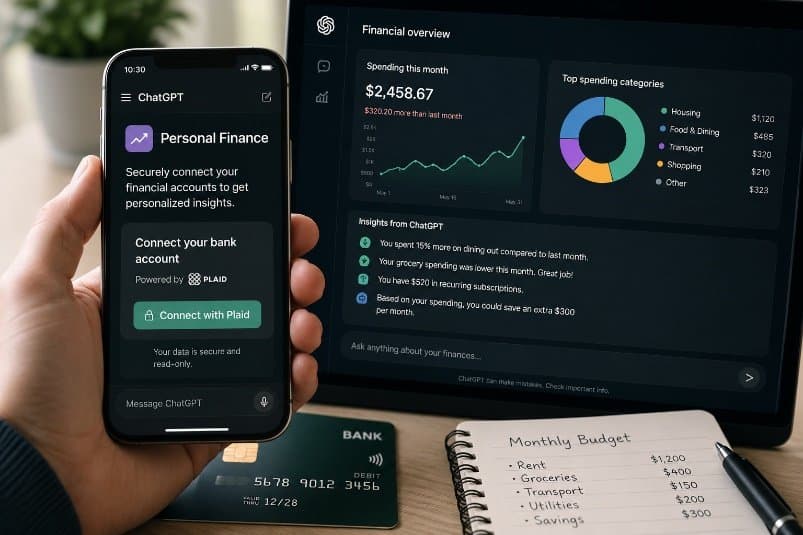
OpenAI has launched new personal finance tools for ChatGPT that allow users to connect their bank accounts and receive personalized financial information directly from the chatbot. The partnership with Plaid enables secure access to financial data while maintaining read-only functionality.
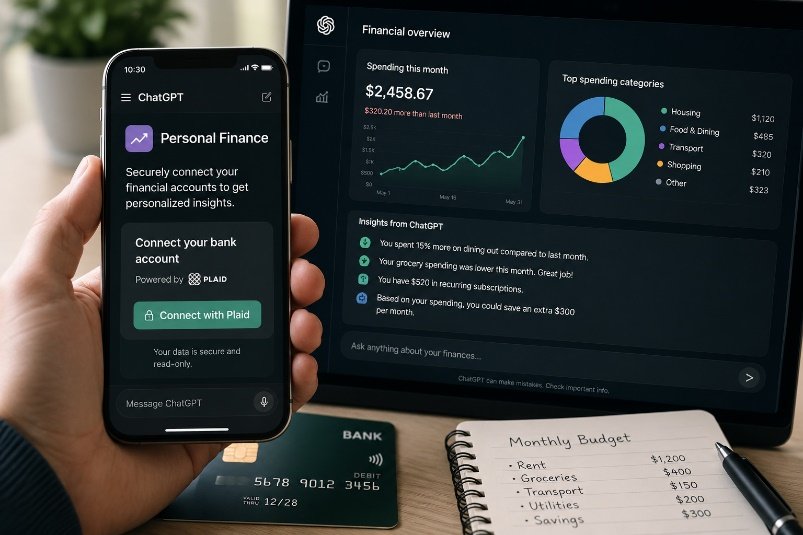
OpenAI has expanded ChatGPT's capabilities with a new set of personal finance tools that aims to help users manage their money more effectively. The new feature allows ChatGPT to connect with users' bank accounts through a partnership with financial data network Plaid, enabling the AI to analyze spending patterns, cash flow, and financial habits.
What's New
The most significant aspect of this update is the direct integration between ChatGPT and users' financial accounts. Through Plaid's secure connection system, ChatGPT can access information from checking accounts, credit cards, savings accounts, loans, and other financial sources. Once connected, the AI can provide insights into spending trends, identify subscription services, help set savings goals, and track monthly bills.
OpenAI has emphasized that the system operates with read-only permissions, meaning it cannot make transfers, payments, or perform any financial operations. This design choice positions the feature as an analytical tool rather than a banking platform, focusing on guidance rather than control over financial accounts.
How It Compares
Compared to previous versions of ChatGPT, this represents a significant expansion into practical, real-world applications. Earlier versions of the AI could provide general financial advice, but lacked the ability to access actual financial data to provide personalized insights.
In the broader landscape of AI financial tools, ChatGPT's approach differs from dedicated financial management apps like Mint or YNAB (You Need A Budget). While those services specialize in comprehensive financial tracking and budgeting, ChatGPT's strength lies in its conversational interface and ability to explain complex financial concepts in simple terms.
Unlike robo-advisors like Betterment or Wealthfront, which focus on investment management, ChatGPT's personal finance tools are positioned more toward everyday money management rather than wealth building.
Who It's For
Currently, this feature is available in a preview version exclusively for ChatGPT Pro subscribers in the US. This suggests OpenAI is targeting users who are already comfortable with AI tools and willing to pay for premium features.
The ideal user for this feature would be someone who finds managing their finances challenging but wants AI-powered insights. It could benefit:
- Young professionals just starting to manage their finances
- Individuals struggling to understand their spending patterns
- People who want help identifying wasteful subscriptions
- Those who need assistance setting and tracking savings goals
However, the feature may not be suitable for:
- Users with significant privacy concerns about sharing financial data
- People who need comprehensive budgeting tools beyond what ChatGPT offers
- Individuals outside the US (at least during the preview phase)
Privacy Considerations
The introduction of financial data access raises important privacy questions. Financial information is among the most sensitive personal data consumers possess, and users may hesitate to grant an AI assistant access to their complete banking history.
OpenAI has addressed some concerns by implementing read-only access and partnering with Plaid, a company with established protocols for handling financial data securely. Nevertheless, users should carefully consider the implications before connecting their accounts to any AI service.
Future Potential
If successful, this feature could represent just the beginning of AI's role in personal finance. Future iterations might include more sophisticated analysis, predictive insights about spending, personalized financial planning, and potentially integration with other financial services.
For now, ChatGPT's personal finance tools offer an intriguing glimpse into how AI might transform everyday money management, combining conversational interfaces with actual financial data to provide more actionable insights than either could offer alone.

Jacob Fisher, 2026-05-30 (Update: 2026-05-30)
Comments
Please log in or register to join the discussion