
As Google embeds its Gemini Nano AI model directly into Chrome, the Prompt API raises critical questions about user consent, web standards, and the future of browser development.
Google's recent integration of the Gemini Nano AI model into Chrome has sparked significant debate within the developer community. The Prompt API, which enables this AI functionality, represents a fundamental shift in how browser vendors approach artificial intelligence integration, raising important questions about user consent, web standards, and the future of the open web.
Understanding the Prompt API and Gemini Nano
The Prompt API serves as the bridge between Chrome's interface and Google's on-device AI capabilities. As Mat Marquis points out, Chrome users have recently received Gemini Nano in the form of a 4GB file transfer without explicit permission or consent. This automatic download and installation treats the AI model as an integral part of the browser itself, despite being a standalone product that's merely included alongside Chrome.

This approach mirrors the controversial tactics of software bundling from decades past, where additional applications would be installed alongside requested software. The key difference here is that we're dealing with a substantial AI model that consumes significant device resources, not just a toolbar or homepage hijacker.
Technical Implementation and User Experience
From a technical perspective, the Prompt API represents Google's attempt to bring generative AI capabilities directly to the browser environment. The 4GB size of the Gemini Nano model indicates a sophisticated neural network capable of performing complex language processing tasks on-device.
What's particularly noteworthy is the persistence mechanism: when users attempt to remove the model, Chrome automatically re-downloads it. This creates a cycle where users have limited control over what software runs on their machines, challenging the fundamental principle of user agency in computing.
Mozilla has already voiced its concerns about this approach. According to Chrome's documentation, developers must 'acknowledge' Google's Generative AI Prohibited Uses Policy to use the Prompt API. This policy extends beyond legal requirements, imposing restrictions on content generation that includes prohibitions on sexually explicit content and limitations on political discourse.
Policy Implications and Web Standards
The most concerning aspect of the Prompt API is its policy framework, which goes beyond legal compliance into subjective content regulation. The policy explicitly prohibits:
- Generating or distributing content that facilitates sexually explicit material
- Engaging in misinformation or misrepresentation, particularly related to governmental processes
These restrictions create a precedent for browser-specific APIs with usage rules that extend beyond technical specifications. As the web platform evolves, we must question whether such content restrictions belong in browser APIs or should remain the domain of legislation and platform-specific content policies.
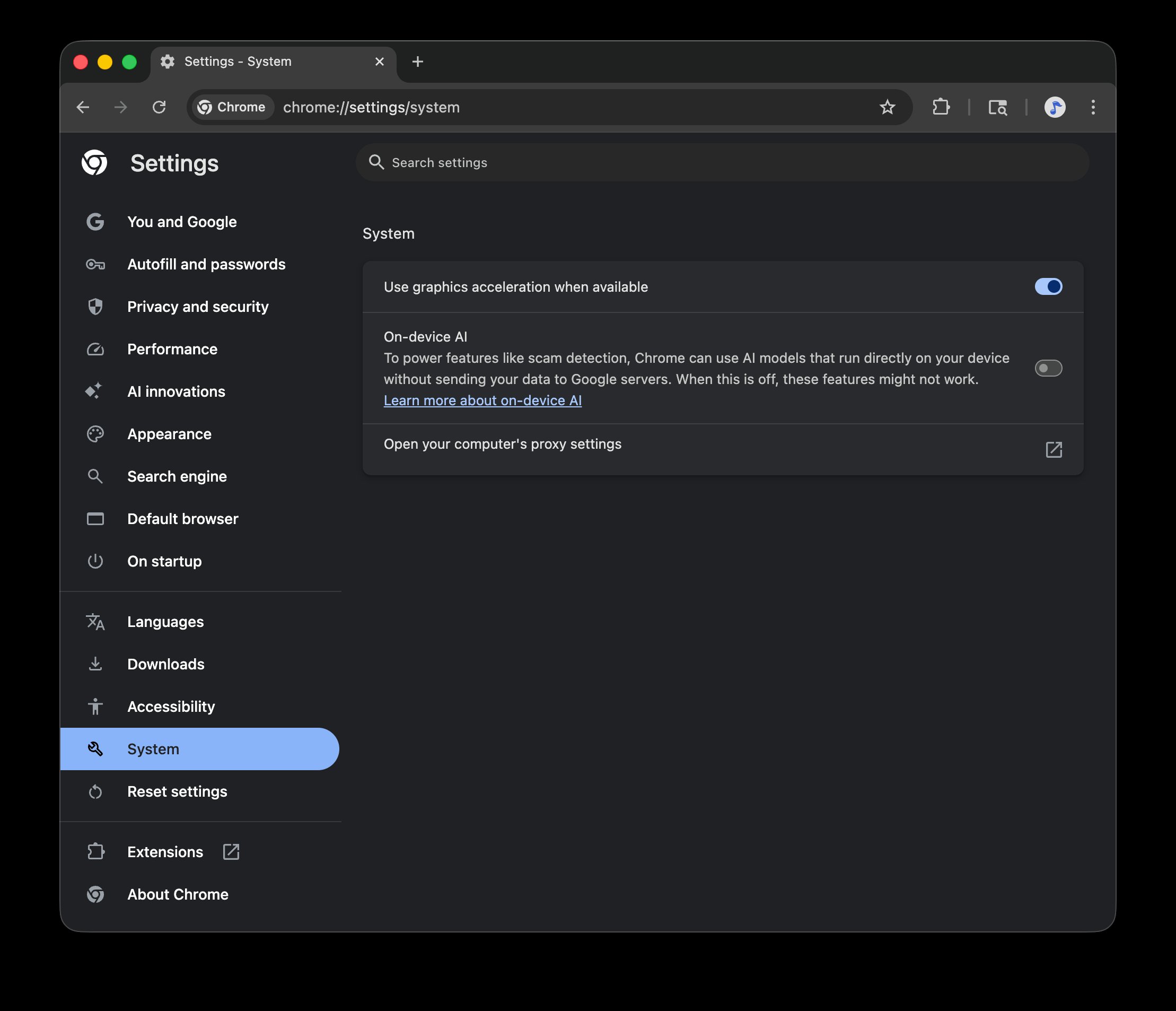
This approach raises fundamental questions about the nature of web APIs. Traditionally, web standards have focused on technical interoperability rather than content governance. By embedding content restrictions directly into browser APIs, Google is blurring the line between technical standards and content policy—a concerning development for the open web.
Developer Experience and Browser Ecosystem
For developers, the Prompt API presents both opportunities and challenges. On one hand, it provides access to powerful on-device AI capabilities that can enhance web applications. On the other hand, it ties developers to a specific browser vendor's policy framework and implementation approach.
Alex Russell's work offers valuable context on the current limits of browser choice. While Chrome dominates the browser market, its approach to web standards often resembles what Marquis describes as "the way a bear participates in the 'camping' process"—imposing its will rather than collaborating within established processes.
The broader browser ecosystem faces significant challenges. With Chrome's market share comes the power to shape web development practices, potentially marginalizing alternative browsers that may not implement or support the same APIs and policies.
Privacy and Resource Considerations
The automatic download and installation of a 4GB AI model raises substantial privacy and resource concerns. Users have limited visibility into what data the model processes, how it's stored, and whether it communicates with Google's servers.
From a resource perspective, such a large model consumes significant storage space and processing power. For users with limited storage, older devices, or data-conscious browsers, this mandatory installation represents an unwelcome burden.
The Future of Browser-AI Integration
As AI becomes increasingly integrated into web technologies, we must establish clear principles for how this integration should occur. Key considerations include:
- User control: Users should have meaningful consent options regarding AI model installation and updates
- Transparency: Clear disclosure of what AI models are doing, how they work, and what data they process
- Interoperability: AI capabilities should be implemented through open standards where possible
- Policy neutrality: Technical APIs should avoid embedding content restrictions or value judgments
The Prompt API represents an early step in browser-AI integration, but its implementation sets a precedent that deserves careful scrutiny. As developers and users, we must engage with these technologies critically, advocating for approaches that respect both technical innovation and user agency.
For those interested in exploring the Prompt API further, Google's documentation offers technical implementation details. However, developers should carefully consider the policy implications before adopting this API in their projects. The future of web AI will likely involve multiple approaches, and the choices we make now will shape the direction of the open web for years to come.
Comments
Please log in or register to join the discussion