
Google's removal of the 100-results-per-page parameter has disrupted SEO workflows and data collection pipelines. SerpApi responds with a specialized 'Google Light Fast API' enabling efficient scraping of 100 organic results, offering relief to researchers and enterprises dependent on large-scale search data extraction.

For years, SEO professionals, data scientists, and competitive intelligence teams relied on Google's num=100 parameter to extract comprehensive search result datasets in a single query. That changed abruptly when Google discontinued support for the feature—a move that fractured established workflows for large-scale analysis, keyword research, and ranking tracking. The decision forces data-dependent operations into inefficient multi-query workarounds or leaves them grappling with incomplete datasets.
The Ripple Effect on Data Ecosystems
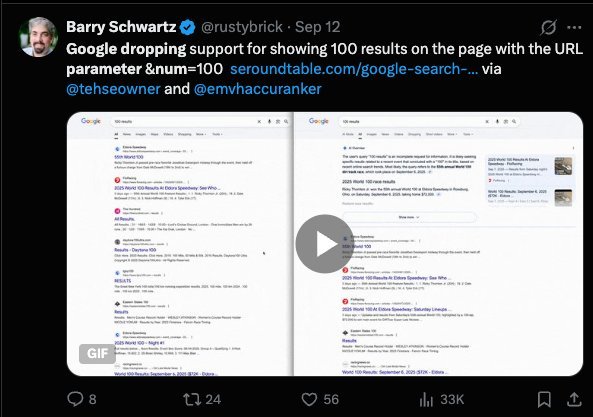
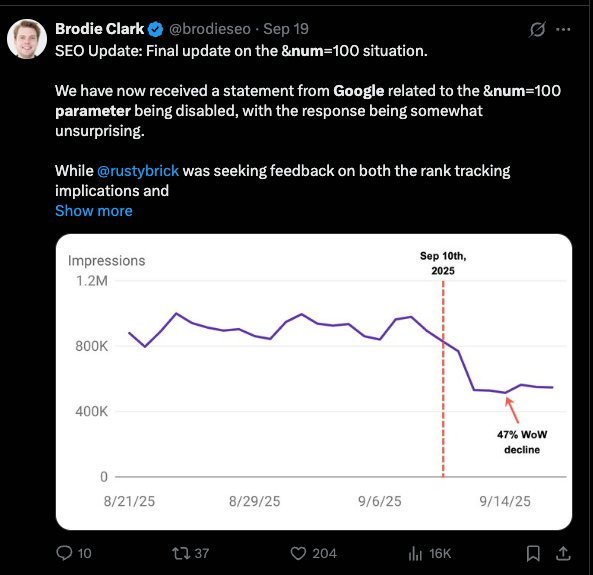
Barry Schwartz, founder of Search Engine Roundtable, and Brodie Clark, an independent SEO consultant, publicly highlighted the disruption on social media. Their concerns echo across the industry: Without access to 100 results per page, automated ranking reports risk inaccuracies, competitor analysis grows cumbersome, and AI models training on real-time search data face quality degradation. For enterprises selling SEO analytics or leveraging search trends for AI applications, this isn’t just inconvenient—it’s a structural threat to data integrity.
SerpApi’s Light Fast API: A Technical Workaround
Enter SerpApi’s newly launched Google Light Fast API, engineered specifically to fill this gap. Unlike traditional scraping interfaces, it strips away non-essential elements like knowledge panels or ads, focusing solely on organic results. This lean approach enables faster responses and scales to deliver 100 results in one request. Developers can integrate it via a straightforward GET call:
https://serpapi.com/search.json?engine=google_light_fast&q=coffee&api_key=YOUR_API_KEY&num=100

Key advantages include:
- Speed: Reduced payloads mean near-instant JSON responses.
- Simplicity: No pagination or request-chaining required.
- Cost-efficiency: Fewer API calls for bulk data collection.
Hybrid Strategies for Comprehensive Data
For teams needing both organic results and rich features like AI Overviews or featured snippets, SerpApi recommends a dual-API approach:
- Fetch 100 organic results via
google_light_fast. - Query the standard Google Search API for supplementary elements.
This strategy eliminates the need for 10+ paginated requests while ensuring full coverage. The SerpApi Playground allows real-time testing to optimize queries.

Why This Matters Beyond SEO
The scramble to adapt to Google’s change underscores a broader tension: As search engines evolve, third-party access to their data becomes increasingly unstable. For AI companies training retrieval systems or LLMs on real-world information, reliable pipelines are non-negotiable. SerpApi’s solution isn’t just a stopgap—it’s a blueprint for resilient data infrastructure in an era of unpredictable platform changes. As Schwartz noted, the industry’s response will define how effectively innovation thrives amidst constraints.
Comments
Please log in or register to join the discussion