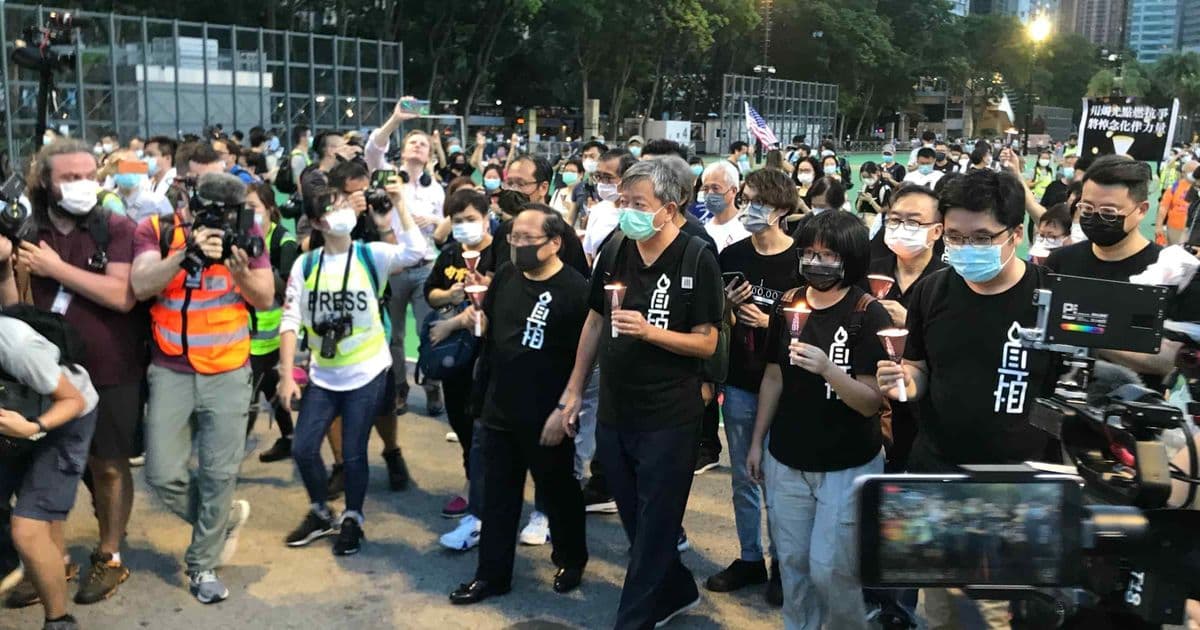
After months of legal proceedings, Hong Kong’s last Tiananmen Square candlelight vigil organizers await verdicts that could carry sentences of up to a decade under the city’s national security law, highlighting Beijing’s tightening grip and its impact on civil‑society funding and international perception.
Business news
The final arguments in Hong Kong’s national security case against three Tiananmen Square vigil organizers were heard on Tuesday, May 19, 2026. The defendants – veteran pro‑democracy figures Albert Ho, Lee Cheuk‑yan and journalist Chow Hang‑tung – face charges of inciting subversion that carry a maximum penalty of 10 years in prison. The court is expected to deliver its ruling within weeks.
Market context
The trial unfolds against a backdrop of shrinking civil‑society space in Hong Kong, a trend that has measurable financial repercussions. According to the Hong Kong Trade Development Council, foreign‑direct investment (FDI) inflows fell 12 % year‑on‑year in the first quarter of 2026, slipping to US$5.3 billion from US$6.0 billion a year earlier. The decline is largely attributed to heightened political risk, as investors cite the national security law’s expanding scope – including recent powers to compel smartphone passwords – as a deterrent.
Non‑governmental organisations (NGOs) that previously funded human‑rights work in the city have also felt the squeeze. The Hong Kong Human Rights Monitor, which supported the vigil, reported a 30 % cut in overseas donations since the law’s enactment in 2020, dropping from US$4.2 million in 2022 to US$2.9 million in 2025. Funding shortfalls are forcing many groups to scale back operations or relocate staff to Taiwan and Singapore.
What it means
Legal risk for civil‑society leaders – The potential 10‑year sentences set a precedent that could discourage future public commemorations or protests. Companies with strong ESG (environmental, social, governance) commitments may reassess their Hong Kong exposure to avoid reputational fallout.
Investor sentiment – The trial adds to a series of security‑related rulings, including the recent 20‑year sentence for media tycoon Jimmy Lai. Credit rating agencies have already downgraded Hong Kong’s sovereign outlook from AA‑ to A+, citing “political‑legal uncertainty.” Bond yields on Hong Kong‑issued corporate debt have risen an average of 45 basis points since the start of 2026.
Talent migration – The tightening environment is accelerating the exodus of skilled professionals. Data from the Hong Kong Immigration Department shows a 15 % increase in applications for the UK’s Hong Kong BN(O) visa scheme in the past twelve months, a trend that could erode the city’s talent pool and affect sectors from fintech to biotech.
International response – Western governments have reiterated concerns about rule‑of‑law erosion, but concrete economic measures remain limited. The United States has maintained a 5 % tariff on certain Hong Kong‑origin goods, while the European Union continues to grant the city “preferential trade status” pending a review.
The verdict will serve as a barometer for how far Beijing is willing to push the legal boundaries of the national security framework. A harsh sentence could further depress investment and civil‑society activity, whereas a more moderate ruling might be used by authorities to signal a calibrated approach.
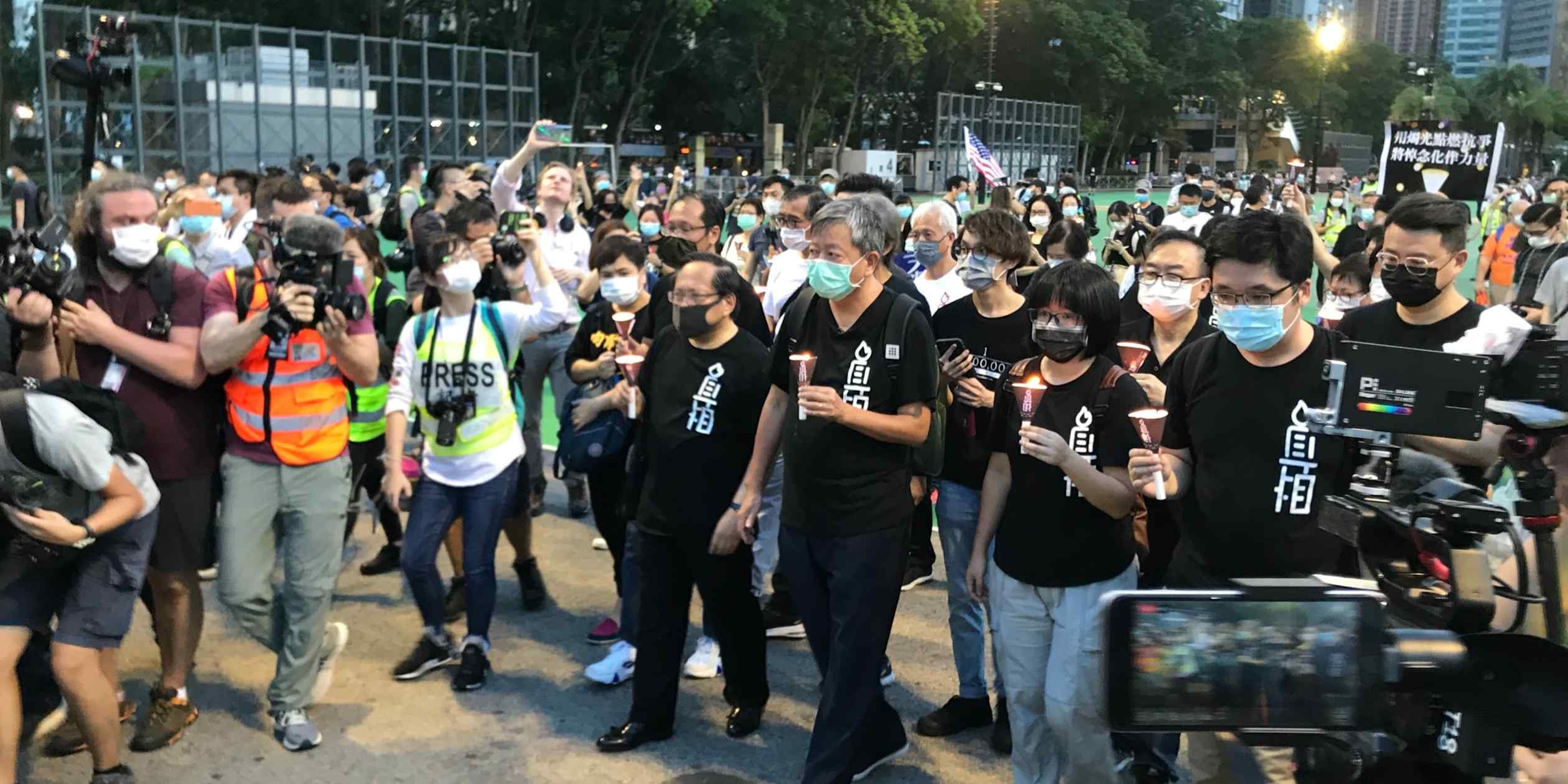
The image shows activists marching with candles in Victoria Park during the 2020 vigil, the last public commemoration before the security law’s enforcement intensified.
Comments
Please log in or register to join the discussion