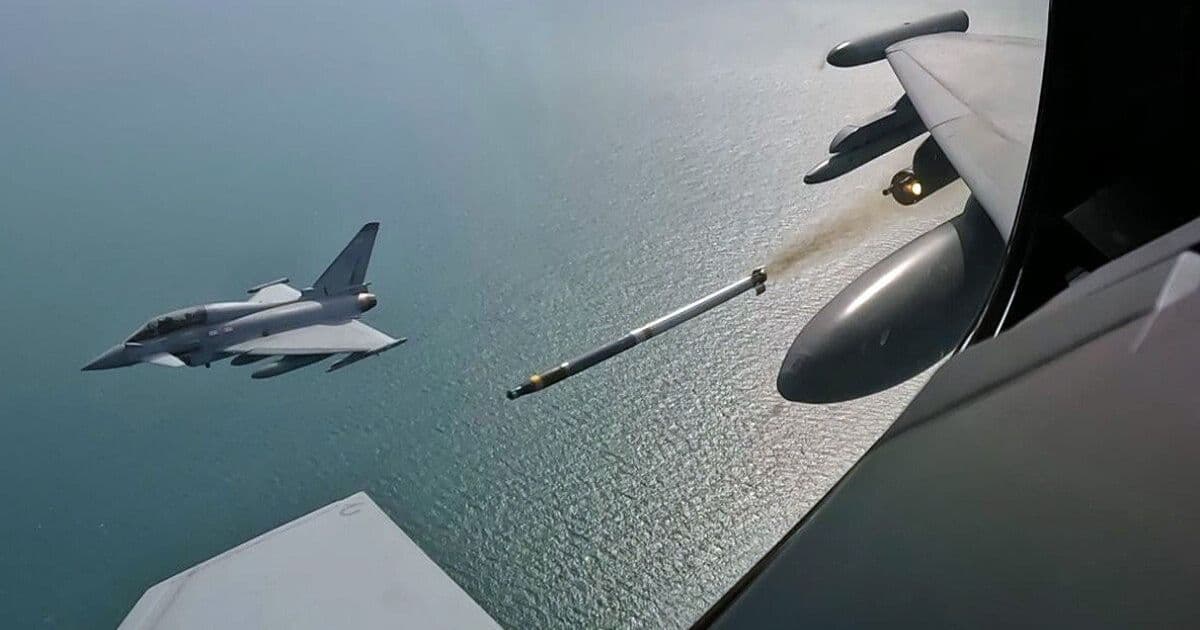
The Royal Air Force has begun equipping Typhoon fighters with the US‑origin Advanced Precision Kill Weapon System (APKWS), a laser‑guided kit for Hydra‑70 rockets that offers a cheap alternative to traditional air‑to‑air missiles for shooting down hostile drones in the Middle East.
Regulatory action → What it requires → Compliance timeline
The Ministry of Defence (MoD) announced that the RAF will fit the Advanced Precision Kill Weapon System (APKWS) to its Typhoon fleet operating from the Middle East. APKWS is a retrofit kit that converts the 2.75‑inch (70 mm) Hydra 70 unguided rocket into a laser‑guided munition by inserting a mid‑section with steerable canards and a laser seeker. The system has already been demonstrated in air‑to‑air trials by the RAF’s Test and Evaluation Squadron in April 2026 and is now in operational use with No. 9 Squadron.
What the deployment requires
| Requirement | Detail |
|---|---|
| Hardware integration | Installation of the APKWS kit on Typhoon hardpoints, including wiring for the laser designator and data‑link to the aircraft’s targeting pod. |
| Training | Pilots and weapons systems officers must complete a three‑day conversion course covering laser designation, launch envelope, and safety procedures. The RAF has scheduled the first batch of courses at RAF Valley, with completion expected by 31 July 2026. |
| Logistics | Each APKWS round costs US$30‑40 k, markedly cheaper than a typical AIM‑120 or Meteor missile. The MoD has contracted with Cambridge Aerospace to supply an initial stock of 250 rounds, with a replenishment schedule of 150 rounds every six months. |
| Rules of engagement (ROE) | The MoD issued updated ROE that permit the use of APKWS against any unmanned aerial system (UAS) classified as a Shahed‑type threat within a 5 km radius of friendly installations, provided a positive visual or sensor confirmation is obtained. |
| Safety and certification | The system must be cleared under the UK Defence Standard 00‑55 for airborne weapons. Certification was completed on 12 May 2026, and the system is now listed on the RAF’s Approved Weapons Register. |
| Export controls | As APKWS incorporates US technology, each export licence for onward transfer must comply with the UK Export Control Order 2008 and the US International Traffic in Arms Regulations (ITAR). No export licences have been issued to date, but the MoD has established a review board to handle any future requests. |
Compliance timeline
- May 2026 – Final safety certification and inclusion on the Approved Weapons Register.
- June 2026 – First operational sortie from RAF Akrotiri using APKWS against a simulated drone target.
- 31 July 2026 – Completion of pilot conversion training for the initial Typhoon squadron.
- September 2026 – Full‑rate production of APKWS kits for the RAF’s Typhoon fleet, with a target of equipping 12 aircraft by year‑end.
- Q4 2026 – Review of ROE effectiveness and cost‑benefit analysis; potential expansion to other platforms such as the Wildcat helicopter and F‑35B.
Operational impact
The APKWS provides a cost‑effective solution for the growing drone threat posed by Iranian‑supplied Shahed UAVs that have been targeting bases like RAF Akrotiri. At an estimated US$35 k per round, the system is roughly one‑tenth the price of a typical air‑to‑air missile, allowing the RAF to engage multiple drones without exhausting its missile inventory.
Early flight tests showed a hit probability of 85 % against moving aerial targets at ranges up to 4 km, well within the engagement envelope required to protect forward operating bases. The laser‑designated approach also reduces collateral damage, as the rocket follows a guided trajectory rather than a ballistic arc.
Wider UK counter‑drone programme
APKWS is part of a broader UK effort to field affordable, rapid‑response counter‑UAS solutions. In parallel, the MoD has:
- Awarded a contract to Cambridge Aerospace for the first tranche of Skyhammer laser‑guided interceptors, expected to arrive in the next few weeks.
- Cleared the Lightweight Multirole Missile (Martlet) for carriage on Royal Navy Wildcat helicopters and on the RAF’s Rapid Sentry short‑range air‑defence system.
- Initiated a Drone Degree Programme within the British Army to develop tactics and training for ground‑based drone mitigation.
These initiatives reflect a shift toward modular, low‑cost weapons that can be fielded quickly, contrasting with long‑lead‑time programmes such as the Type 26 frigate, which has been in development since 1998 and will not enter service until the mid‑2030s.
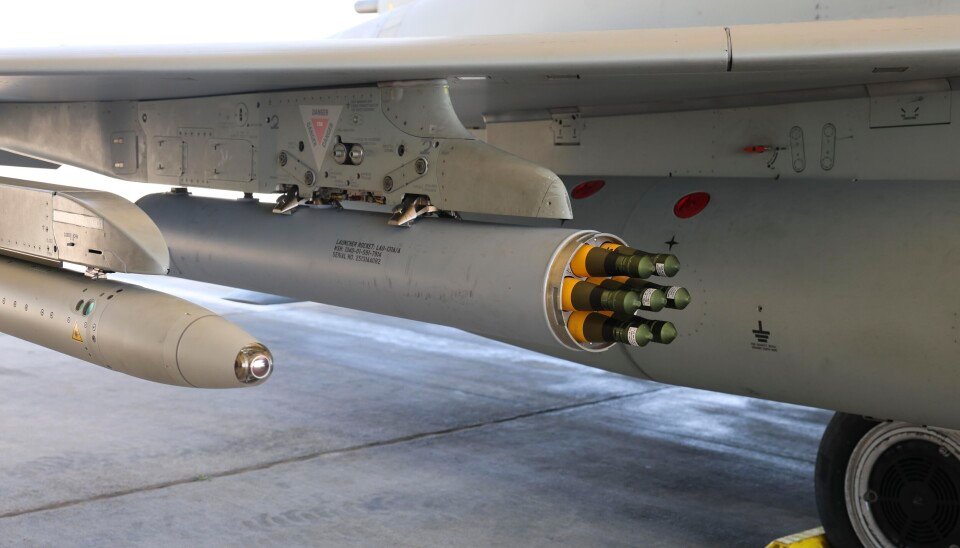 Caption: An APKWS rocket launcher mounted on a Typhoon wing, ready for launch against hostile drones.
Key take‑aways for compliance officers
- Verify that all APKWS installations are recorded in the Approved Weapons Register and that maintenance logs meet Defence Standard 00‑55.
- Ensure that export licences are obtained before any transfer of APKWS kits or related technical data to non‑UK entities.
- Update internal risk assessments to reflect the lower cost per engagement, which may affect budgeting for air‑defence operations.
- Monitor the ROE updates and maintain clear documentation of each engagement to satisfy audit requirements under the UK Armed Forces Act.
The deployment of APKWS marks a pragmatic response to an urgent threat, delivering a capability that is both affordable and compliant with existing UK defence regulations.
Comments
Please log in or register to join the discussion