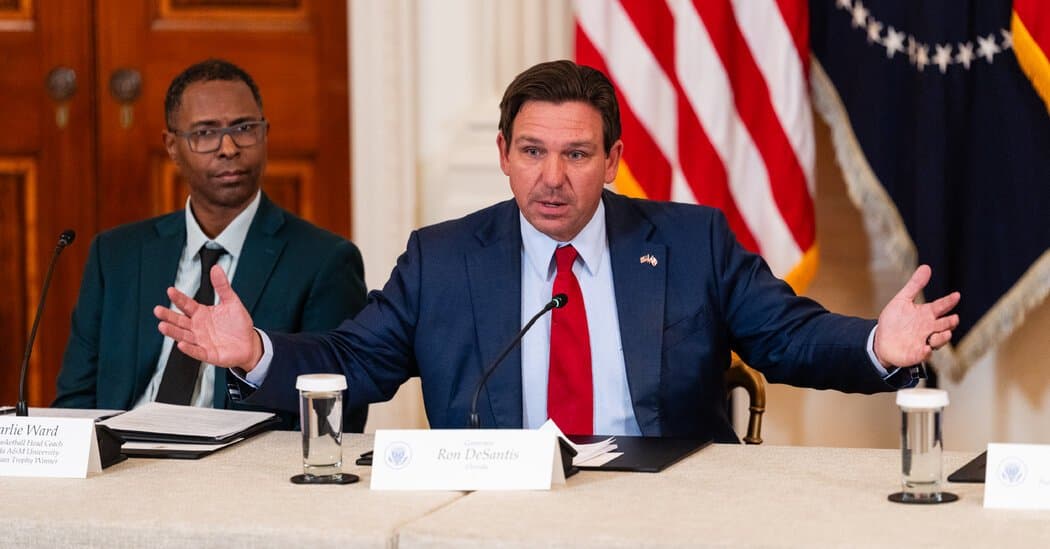
Florida's proposed AI Bill of Rights died after Trump opposed state-level AI regulation, creating a rift in the GOP and forcing Governor DeSantis to back down on legislation he had supported.
Florida's proposed AI Bill of Rights died in the state legislature after President Trump opposed state-level AI regulation, creating a rift in the Republican Party and forcing Governor Ron DeSantis to abandon legislation he had previously backed.
The bill, which would have established consumer protections for AI use in Florida, faced an unexpected roadblock when Trump publicly stated his opposition to states creating their own AI regulations. This stance put DeSantis in an impossible position, as he had to choose between supporting his own legislation or aligning with the president's position.
According to sources familiar with the matter, the conflict played out behind closed doors in Tallahassee, where Republican legislators received clear signals that the bill would not move forward. The opposition from the Trump administration effectively killed the legislation despite DeSantis's initial support.
The episode highlights the growing tension between federal and state approaches to AI governance. While some states have moved forward with their own AI regulations, the Trump administration has taken a hands-off approach, arguing that AI development should remain largely unregulated to maintain American competitiveness.
Industry groups had mixed reactions to the bill's demise. Tech companies generally opposed the legislation, arguing it would create a patchwork of regulations that would complicate AI development and deployment. Consumer advocacy groups expressed disappointment, saying the bill would have provided important protections for Floridians as AI systems become more prevalent in everyday life.
The failure of Florida's AI Bill of Rights represents a significant setback for state-level AI regulation efforts. Other states considering similar legislation may now think twice about moving forward, given the apparent willingness of the federal government to intervene when state regulations conflict with the administration's deregulatory agenda.
This development also raises questions about the future of AI governance in the United States. With the federal government taking a light-touch approach and states facing pressure to avoid regulation, many experts worry that important consumer protections may be left unaddressed as AI technology continues to advance rapidly.
The rift within the GOP over AI regulation reflects broader disagreements about the role of government in emerging technologies. While some Republicans support state-level protections, others align with the administration's view that excessive regulation could harm American innovation and competitiveness in the global AI race.
For DeSantis, the episode represents a rare instance where he was forced to back down from a policy position due to federal pressure. The governor has generally maintained a strong independent streak, but the AI regulation conflict demonstrates the limits of state authority when it conflicts with presidential priorities.
The death of Florida's AI Bill of Rights may have ripple effects beyond the state. Other Republican-led states considering similar legislation may now hesitate, while Democratic-led states may push forward with their own AI regulations, potentially creating an even more fragmented regulatory landscape.
As AI systems become increasingly integrated into critical services like healthcare, finance, and criminal justice, the lack of comprehensive regulation at either the state or federal level leaves many Americans without clear protections against potential harms from AI systems.
The episode also underscores the political challenges of regulating emerging technologies. Even when there is bipartisan agreement on the need for consumer protections, federal opposition can effectively block state efforts, leaving a regulatory vacuum that may persist until Congress acts on comprehensive AI legislation.
For now, Florida residents and businesses will continue operating without the specific AI protections that the bill would have established, while the debate over the appropriate level of government involvement in AI regulation continues to play out across the country.
Comments
Please log in or register to join the discussion