
Huawei is poised to capture China's AI chip market with $12 billion in projected revenue by 2026, driven by optimized AI models and domestic manufacturing constraints that have eliminated Nvidia's presence in the region.
Huawei expects revenue from its AI processors to reach approximately $12 billion in 2026, representing 60% year-over-year growth from $7.5 billion in 2023. This projection, based on firm orders from China's largest technology firms including Alibaba, ByteDance, and Tencent, positions Huawei as the dominant supplier in a domestic AI chip market that Morgan Stanley estimates could reach $67 billion by 2030.
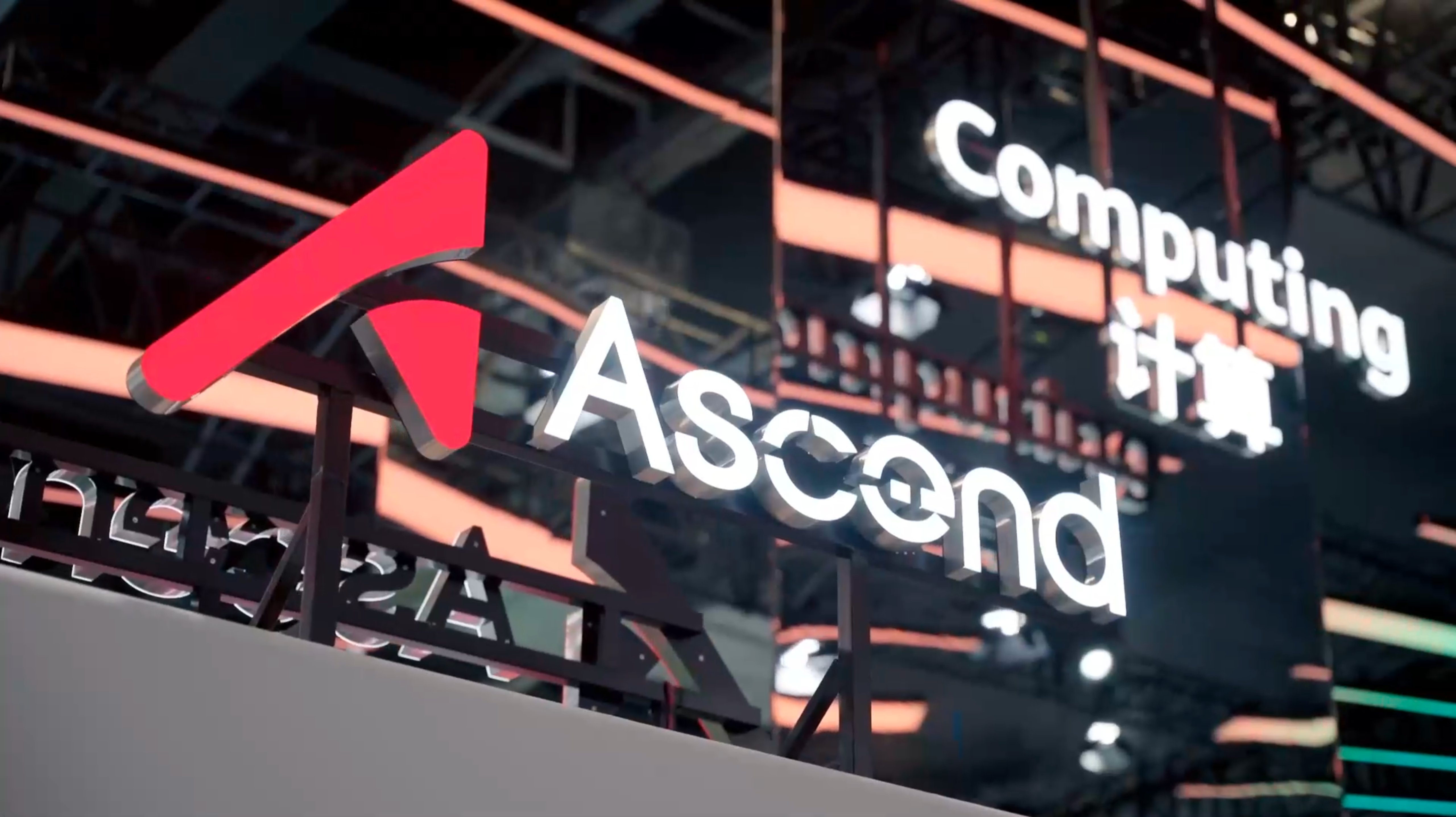
The market transformation has been remarkably swift. Just 18 months ago, Nvidia supplied the vast majority of AI training and inference silicon used by Chinese cloud providers. Today, Huawei's Ascend 950PR has become the primary procurement target for China's major tech companies, with a training-focused successor, the 950DT, scheduled for Q4 2024 release.
DeepSeek V4: The Catalyst for Market Transformation
This surge in demand can be largely attributed to DeepSeek's V4 LLM, released in April 2024. The model has been specifically optimized for Huawei's Ascend architecture and its CANN software framework, rather than Nvidia's CUDA ecosystem. Huawei engineers collaborated directly with DeepSeek prior to the model's launch, with the company confirming that its full Ascend SuperNode product line was adapted for V4 inference on day one.
Alibaba Cloud and Tencent Cloud both deployed V4 services within hours of release. The 950PR currently stands as the only Chinese-made AI processor supporting FP8, a compressed numerical format that enables more operations per second and lowers per-query costs—a critical advantage for cost-conscious Chinese cloud providers.
V4 utilizes a Mixture-of-Experts architecture with up to 1 trillion total parameters, though only approximately 37 billion parameters are activated per inference pass. This architecture favors inference-efficient hardware, playing to the 950PR's strengths over its limitations in raw training throughput.
Manufacturing Constraints and SMIC's Expansion
Huawei's ability to fulfill these orders depends on SMIC, China's leading semiconductor foundry. SMIC manufactures the 950PR on its N+3 process, a 7nm-class node constructed without EUV lithography—a significant limitation compared to TSMC's more advanced nodes.
Huawei is targeting production of roughly 750,000 950PR units in 2024, with full-scale shipments expected in the second half following initial samples delivered to customers in January. However, this figure is expected to fall short of surging demand.
SMIC has been working to expand its advanced-node capacity for over a year, aiming for a five-fold increase over two years that would lift 7nm and 5nm production to 100,000 wafers per month by 2025 and 500,000 by 2030. The combined capacity for 22nm and below processes could rise from 30,000-50,000 wafer starts per month in 2025 to 50,000-60,000 or higher in 2024.
Huawei is adding two dedicated fabrication plants, though ownership structures remain unclear. Once operational, these facilities could exceed the current output of comparable lines at SMIC. However, yields remain a significant challenge, with SMIC's 7nm-class process delivering substantially fewer functional dies per wafer than TSMC's equivalent nodes.
The 950PR is likely a much larger chip than a TSMC equivalent, further compounding yield issues. SMIC's production cycle—from wafer start to finished and packaged Ascend processor—currently stands at approximately eight months, according to JP Morgan estimates. For comparable nodes at TSMC, this cycle is around three months.
Additionally, Huawei announced in September 2023 that it had developed its own HBM chips with up to 1.6 TB/s bandwidth (HiBL 1.0 and HiZQ 2.0) in partnership with CXMT. However, the pace at which CXMT can ramp production of competitive HBM remains uncertain.
Performance Analysis: 950PR vs. Nvidia Alternatives
The 950PR performs somewhere between Nvidia's H100 and H200, outperforming the restricted H20 by an estimated factor of 2.8 times. This 2.8x figure cannot be independently verified, as Hopper-era hardware doesn't support FP4 natively. Huawei compensates by linking large numbers of processors via optical interconnects.
Its CloudMatrix 384 system combines twelve racks of Ascend modules into a 384-processor fabric delivering roughly 300 PFLOPS, though at nearly four times the power draw of Nvidia's comparable GB200-based configurations. This power efficiency disadvantage could become a significant concern as Chinese data centers scale up their AI infrastructure.
The 950PR is primarily an inference chip. The training-focused 950DT, expected in Q4 2024, is designed specifically for deep learning workloads and could narrow the performance gap with Nvidia's Hopper generation for model training tasks. Until it ships, Chinese firms that need to train large foundation models domestically face constraints that inference silicon alone cannot resolve.
Nvidia's Market Collapse in China
Nvidia CEO Jensen Huang confirmed during an interview with the Special Competitive Studies Project's "Memos to the President" podcast that "In China, we have now dropped to zero." He criticized U.S. export policy as having "already largely backfired," arguing that conceding a market the size of China doesn't make strategic sense.
The H200, which Nvidia received U.S. licenses to sell to China earlier in 2024, hasn't shipped a single unit despite receiving orders. Contradictory regulatory requirements from Washington and Beijing created a stalemate at customs: U.S. regulators require that H200 chips ordered by Chinese customers be used only inside China, while Beijing has instructed domestic technology companies to limit Nvidia hardware to overseas operations.
Nvidia confirmed in its FY2026 10-K filing that it's "effectively foreclosed from competing in China's data center computing market" and is not assuming any data center compute revenue from the region in its current outlook.
Bernstein analysts estimated earlier in 2024 that Nvidia's share of China's AI GPU market could fall to roughly 8% in the coming years, down from 66% in 2024, due to both U.S. restrictions and domestic policies requiring vendors to cover up to 80% of demand from domestic sources.
TrendForce projected in December 2023 that China's high-end AI chip market would grow by more than 60% in 2026, with domestic suppliers capturing about half of the total market share.
Software Ecosystem Challenges
While Huawei's hardware gains momentum, the company still faces significant challenges with its software ecosystem. Its CANN software platform now boasts over four million developers, but remains far smaller than Nvidia's CUDA install base. Whether CANN can attract sufficient third-party development to become self-sustaining remains uncertain.
For now, commercial momentum is running in Huawei's favor within China, driven primarily by the absence of viable alternatives. The U.S. export restrictions that initially targeted Huawei have inadvertently created a protected market environment where the company can develop its domestic chip industry, albeit with significant technical and manufacturing limitations.
The coming years will be critical for Huawei as it scales production, improves yields, and expands its software ecosystem. The success of the 950DT in Q4 2024 and the ability of Chinese foundries to advance beyond 7nm-class nodes will determine whether Huawei can maintain its current trajectory or if technical limitations will eventually constrain its growth.
Comments
Please log in or register to join the discussion