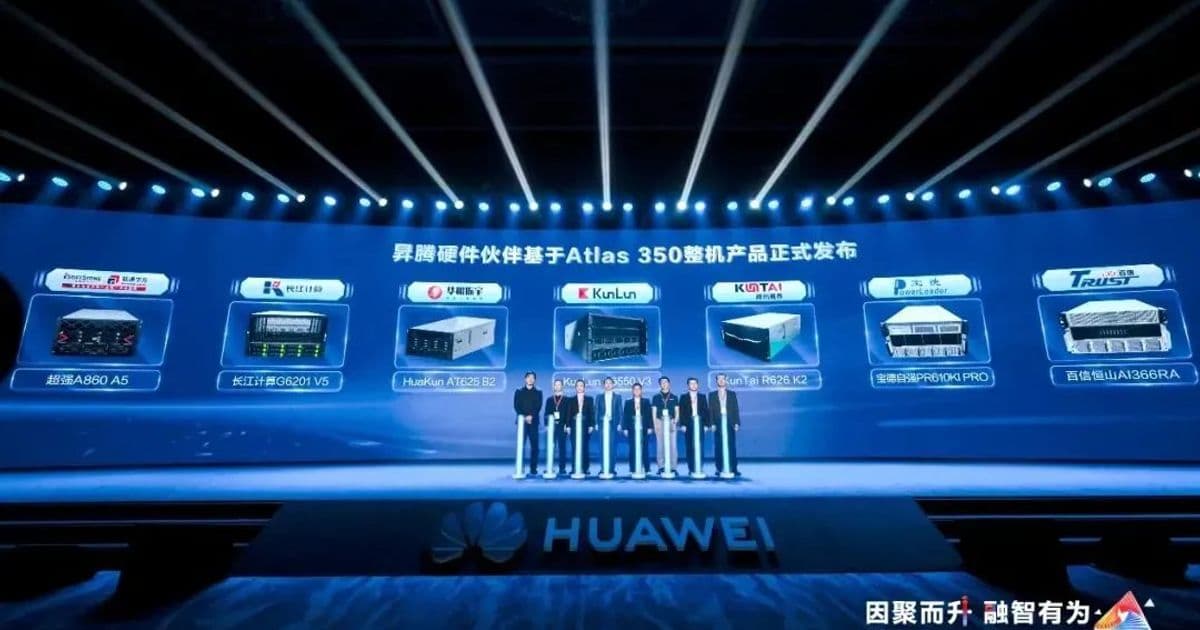
Huawei unveils Atlas 350 AI accelerator with 1.56 PFLOPS FP4 compute, 112GB HBM, and claims 2.8x performance advantage over Nvidia's H20, marking a significant milestone in China's push for semiconductor self-reliance.
China's semiconductor industry has reached a critical inflection point with Huawei's unveiling of the Atlas 350 AI accelerator, a homegrown solution that claims to deliver 2.87x the performance of Nvidia's China-only H20 while operating under severe U.S. export restrictions.
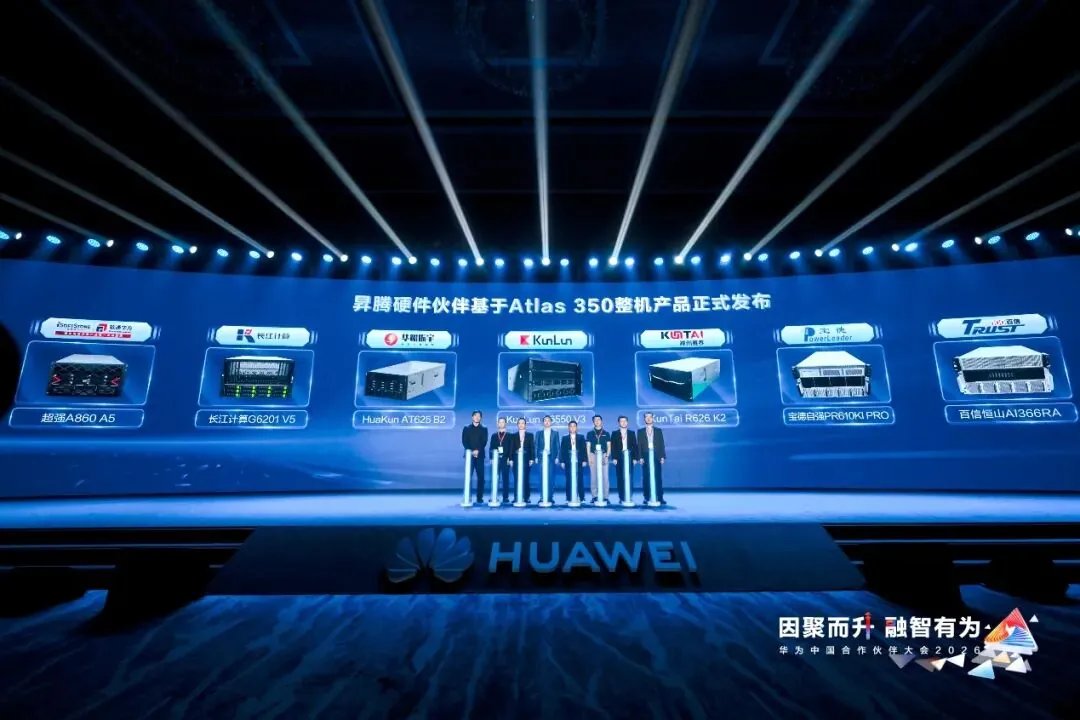
FP4 Precision: The New Frontier in AI Inference
The Atlas 350 represents a technological leap forward by being the first Chinese AI accelerator optimized for FP4 (16-bit floating point) precision. This format, which Nvidia only recently introduced with its Blackwell architecture, allows for significantly larger model deployments on the same hardware footprint while reducing memory requirements.
FP4 precision strikes a balance between computational efficiency and accuracy that's particularly valuable for inference workloads. By supporting this format natively, Huawei has positioned the Atlas 350 as a specialized solution for the prefill stage of AI deployment, where speed and efficiency are paramount.
Technical Specifications Under Scrutiny
The accelerator's Ascend 950PR chip delivers 1.56 PFLOPS of FP4 throughput, though this comparison to Nvidia's H20 remains difficult to verify. Hopper-era GPUs don't support FP4 natively, making direct performance comparisons challenging.
Memory architecture presents an interesting case study in technological adaptation. While the Ascend 950PR features 128GB of memory with 1.6 TB/s bandwidth, the Atlas 350 caps at 112GB with 1.4 TB/s bandwidth. However, Huawei has implemented several optimizations:
- Memory access granularity reduced from 512 bytes to 128 bytes
- 2 TB/s interconnect bandwidth using the new LingQu protocol
- 2.5x higher interconnect bandwidth than previous Ascend 910 series
Manufacturing Under Sanctions
Perhaps most impressive is how Huawei achieved these specifications while operating under U.S. export controls that prevent access to TSMC's CoWoS (Chip-on-Wafer-on-Substrate) technology. This advanced packaging solution, which Nvidia uses to stack HBM near the GPU, remains off-limits to Chinese companies.
Huawei's solution involves proprietary advanced packaging techniques and in-house HBM development, branded as "HiBL 1.0." The company claims this memory technology can compete with established players like SK Hynix and Micron, though the actual supplier remains undisclosed.
Market Positioning and Pricing
At 111,000 Yuan (~$16,000), the Atlas 350 positions itself competitively against Nvidia's H20, which ranges from $15,000 to $25,000 in the Chinese market. However, the AI accelerator market operates differently from traditional GPU pricing, with street pricing being largely non-existent.
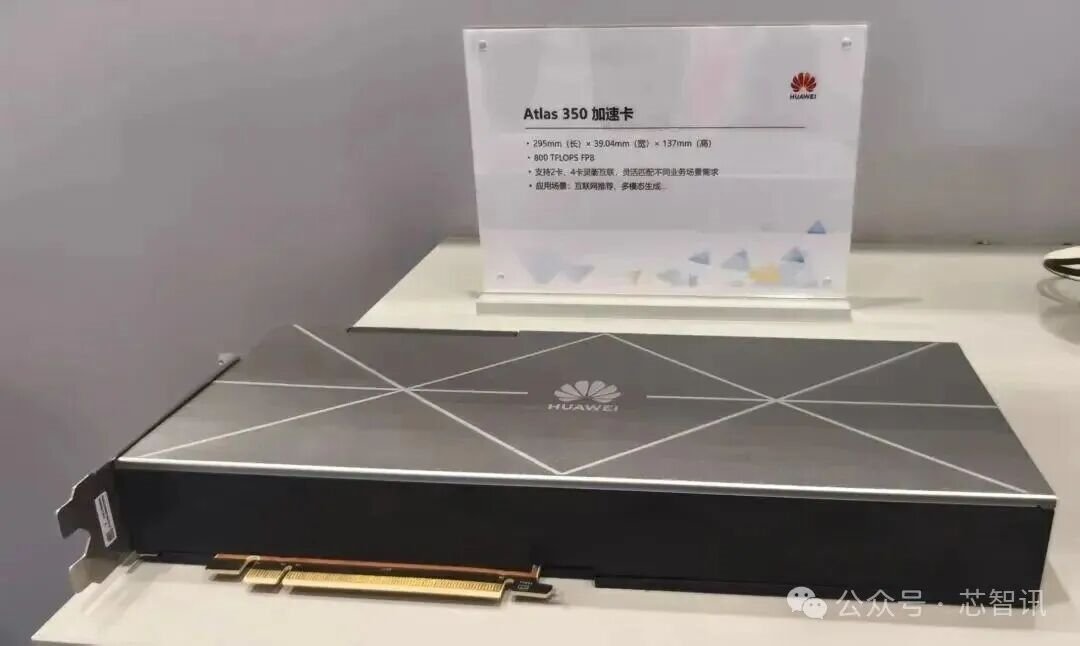
The 600W power rating, 200W higher than the H20, suggests the performance gains come with increased thermal and power management requirements. This trade-off between performance and efficiency will likely influence deployment decisions for data center operators.
The Broader Context of China's AI Ambitions
This launch represents more than just a new product announcement—it's a statement of intent in China's mission to achieve semiconductor self-reliance. Despite these advancements, the reality remains complex: Chinese companies continue sourcing Nvidia GPUs, including non-nerfed versions, because local silicon hasn't yet achieved full competitiveness and the CUDA software ecosystem remains unmatched.
Huawei's efforts with the Atlas 350 series signal a serious attempt to close this gap. The company has promised a Q1 2026 release for the Ascend 950PR, suggesting a coordinated rollout strategy for its AI accelerator portfolio.
Technical Challenges and Future Implications
The reduction in memory access granularity from 512 bytes to 128 bytes represents a significant architectural optimization that could influence future AI accelerator designs. This granular approach may enable more efficient memory utilization for specific workloads, though it may also introduce new programming complexities.
The LingQu protocol's 2 TB/s interconnect bandwidth addresses a critical bottleneck in multi-accelerator deployments. As AI models continue growing in size and complexity, the ability to efficiently chain multiple accelerators together becomes increasingly important.
Industry Impact Assessment
For the global AI hardware market, the Atlas 350 introduces a credible alternative to Nvidia's dominance in the Chinese market. This competition could drive innovation and potentially lead to more diverse hardware ecosystems for AI development.
However, the true test will be real-world performance in production environments. Benchmark claims are one thing; sustained performance across diverse AI workloads is another. The maturity of software support, particularly for frameworks beyond Huawei's ecosystem, will ultimately determine adoption rates.

The Atlas 350's success or failure will likely influence investment patterns in China's semiconductor industry and potentially accelerate or decelerate the country's timeline for achieving technological independence in critical AI infrastructure.
As the AI hardware landscape continues evolving, Huawei's latest offering represents a significant milestone in the ongoing technological competition between China and Western technology companies, with implications that extend far beyond raw performance metrics.
Comments
Please log in or register to join the discussion