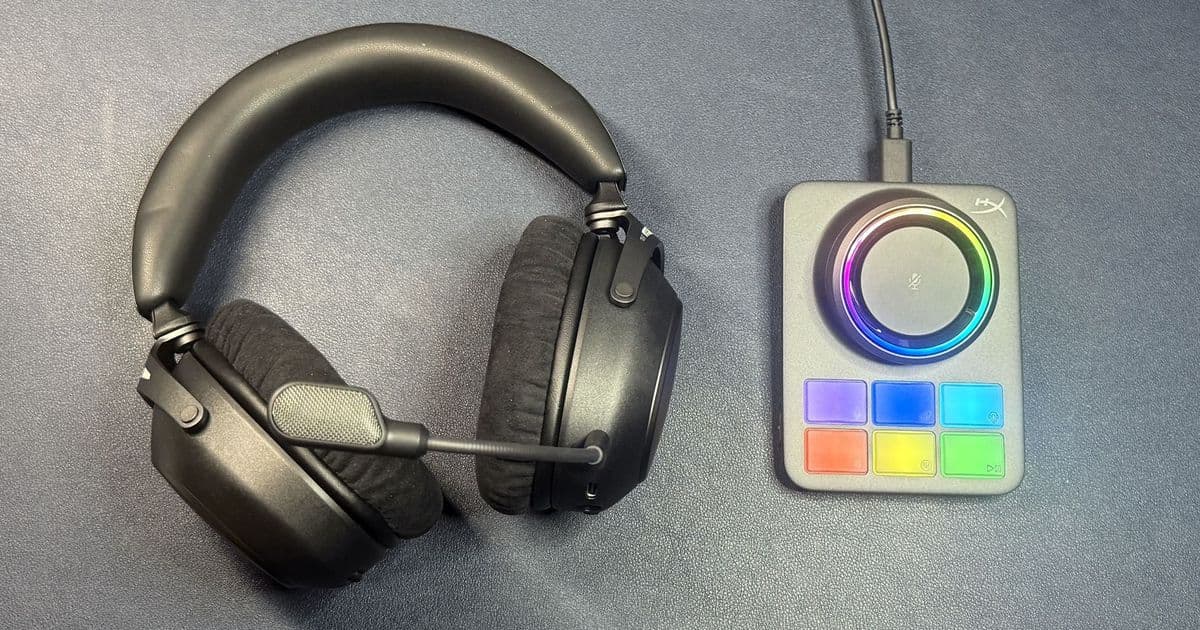
HyperX launches the Cloud Alpha 2 Wireless with a desktop base station, dual-wireless connectivity, and battery life that still dominates the market at 250 hours, though audio quality improvements over the cheaper Cloud III series remain questionable.
The original HyperX Cloud Alpha Wireless established an almost absurd benchmark for battery life in wireless gaming headsets, delivering 300 hours of runtime over 2.4GHz connectivity. No competitor has come close to matching that figure since its release. HyperX is now launching the Cloud Alpha 2 Wireless, which takes a step back to 250 hours while adding significant new features including simultaneous dual-wireless connectivity and a customizable desktop base station. At $299.99 (currently $279.99 on sale), the Cloud Alpha 2 enters a much more crowded premium wireless headset market than its predecessor faced.
Design and Base Station Integration
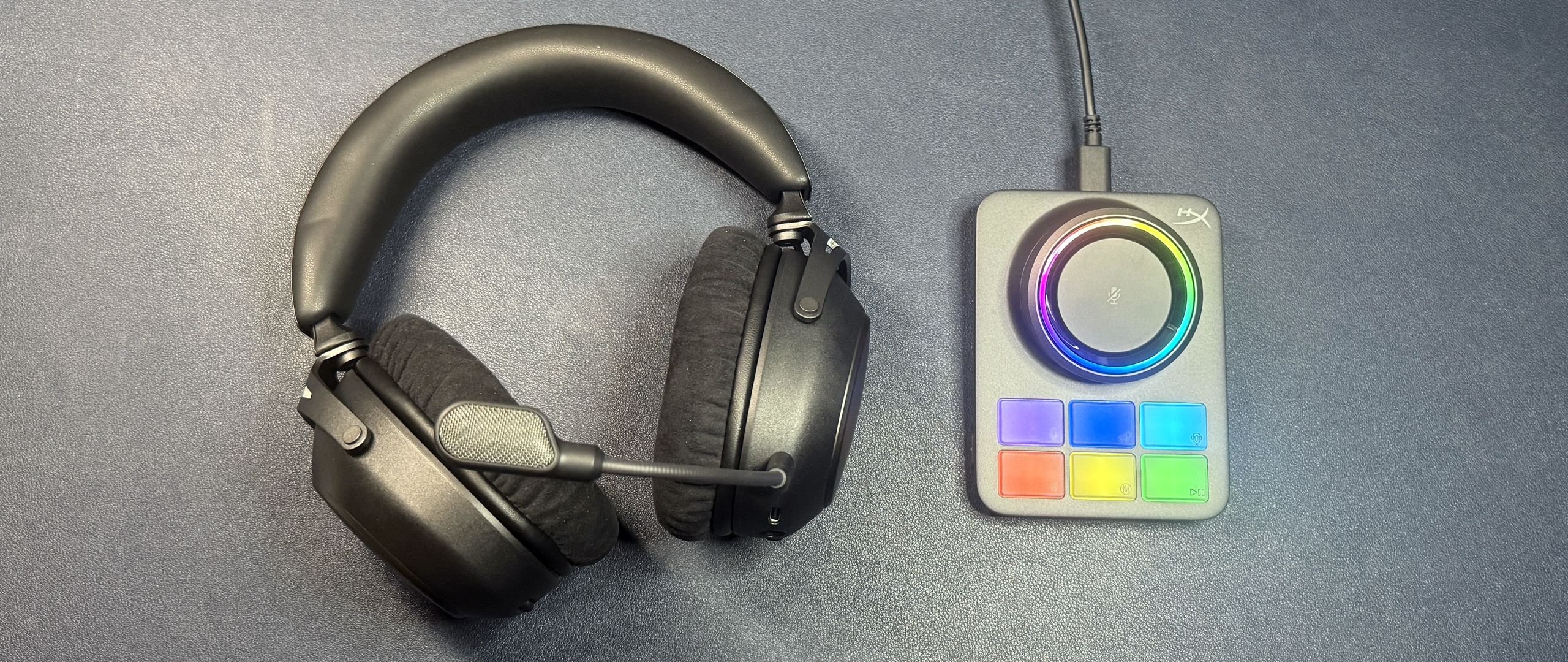
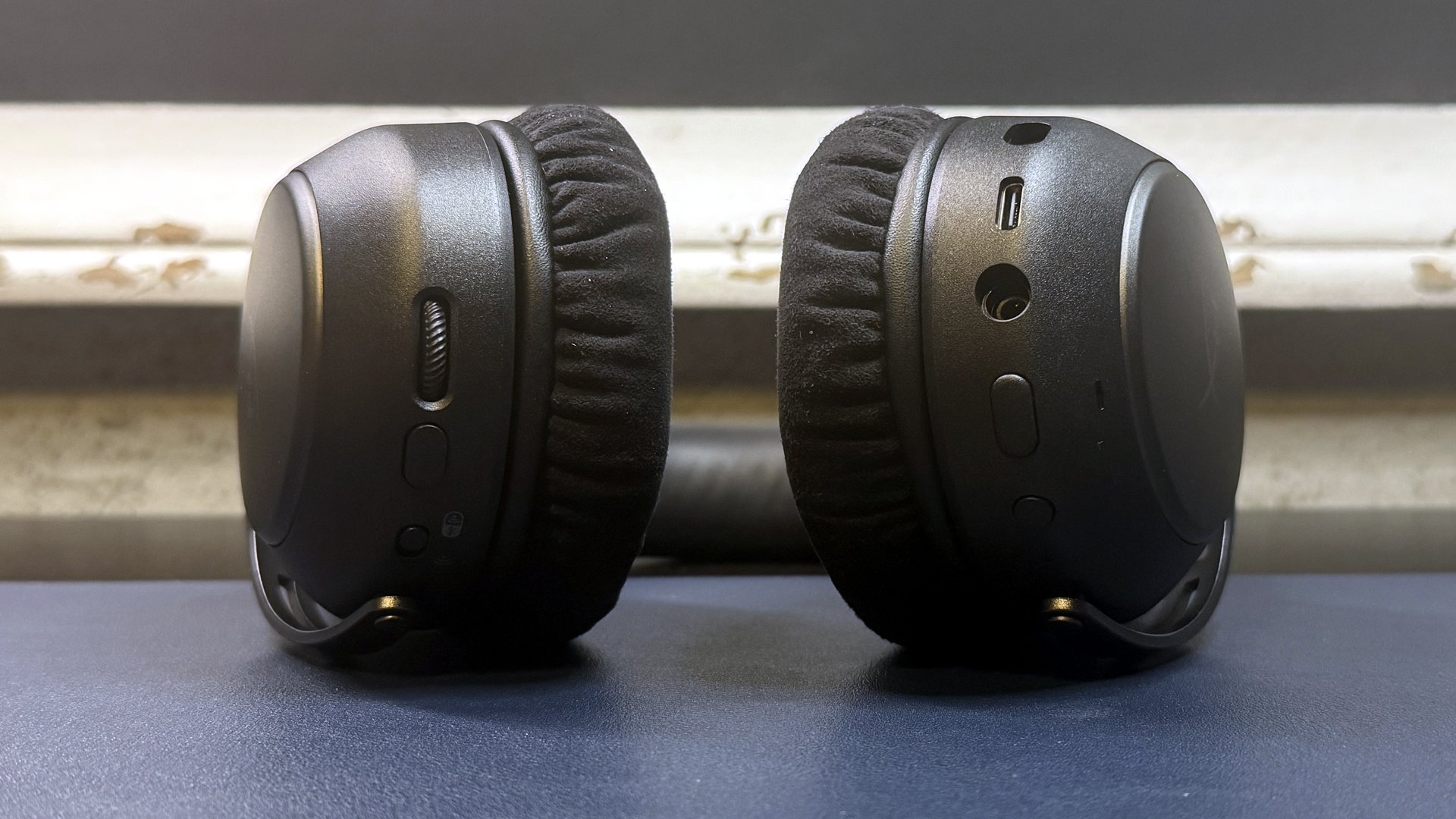
The Cloud Alpha 2 represents a fundamental redesign of the wireless platform. Instead of a simple USB dongle, HyperX includes a desktop base station that serves as both the 2.4GHz wireless receiver and a physical control hub. The base station features a large volume wheel with tap-to-mute functionality at its center, surrounded by six programmable buttons. It also provides 3.5mm line-in and line-out ports, plus a USB-C connection for the PC link.
This base station approach solves a persistent problem with wireless gaming headsets: the need to open software for basic adjustments. The physical controls allow users to adjust microphone volume, game/chat balance, mic monitoring, and EQ settings without touching the keyboard. The buttons are fully programmable and can map to keyboard functions, media keys, or macros.
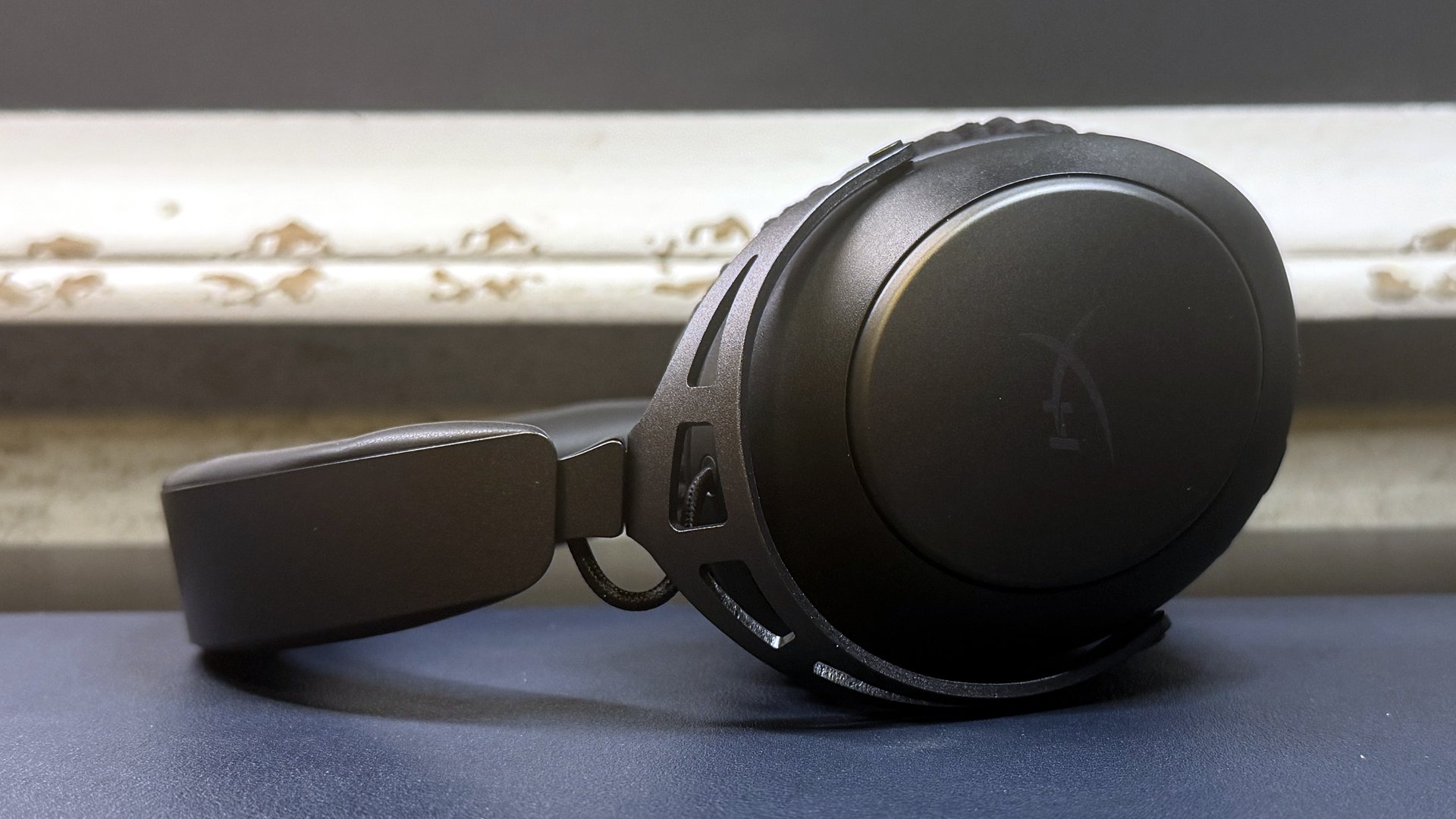
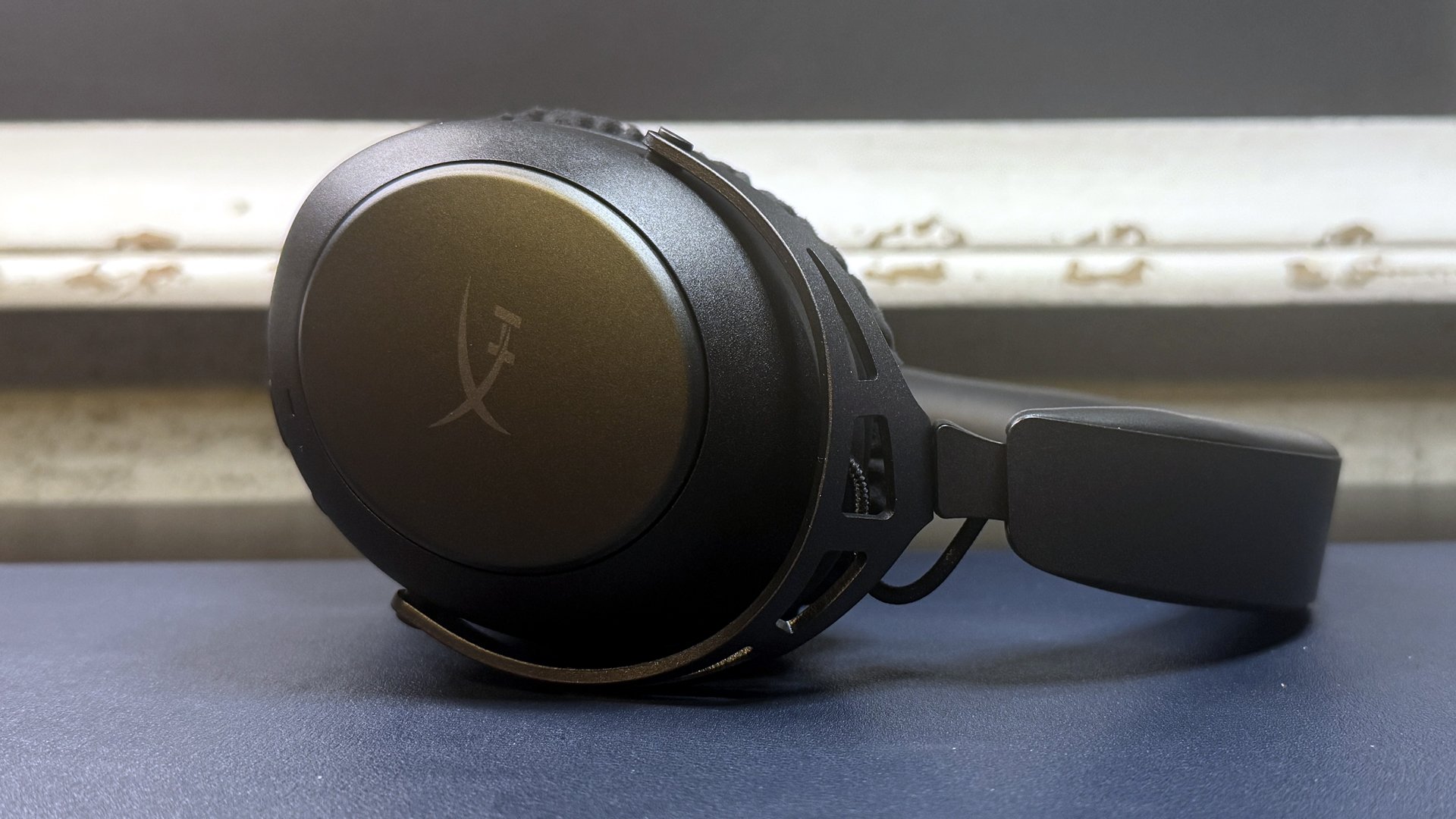
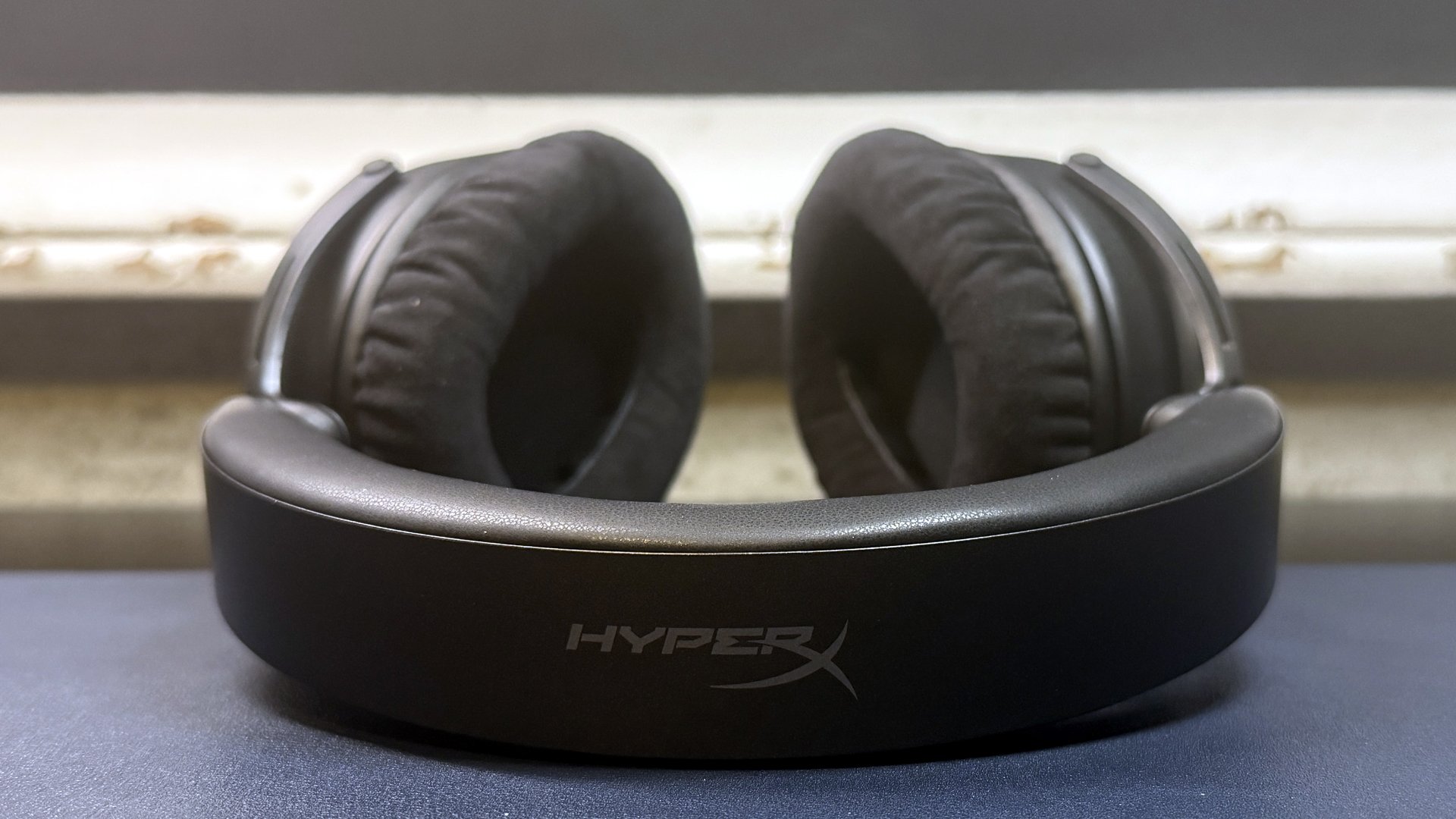
The headset itself follows the established Cloud series design language with dark gray stainless steel headband and aluminum forks. At 12.16 ounces (344.7g), it's slightly heavier than the Cloud III Wireless (12.05oz) and notably heavier than the wired Cloud III (10.86oz). The earcups use microfiber-covered padding with leatherette on the headband, providing comfort for extended sessions.
Connectivity options are comprehensive. The headset operates in two modes: "adapter mode" for 2.4GHz wireless only, and "dual mode" for simultaneous 2.4GHz and Bluetooth connections. This dual-mode capability allows users to mix sources—gaming audio from the PC via 2.4GHz while taking phone calls or listening to music from a mobile device via Bluetooth.
Technical Specifications and Audio Architecture
The Cloud Alpha 2 uses 53mm angled dynamic drivers with multi-layer, dual-chamber design. The frequency response spans 20-20,000 Hz, which is standard for gaming headsets but notably conservative compared to some premium competitors that push beyond 40kHz. Impedance sits at 64Ω, which is relatively high for a wireless headset and suggests the drivers are designed for detailed reproduction rather than easy-to-drive efficiency.
The dual-chamber driver design separates bass frequencies from mid and high ranges, theoretically reducing distortion and improving clarity. This is the same fundamental technology used in the original Cloud Alpha, though HyperX claims the angled driver positioning and wireless-specific tuning have been refined.
For microphone duties, the headset includes a detachable 10mm omnidirectional boom mic on a flexible gooseneck arm. The specification matches the Cloud III series mic, which delivers moderately full and warm vocal reproduction. Internal microphones in the earcups provide backup functionality for mobile use, though audio quality is notably thinner.
Battery performance varies by mode. In 2.4GHz-only adapter mode, the headset achieves 250 hours of runtime. Switching to dual-mode (2.4GHz + Bluetooth) cuts this to approximately 125 hours. Both figures still exceed most competitors—the HyperX Cloud III S Wireless manages 120 hours over 2.4GHz alone, while many premium headsets like the SteelSeries Arctis Nova Pro Wireless offer around 25 hours.
Audio Performance Analysis
The Cloud Alpha 2's audio quality sits in an awkward position: it's measurably better than the Cloud III series but falls short of other $300 headsets. The dual-chamber 53mm drivers deliver more powerful bass than the Cloud III, though it lacks the depth and resonance of planar magnetic drivers found in the Audeze Maxwell.
In gaming scenarios, the headset performs well. Virtual surround sound implementation is effective, allowing precise localization of footsteps, gunshots, and environmental cues. The soundstage, while constrained by the closed-back design, provides enough separation for competitive play. High-frequency details—critical for identifying enemy positions—are clear and distinct.
For music listening, the performance is less impressive. The sound profile leans heavily into the midrange with noticeable sibilance in upper mids. Tracks like Beyoncé's "Single Ladies" and Enya's "Orinoco Flow" reveal compression artifacts and a lack of dynamic range that shouldn't be present in a $300 headset. Bass is present but lacks the impact and texture audiophiles expect. Compared to the Audeze Maxwell or even Razer's BlackShark V3 Pro, the Cloud Alpha 2 sounds flat and compressed.
This performance gap matters because the Cloud III Wireless sells for significantly less while delivering similar audio character. Users paying the $300 premium are essentially buying the base station, dual-wireless capability, and extra battery life—not substantially better sound.
Software and Customization
HyperX's Ngenuity Beta software controls the Cloud Alpha 2. The "Beta" designation is important: the software remains unfinished, and settings don't save to the headset or base station permanently. Users must run the software in the background to maintain custom configurations, which defeats the purpose of a hardware control hub.
The software provides EQ customization with presets for music, gaming, and voice chat. It includes AI noise reduction, compressor, limiter, and boost filters for the microphone. Virtual spatial audio parameters can be adjusted for direction and distance. The base station's RGB lighting is also configurable here.
The beta status creates practical limitations. If you want to use the headset away from your primary PC—traveling, using a laptop, or connecting to a console—the Ngenuity software isn't available, and your custom settings won't persist. This is a significant oversight for a $300 wireless headset marketed as versatile.
Market Position and Competition
The Cloud Alpha 2 launches into a transformed wireless headset market. When the original Cloud Alpha Wireless debuted, its 300-hour battery life was revolutionary. Now, competitors have caught up in battery life while surpassing HyperX in audio quality.
The Audeze Maxwell remains the audio quality benchmark in this price range, offering planar magnetic drivers that deliver superior detail, bass response, and dynamic range. The Maxwell's 80-hour battery life is less than half the Cloud Alpha 2's, but the audio difference is substantial enough that most reviewers recommend it despite the battery trade-off.
Razer's BlackShark V3 Pro competes directly at the $300 price point with better audio tuning for gaming and music, though it sacrifices battery life (around 50 hours). SteelSeries Arctis Nova Pro Wireless offers hot-swappable batteries and a similar base station concept but at a much higher $350 price.
HyperX's own Cloud III S Wireless provides the same microphone quality and similar audio character for $100 less, albeit without dual-wireless connectivity or the base station. For users who don't need simultaneous 2.4GHz and Bluetooth, the value proposition favors the Cloud III series.
The Battery Life Question
The Cloud Alpha 2's 250-hour battery life remains its standout feature. In practical terms, this means charging the headset once every few weeks with typical daily use. The convenience cannot be overstated—users accustomed to weekly charging will find this liberating.
However, the dual-mode battery life of 125 hours is more relevant to the headset's core value proposition. Simultaneous connectivity is the primary new feature that distinguishes the Cloud Alpha 2 from its predecessor. Using it costs half the battery life, but 125 hours still exceeds most competitors' single-mode performance.
The question becomes whether this battery advantage justifies the $100 premium over the Cloud III S Wireless and the audio quality compromise compared to the Maxwell. For users who prioritize convenience and versatility over pure audio fidelity, the answer is yes. For audiophiles or competitive gamers seeking the best sound, the answer is likely no.
Final Assessment
The HyperX Cloud Alpha 2 Wireless succeeds as a successor by adding meaningful features—dual-wireless connectivity and a hardware base station—to an already strong battery life foundation. The build quality is premium, comfort is excellent, and the physical controls address real user pain points.
Where it stumbles is audio quality relative to price. The improvements over the Cloud III series are marginal, and competitors offer better sound for similar or lower prices. The beta software status is also concerning for a $300 product, especially when settings don't persist without the software running.
The Cloud Alpha 2 is a great gaming headset that excels at the specific demands of competitive play: clear positional audio, reliable wireless connectivity, and exceptional battery life. It's less compelling as an all-purpose audio device, where the midrange-heavy tuning and compression become more apparent.
HyperX has built a capable headset that will satisfy gamers who value convenience and battery life above all else. But in 2025, the wireless headset market demands more than just long runtime—it demands exceptional audio quality across all use cases. The Cloud Alpha 2 delivers the former but only meets expectations for the latter.
Comments
Please log in or register to join the discussion