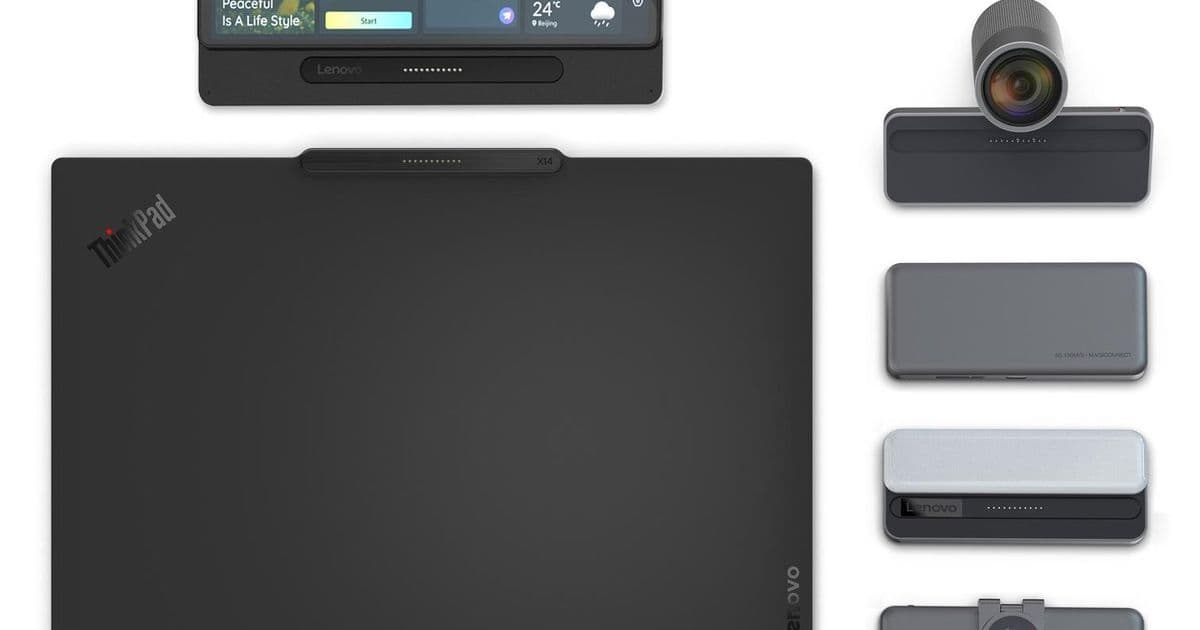
Lenovo's new ThinkPad model introduces Magic Bay support, allowing users to swap modular accessories like cameras, speakers, and storage devices.
Lenovo has unveiled its first ThinkPad laptop featuring Magic Bay support, a modular accessory system that allows users to attach and swap various components like cameras, speakers, and storage devices. This new ThinkPad model represents a significant evolution in Lenovo's approach to laptop customization and expandability.
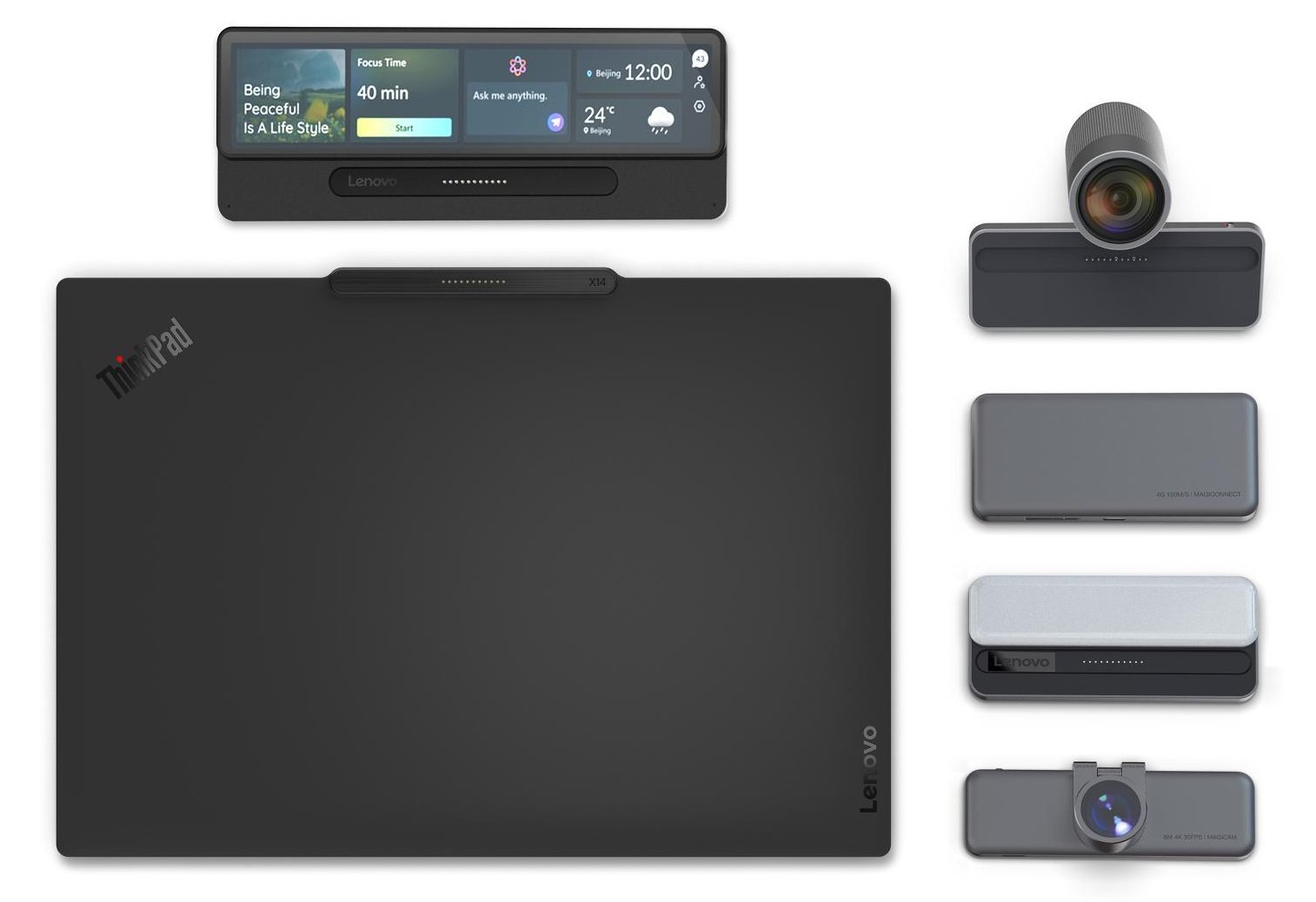
The Magic Bay system works through a magnetic attachment mechanism on the top of the laptop's display. Users can easily snap on different modules without needing to power down the device or use tools. This approach offers several advantages over traditional fixed-component designs:
- Flexibility: Users can choose which modules they need for specific tasks
- Upgradability: Components can be swapped out as technology improves
- Space efficiency: The laptop itself remains slim while offering expandability
- Customization: Users can configure their setup based on personal preferences
The initial lineup of Magic Bay modules includes:
- 4K webcam module: For enhanced video conferencing capabilities
- Premium speaker module: Delivering better audio than typical laptop speakers
- Mobile hotspot module: Providing cellular connectivity on the go
- Additional storage module: Expanding the laptop's storage capacity
- LED light module: Useful for video calls and content creation
This modular approach addresses several pain points that laptop users commonly face. Many users find themselves carrying external webcams, speakers, or other accessories. With Magic Bay, these components become integrated yet removable, reducing cable clutter and the need for separate devices.
From a technical perspective, the Magic Bay system appears to use a combination of magnetic alignment and pogo pin connectors for power and data transfer. This design allows for quick swapping while maintaining reliable connections. The system likely communicates with the laptop's operating system to recognize and configure new modules automatically.
For developers and IT professionals, the modular design offers interesting possibilities. Different modules could be deployed for specific use cases - a development team might use a webcam module for daily standups, then swap to a storage module for data-intensive tasks. Organizations could also standardize on certain configurations while allowing individual customization.
The introduction of Magic Bay on a ThinkPad is particularly noteworthy given the brand's reputation for durability and business-focused features. ThinkPads have traditionally emphasized reliability and performance over flashy features, making this move toward modularity somewhat surprising but potentially strategic.
This development also reflects broader trends in computing hardware. As devices become more powerful and compact, manufacturers are exploring new ways to add functionality without increasing size or weight. Modular systems like Magic Bay, Framework's laptop, and various smartphone mods represent different approaches to this challenge.
For existing ThinkPad users, the question of compatibility arises. The Magic Bay system appears to be specific to this new model, meaning users would need to purchase the new laptop to take advantage of the modular accessories. This could be a barrier for some, though the benefits of the system might justify the upgrade for others.
Looking ahead, the success of Magic Bay will likely depend on several factors:
- Module availability: A robust ecosystem of third-party modules would significantly enhance the system's value
- Pricing: The cost of modules compared to standalone accessories will influence adoption
- Reliability: The magnetic connection system needs to prove durable over time
- Software support: Seamless integration with operating systems and applications is crucial
The ThinkPad's introduction of Magic Bay support marks an interesting moment in laptop evolution. While modular phones have struggled to gain mainstream adoption, the laptop form factor might prove more amenable to modularity. The larger size allows for more robust connections, and users are generally more willing to customize their primary work devices.
As this technology develops, it will be worth watching whether other manufacturers adopt similar approaches or if Lenovo's Magic Bay becomes a unique selling point for their ThinkPad lineup. The concept certainly offers intriguing possibilities for both consumers and businesses looking for more flexible computing solutions.
Comments
Please log in or register to join the discussion