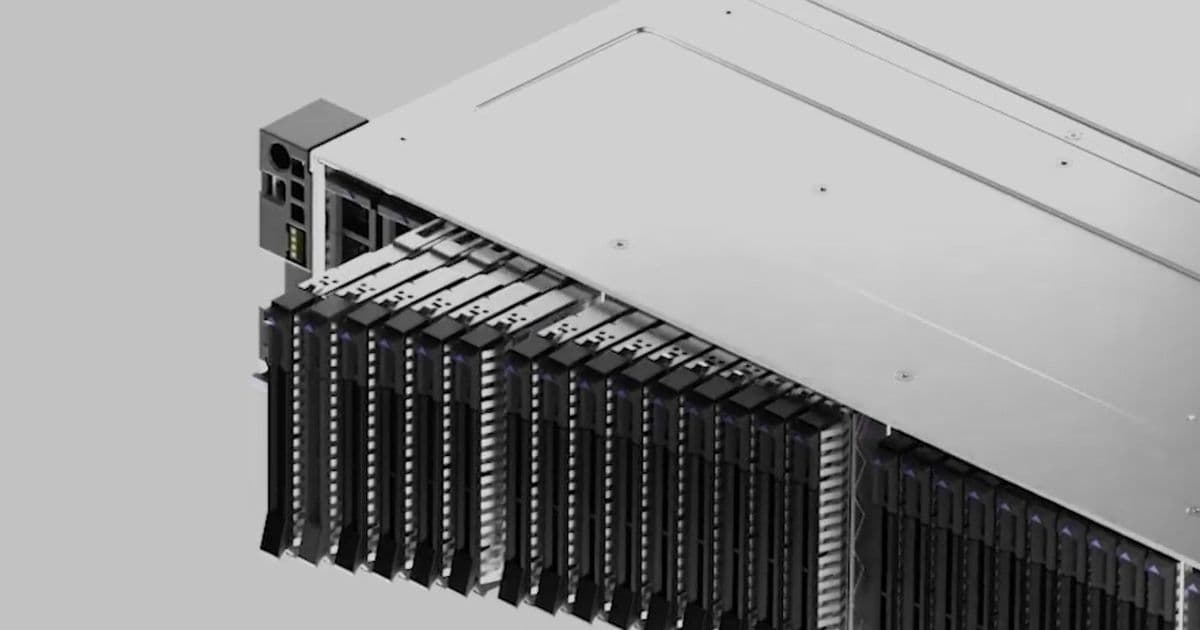
IBM's new FlashSystem lineup brings EDSFF drives, massive capacity up to 3.37PB, and AI-powered administration through FlashSystem.ai, with models ranging from 1U 12-drive to 2U 32-drive configurations supporting PCIe Gen4/Gen5 and multi-core CPUs.
IBM has unveiled its next-generation Storage FlashSystem lineup featuring the 5600, 7600, and 9600 arrays, bringing substantial capacity increases, performance improvements, and AI-powered administration capabilities to enterprise storage environments. The new systems leverage EDSFF (Enterprise and Datacenter SSD Form Factor) drives and fifth-generation FlashCore modules to deliver unprecedented storage density and performance.
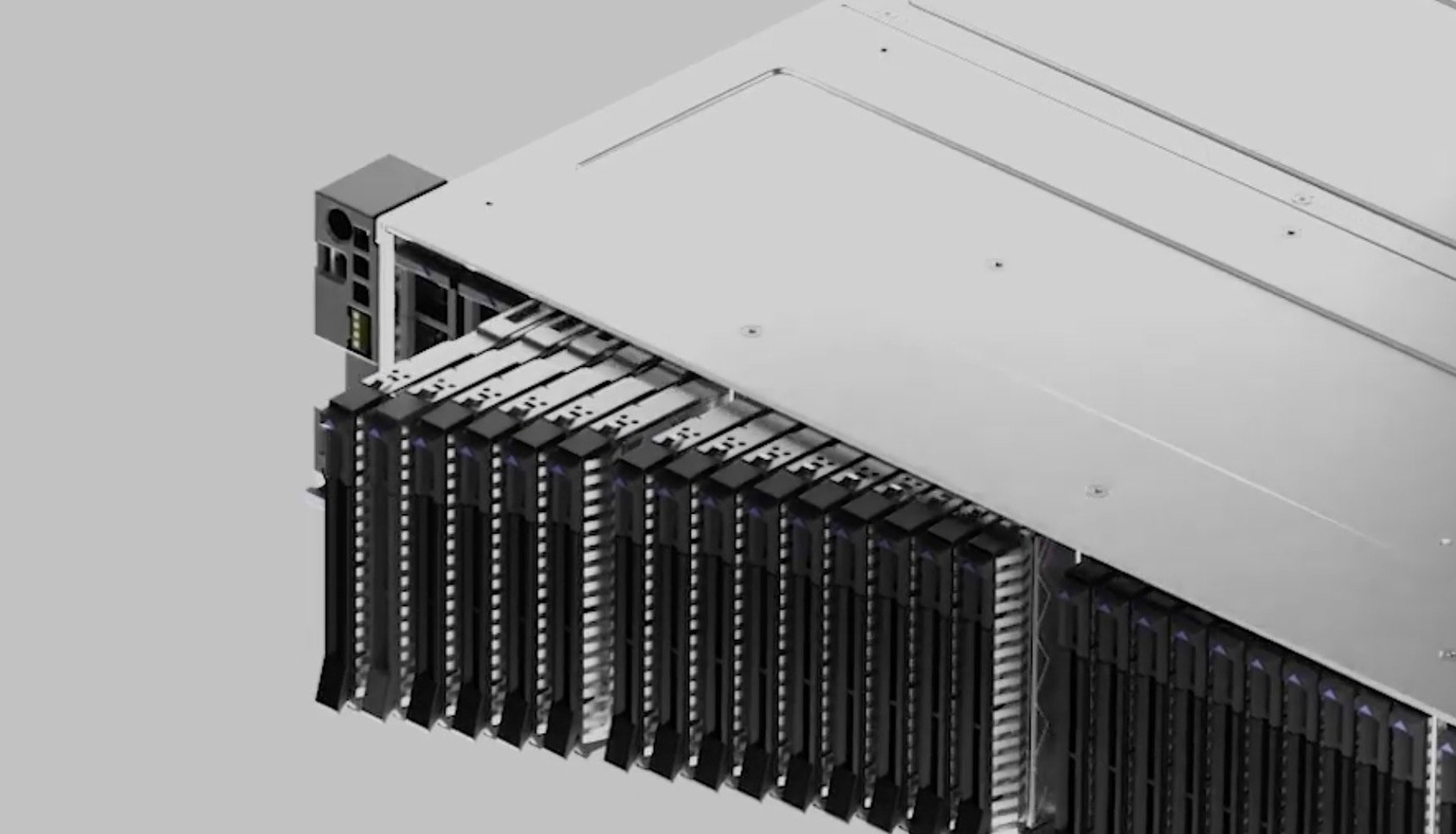
The New FlashSystem Lineup
The three new models represent different tiers of enterprise storage needs, each building upon the previous generation's capabilities while introducing significant architectural improvements.
IBM Storage FlashSystem 5600: Entry-Level Powerhouse
The FlashSystem 5600 serves as the entry point to the new lineup, featuring a compact 1U 12-drive enclosure design. What's particularly interesting about this model is its use of two 12-core Intel Xeon processors and PCIe Gen4 support, placing it firmly in the Intel Ice Lake generation for storage arrays.

IBM specifies the 5600 can support up to 633TB of raw capacity, delivering 30GB/s of read bandwidth and up to 2.6 million IOPS. This represents a significant leap in density for a 1U form factor, making it ideal for space-constrained environments that still require substantial storage performance.
IBM Storage FlashSystem 7600: Midrange Performance
Stepping up to the midrange, the FlashSystem 7600 features a 2U 32-drive enclosure with a notable architectural shift. IBM has moved to two 16-core AMD EPYC CPUs and adopted PCIe Gen5 for I/O operations. This combination of AMD EPYC processors and PCIe Gen5 represents a significant performance boost over the 5600.

The 7600 can support up to 1.68PB of raw capacity, delivering 55GB/s of read bandwidth and up to 4.3 million IOPS. The jump to AMD EPYC provides additional cores and PCIe lanes, while PCIe Gen5 doubles the potential bandwidth compared to the 5600's PCIe Gen4 implementation.
IBM Storage FlashSystem 9600: High-End Performance
At the top of the lineup sits the FlashSystem 9600, which shares the 2U 32-drive form factor with the 7600 but pushes performance even further. The key differentiator is the support for two 48-core AMD EPYC CPUs, providing substantial parallel processing capabilities for demanding workloads.
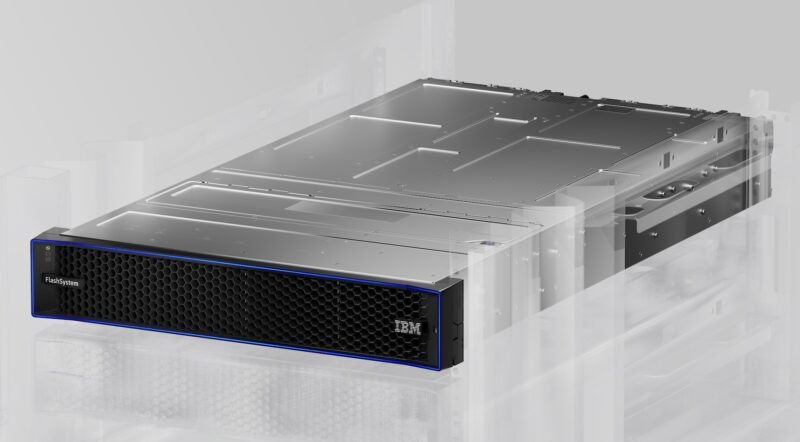
The 9600 can support up to 3.37PB of raw capacity, making it capable of handling massive datasets in a single chassis. Performance scales to 86GB/s of read bandwidth and up to 6.3 million IOPS, positioning it as a high-performance solution for the most demanding enterprise applications.
AI-Powered Storage Administration
Beyond the hardware improvements, IBM is introducing FlashSystem.ai, bringing agentic AI capabilities to storage administration. This represents IBM's response to industry pressure to demonstrate AI value across all product lines. The AI system is designed to automate routine maintenance tasks, potentially reducing administrative overhead and improving system reliability through predictive maintenance and automated optimization.
This AI infusion follows a broader industry trend where storage and networking vendors are incorporating AI capabilities to enhance their offerings. IBM's approach focuses on practical applications of AI for storage management rather than theoretical capabilities, addressing real-world administrative challenges faced by storage professionals.
Technical Architecture and Implications
The architectural choices across the lineup reveal IBM's strategy for different market segments. The 5600's Intel Ice Lake foundation with PCIe Gen4 provides a cost-effective entry point with respectable performance. The 7600 and 9600's AMD EPYC processors with PCIe Gen5 support indicate IBM's focus on high-performance computing environments where maximum throughput and IOPS are critical.
The use of EDSFF drives across all models suggests IBM is betting on this form factor's future in enterprise storage. EDSFF provides better density and potentially lower costs compared to traditional 2.5-inch SSDs, while the fifth-generation FlashCore modules likely offer improved endurance and performance characteristics.
Market Positioning and Competition
IBM's new FlashSystem lineup positions the company to compete directly with other enterprise storage vendors offering high-capacity, high-performance arrays. The combination of massive capacity in relatively compact form factors, combined with AI-powered management, addresses key enterprise requirements for scalability, performance, and operational efficiency.
The tiered approach allows customers to select the appropriate balance of capacity, performance, and cost for their specific needs, while the consistent use of EDSFF and FlashCore modules across the lineup provides some standardization benefits for mixed deployments.
Looking Forward
This announcement signals several important trends in enterprise storage. First, the continued push toward higher capacity in smaller form factors, driven by advances in NAND technology and storage architecture. Second, the integration of AI capabilities into storage management tools, reflecting the broader industry movement toward AI-enhanced infrastructure. Third, the architectural diversity with different CPU and I/O choices across the lineup, suggesting that one-size-fits-all approaches are giving way to more tailored solutions.
As enterprises continue to grapple with massive data growth and the need for efficient storage management, solutions like the new FlashSystem arrays that combine high capacity, strong performance, and intelligent management capabilities will likely see strong demand. IBM's AI infusion through FlashSystem.ai may prove to be a differentiator if it delivers on its promise of meaningful automation and optimization capabilities.
Comments
Please log in or register to join the discussion