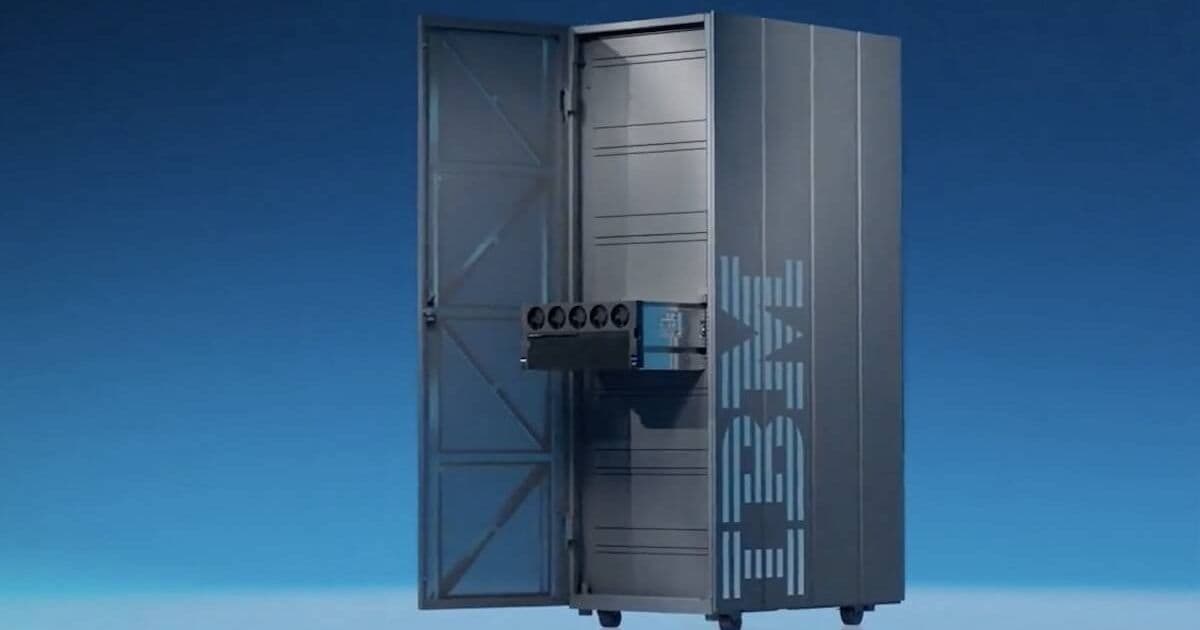
IBM's new Power11 processors promise up to 55% faster cores than their 2017-era Power9 predecessors and claim twice the performance per watt of comparable x86 systems. Key innovations include 'resource groups' for optimized utilization, an energy-saver mode, and unique resiliency features like dedicated hot-spare cores for 99.9999% uptime. The chips also integrate on-die AI accelerators, positioning Power11 as a contender in power-conscious data centers.
While the industry fixates on ever-higher core counts, IBM is charting a different course with its Power11 processors, emphasizing radical efficiency gains and rock-solid reliability over core density. Unveiled today, the latest generation of Big Blue's bespoke silicon targets enterprises where energy costs and uptime are paramount, claiming a decisive edge over x86 rivals.
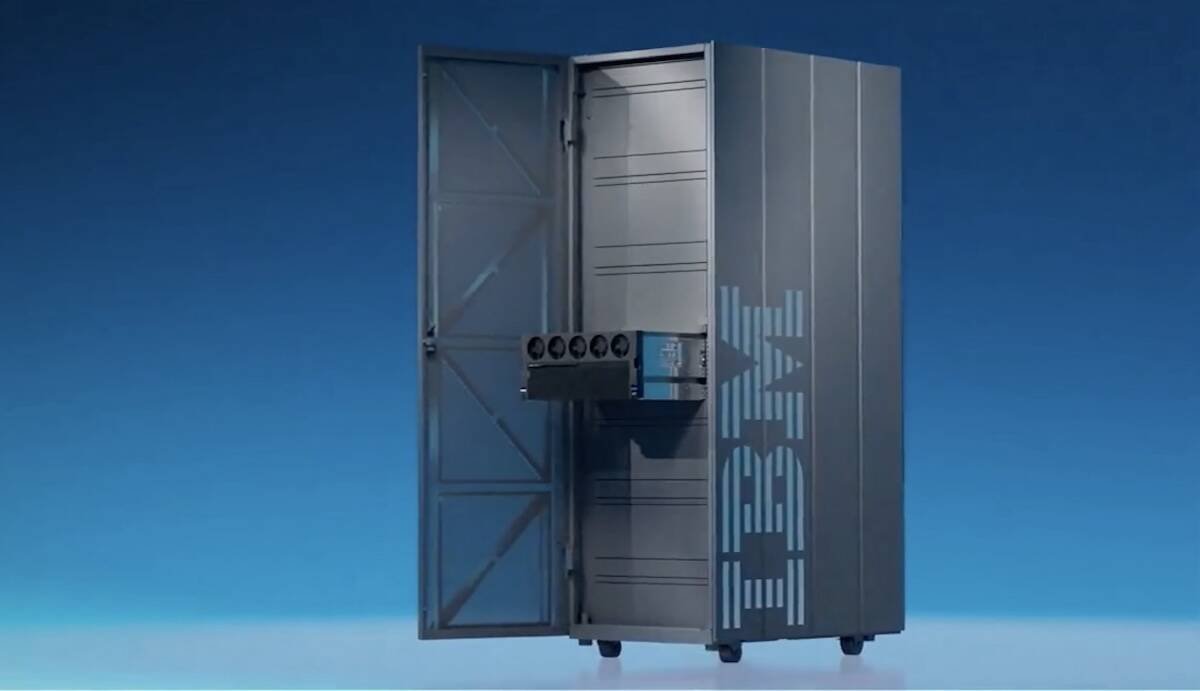
Performance and Efficiency: Doing More with Less
Power11 sockets top out at 30 physical cores, leveraging 8-way simultaneous multithreading (SMT) to present up to 240 threads per socket. While this core count lags behind the 192+ cores offered by modern AMD EPYC or Intel Xeon Scalable chips, IBM argues raw core numbers aren't the whole story. The company asserts Power11 delivers up to 55% faster cores than its 2017-era Power9 chips and, crucially, twice the performance per watt of comparable x86 platforms.
This leap stems from two key architectural choices:
- Resource Groups: A novel firmware-managed feature designed to maximize core utilization dynamically, minimizing idle power without sacrificing throughput.
- Energy Saver Mode: An optional operating mode that intelligently trades a marginal performance dip for a substantial 28% improvement in energy efficiency.
"In an era where power consumption and cooling constraints are increasingly defining data center capabilities, efficiency isn't just a bonus – it's the battleground," notes industry analyst Raj Patel. "IBM's focus here is pragmatic."
Resilience Engineered into Silicon
IBM continues to push its 'Enterprise Resiliency' narrative hard with Power11. The architecture is designed for 99.9999% (six-nines) uptime and supports zero-downtime maintenance. Key to this are:
- Hardware Redundancy: Systems feature hot-pluggable fans, power supplies, and I/O cards.
- Core Sparing: In high-end configurations like the E1180 node, one core per socket is reserved as a dedicated hot-spare. If an active core fails, workloads seamlessly shift to this spare with no interruption.
AI Acceleration: On-Die and On the Horizon
Acknowledging the pervasive AI wave, Power11 integrates on-chip AI accelerators capable of running both large and small language models. While IBM remains tight-lipped on specifics, these accelerators likely share DNA with those in its z17 mainframe processors. Later this year, IBM will also offer systems equipped with its discrete Spyre AI inference accelerator cards (75W, 128GB LPDDR5, 300 TOPS), positioning them against Nvidia's L4 but with significantly more memory.
The Power11 Lineup: From Scale-Up to Scale-Out
Available July 25th on-premises and in IBM Cloud, the initial Power11 systems include:
- E1180: The flagship 4U system, configurable as a single node or 4-node cluster. Each node houses four sockets (10, 12, or 16 cores each), 64 DDIMM slots (max 16TB DDR5), leveraging core-sparing.
- E1150: Another four-socket 4U system, but configurable with higher core counts per socket (16, 24, or 30 cores) for up to 120 cores total, also supporting 16TB RAM.
- S1124/S1122/L1124/L1122: Dual-socket systems ranging from 4U (S1124, max 8TB RAM, 24 U.2 drives) down to 2U (S1122, max 4TB RAM, 16/24 U.2 drives). The 'L' variants (L1122/L1124) are Linux-only, offering a lower-cost entry point.
The Efficiency Imperative
IBM's Power11 strategy represents a clear bet: that raw computational muscle must be tempered by intelligent power management and unwavering reliability for the modern enterprise. By eschewing the core-count arms race and doubling down on efficiency and resilience, IBM aims to carve out a vital niche in high-stakes environments where downtime is unthinkable and the electricity bill is a critical KPI. The true test will be whether this value proposition resonates strongly enough to sway workloads from the dominant x86 ecosystem.
Source: Based on reporting from The Register (https://www.theregister.com/2025/07/08/ibm_claims_x86_beating_efficiency/) and IBM product disclosures.
Comments
Please log in or register to join the discussion