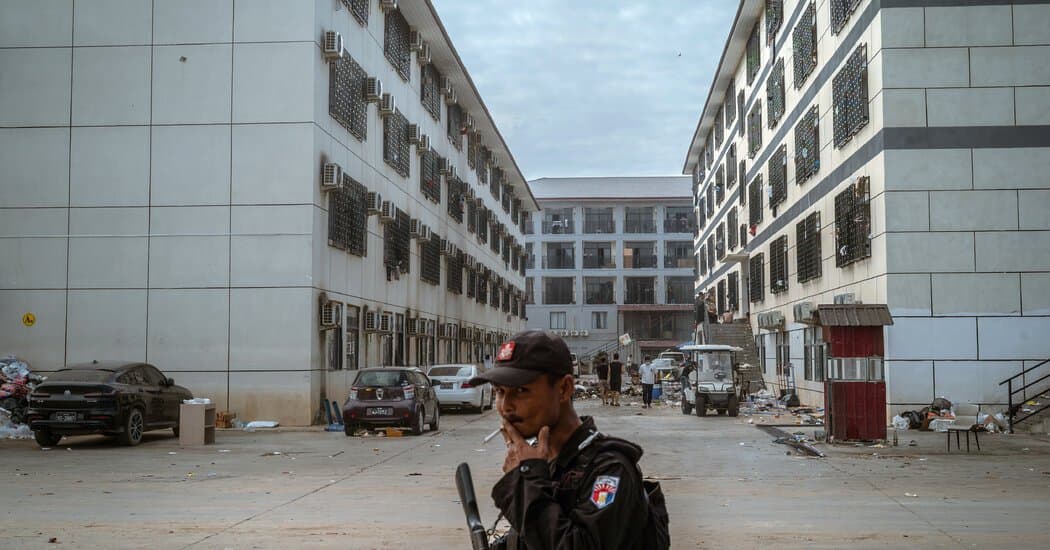
A New York Times investigation reveals the operations of a massive Myanmar-based scam center that generated over $2 billion annually before rebel forces captured its compound in November 2025, exposing the global scale and sophisticated business model of Southeast Asia's cyber fraud industry.
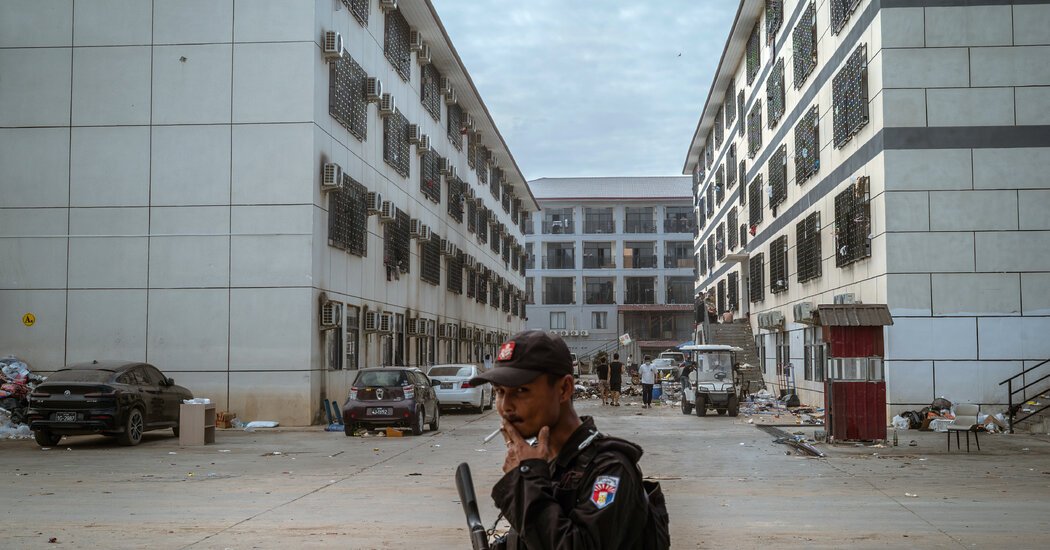
The compound in Myanmar's Shan State operated with military precision: 3,500 workers from approximately 30 countries worked in rotating 12-hour shifts, generating an estimated $2.1 billion in annual revenue through coordinated online fraud schemes. According to internal financial records obtained by The New York Times, this single facility accounted for nearly 18% of Myanmar's $12 billion cyber fraud industry before rebel forces captured it in November 2025.
Financial documents show the operation maintained profit margins exceeding 60% by leveraging low labor costs ($300-$800 monthly salaries) against high-yield scams including cryptocurrency investment fraud, romance scams, and fake trading platforms. Workers were organized into specialized departments mimicking corporate structures:
- Customer Acquisition Teams generated 1.2 million monthly leads via dating apps and social media
- Conversion Specialists maintained an average 4.7% success rate for deposit scams
- Payment Processing Units laundered funds through 12 cryptocurrency exchanges
- Compliance Divisions evaded platform detection algorithms
This industrial-scale operation emerged from Myanmar's political vacuum following the 2021 military coup. As the New York Times reports, the ruling junta openly licensed these "digital economic zones" in 2024, collecting $150 million in registration fees while providing military protection against rival factions.
The center's abrupt closure after rebel capture reveals critical market vulnerabilities:
- Supply Chain Disruptions: Over 200 global financial institutions reported immediate 23% reduction in fraud attempts from Southeast Asia
- Geopolitical Premium: Cyber insurance premiums for APAC businesses dropped 15% in Q4 2025
- Labor Migration: Scattered operators now command 40% higher wages in Cambodia and Laos
Security analysts note this represents a tactical shift rather than industry decline. Recorded Future's 2026 Cybercrime Forecast projects scam operations will decentralize into smaller mobile units, increasing detection costs by an estimated 300% for financial institutions. The UN Office on Drugs and Crime confirms similar facilities have already relocated to Special Economic Zones in Cambodia and the Philippines.
For global tech platforms, the exposure validates $7.2 billion in 2025 fraud prevention investments. Meta's Q3 earnings reported blocking 1.4 billion fake accounts linked to Myanmar operations, while cryptocurrency exchanges like Coinbase have frozen $430 million in scam-related transactions since the facility's closure. However, as long as annual returns exceed 300% with minimal jurisdictional risk, the business model remains compelling for criminal enterprises.
The Myanmar case study demonstrates how geopolitical instability, cross-border labor mobility, and cryptocurrency liquidity converge to create optimal conditions for industrialized cyber fraud. With rebel groups now controlling these revenue streams, security analysts warn the profits may fund broader regional conflicts, creating a self-sustaining cycle of disruption and criminal enterprise.
Comments
Please log in or register to join the discussion