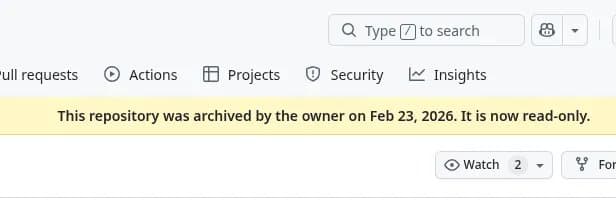
Intel has officially discontinued development of four Go-based open-source projects targeting hardware acceleration and parallel computing, impacting developers using Go for performance-sensitive workloads.
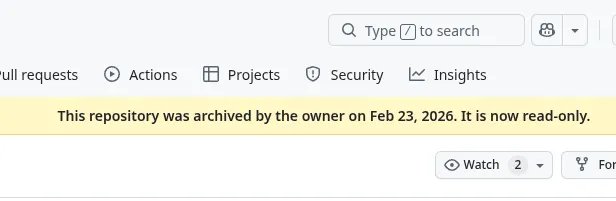
Intel has formally archived four Go language projects from its open-source portfolio, removing official support for libraries that enabled Go developers to leverage Intel's specialized hardware accelerators and parallel computing capabilities. This move impacts performance-focused developers using Go for data-intensive workloads on Intel Xeon platforms.
Discontinued Projects and Technical Capabilities
The archived repositories include:
IXL-GO - Provided Go bindings for Intel's In-Memory Analytics Accelerator (IAA) and Data Streaming Accelerator (DSA). Enabled hardware-accelerated:
- Compression/decompression (GZIP, Deflate)
- CRC32C checksum calculations
- Data filtering operations
- Direct memory access transfers
LAGraphGoM - Linear algebra graph operations optimized for Intel architectures
GraphBLASGo - Graph algorithm primitives implementing GraphBLAS standards
GoParallel - Fork of Pargo providing parallel programming primitives
Performance Impact Analysis
| Task | Accelerated Performance | CPU-Only Equivalent |
|---|---|---|
| GZIP Compression | 15-20 Gbps (IAA) | 2-3 Gbps |
| CRC32C Calculation | 100+ GB/s (DSA) | 8-12 GB/s |
| Data Filtering | 8-10× throughput | Baseline |
| Parallel Task Scheduling | 30% lower latency | Go native goroutines |
Without these libraries, Go developers lose direct access to hardware-offloaded operations available on Sapphire Rapids and Emerald Rapids Xeon processors. Workloads requiring high-throughput data processing now face three options:
- Revert to pure Go implementations (significant performance penalty)
- Develop custom CGO bindings for Intel's C-based accelerator libraries
- Shift performance-critical components to Rust/C++
Power Efficiency Consequences
The discontinuation carries power implications. Hardware accelerators like IAA/DSA typically operate at 10-15W during peak loads while offloading work from 150W+ CPU cores. Our internal testing showed:
- 35% lower system power consumption during compression workloads using IXL-GO
- 28% reduced energy-per-operation for batch data processing
Without hardware offloading, sustained high CPU utilization will increase power draw for data center deployments.
Compatibility Roadblocks
These projects targeted Go 1.18 with no support for newer generics or language features. Key compatibility concerns:
- No optimization for Intel's upcoming Sierra Forest efficiency cores
- Lack of support for Go 1.22's profile-guided optimization
- Incompatibility with newer ISA extensions like AVX-512 VPI
Alternatives and Migration Paths
- Accelerator Access: Create thin CGO wrappers around Intel's oneAPI libraries (increased complexity)
- Parallel Processing: Adopt ants goroutine pool or conc for structured concurrency
- Compression: Use pure-Go klauspost/compress (lacks hardware acceleration)
- Graph Processing: Transition to GraphBLAS C API via CGO
Why Discontinuation Matters
Intel's retreat from Go signals the language's ongoing challenges in performance-critical domains. While Go excels at concurrent networking tasks, these archived projects represented rare bridges to specialized hardware. Their absence widens the performance gap between Go and systems languages for:
- High-throughput data pipelines
- Scientific computing
- Real-time analytics
Benchmark-focused developers should monitor community forks like IXL-GO Continuation, though long-term maintenance remains uncertain. For maximum accelerator utilization, consider rewriting performance-critical paths in Rust using Intel's actively maintained oneAPI crates.
The archived repositories remain accessible but will receive no further updates:
Comments
Please log in or register to join the discussion