
Intel requires at least 7,467 MT/s LPDDR5X memory for Panther Lake chips to properly display Arc B370/B390 integrated GPUs in Task Manager, preventing OEMs from downgrading performance through slower RAM.
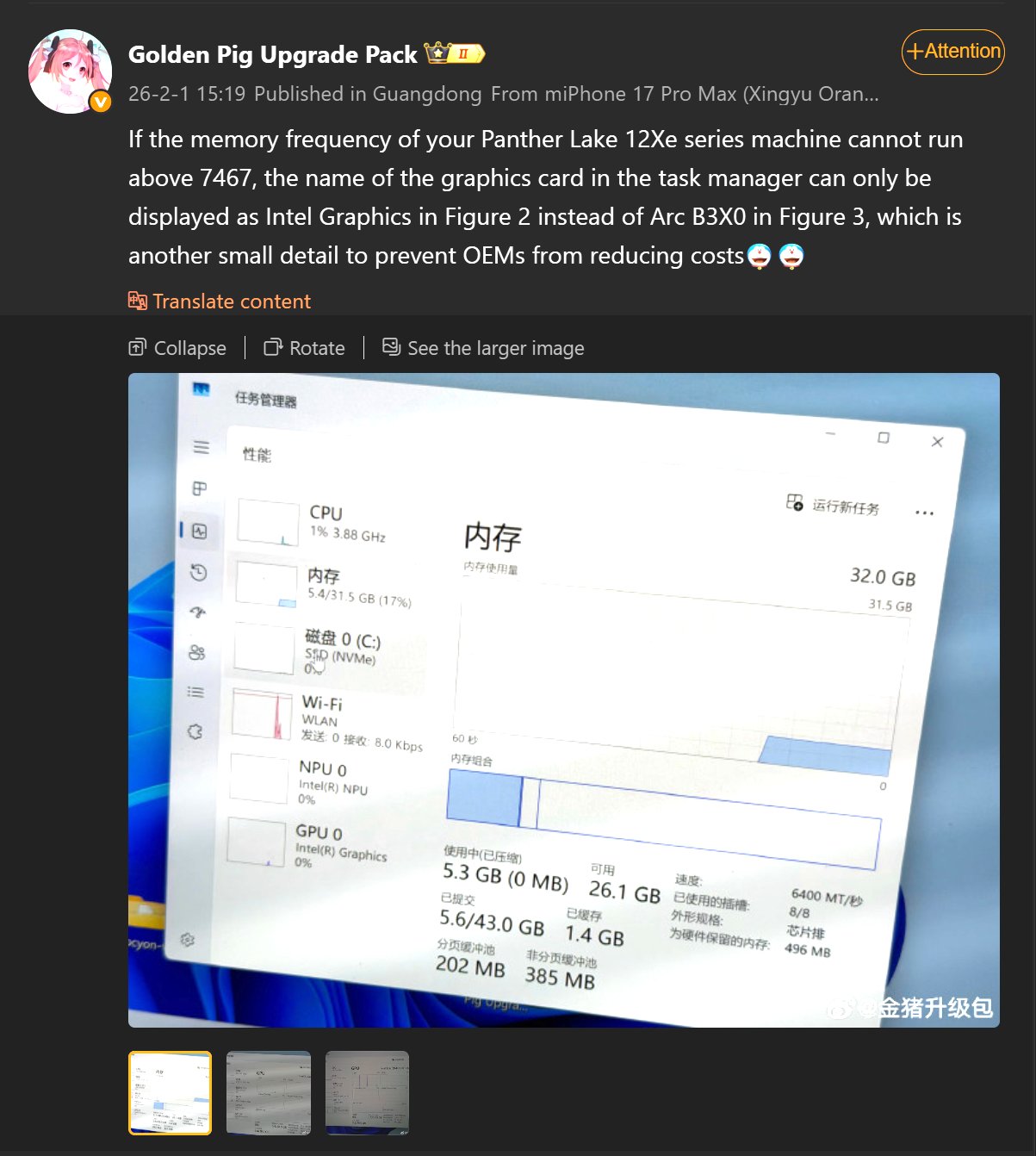
Intel has implemented a strict memory speed requirement for its upcoming Panther Lake processors, mandating that high-end SKUs ship with at least 7,467 MT/s LPDDR5X RAM to properly showcase their Arc B370 and B390 integrated graphics capabilities. According to popular leaker Golden Pig Upgrade, this requirement ensures that the impressive iGPU performance Intel has developed won't be undermined by cost-cutting measures from OEMs.
The Memory Speed Mandate
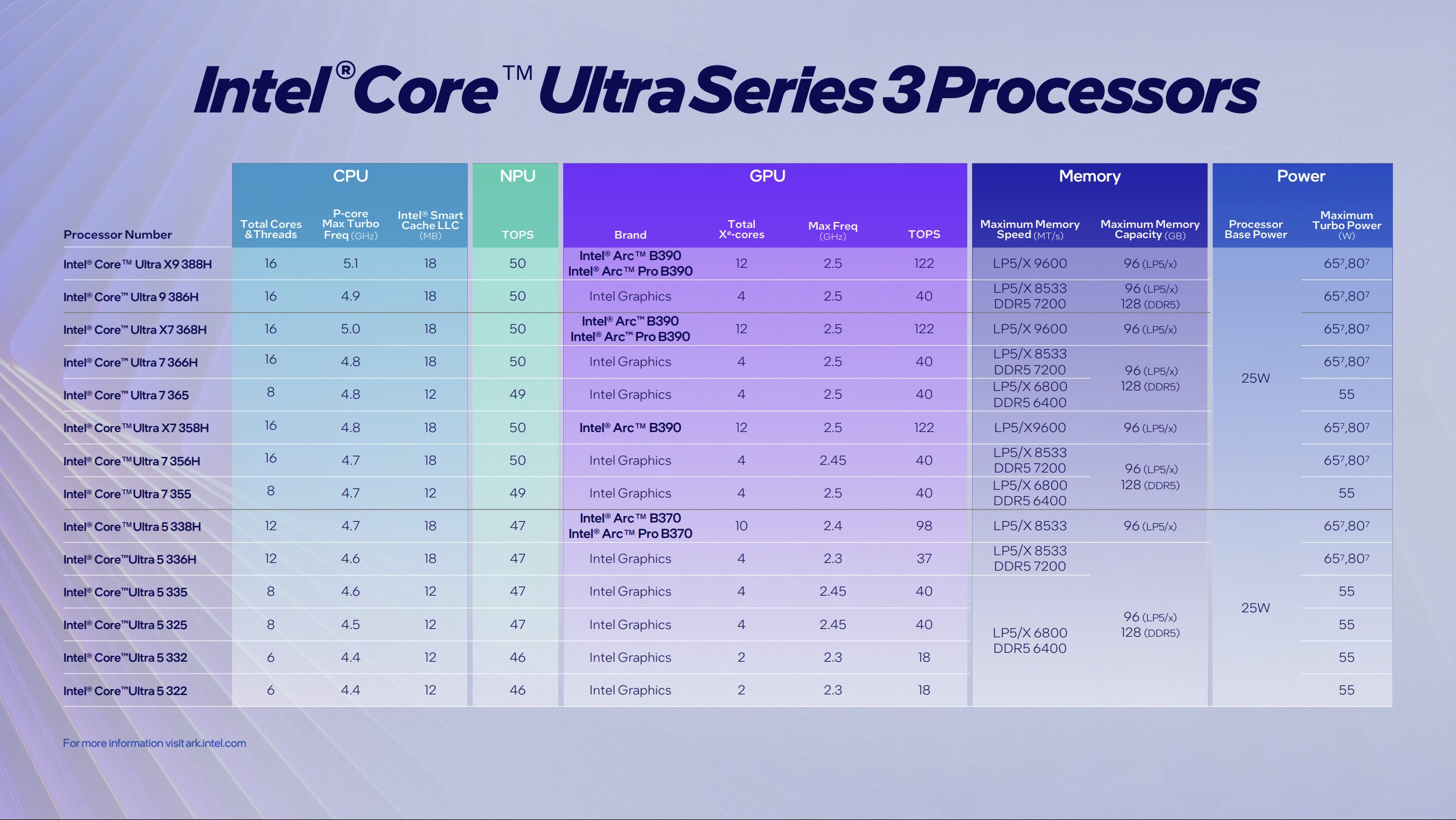
The requirement specifically targets the Arc B370 and Arc B390 integrated GPUs found in premium Panther Lake chips. If systems ship with memory slower than 7,467 MT/s, these GPUs will be relabeled as generic "Intel Graphics" in Windows Task Manager, even if the hardware itself contains the full 12 Xe3 GPU cores available in the Arc B390 configuration.
This labeling change applies to flagship models like the Core Ultra X9 388H, which features the Arc B390 iGPU, as well as the Core Ultra X7 368H and Core Ultra X7 358H. The midrange Core Ultra 5 338H, powered by the Arc B370 with 10 Xe cores, falls under the same requirement.
Why This Matters
Integrated graphics performance is heavily dependent on memory bandwidth since they share system RAM rather than having dedicated VRAM. Slower memory directly impacts the bandwidth available to the iGPU, which can significantly affect gaming performance and other graphics-intensive tasks.
Intel's approach serves multiple purposes:
- Performance Protection: Ensures customers receive the full iGPU capabilities they paid for
- Anti-Piracy Measure: Functions similarly to DRM by preventing unauthorized downgrades
- Quality Control: Helps maintain consistent performance across different OEM implementations
Market Context and Implications
The timing of this mandate is particularly relevant given current market conditions. RAM prices have been soaring, creating strong incentives for manufacturers to cut costs wherever possible. Smaller OEMs might be tempted to equip systems with slower memory to reduce expenses, potentially compromising the user experience.
By setting this minimum requirement, Intel is essentially creating a quality gate that prevents such cost-cutting measures from affecting the core selling point of Panther Lake processors. The company wants to ensure that the significant gains made in the graphics department aren't undermined by hardware configurations that don't match the marketing claims.
Technical Considerations
While the relabeling in Task Manager might seem like a purely cosmetic change, it reflects a deeper technical reality. Integrated graphics rely on shared memory bandwidth, and slower RAM can create bottlenecks that prevent the iGPU from reaching its full potential. This isn't just about marketing—it's about maintaining the performance characteristics that make Panther Lake competitive.
Most major OEMs already work closely with Intel to ensure their products meet specifications, but this mandate provides an additional safeguard against corner-cutting. It's particularly important for ensuring consistency across the entire ecosystem, from large manufacturers to smaller players who might otherwise slip under the radar.
Panther Lake represents one of Intel's most significant releases in recent years, with substantial improvements in graphics performance being a key differentiator. This memory requirement demonstrates how seriously Intel is taking the protection of its technological investments and customer experience.

Comments
Please log in or register to join the discussion