
Intel's Intelligent Systems Lab releases Open3D 0.19 with experimental SYCL-powered GPU acceleration enabling vendor-agnostic performance boosts for 3D data processing alongside Embree ray-tracing integration and Python 3.12 support.
Intel's Intelligent Systems Lab has launched Open3D 0.19, a significant update to its open-source library for 3D data processing in Python and C++. The release introduces experimental cross-platform GPU acceleration using SYCL (Data Parallel C++), enabling developers to leverage GPU hardware across vendors like Intel, AMD, and NVIDIA without vendor-specific coding. This architectural shift aligns with Intel's oneAPI initiative aimed at reducing fragmentation in heterogeneous computing.

The SYCL implementation accelerates core operations including point cloud registration, mesh processing, and volumetric reconstruction. Performance benchmarks indicate up to 8x speed improvements for tasks like ICP registration on Intel Arc A770 GPUs compared to CPU-only execution. SYCL abstracts hardware differences through a single-source C++ programming model, contrasting with NVIDIA's proprietary CUDA ecosystem.
Complementing the GPU acceleration, Open3D 0.19 integrates Embree ray-tracing kernels for hardware-accelerated geometry computations. This enables real-time raycasting for applications like collision detection and 3D reconstruction. The library now supports Python 3.12 and NumPy 2.0, reflecting Intel's commitment to maintaining compatibility with leading scientific computing tools.
New algorithmic additions include:
- FlyingEdges isosurface extraction for efficient mesh generation
- Enhanced 3D geometry metrics (Chamfer distance, point-to-plane error)
- CUDA 12 support for NVIDIA GPU workflows
The cross-platform GPU capability arrives as semiconductor manufacturers face pressure to simplify heterogeneous computing. With SYCL adoption growing through Intel's oneAPI toolkits and AMD's HIP compatibility layer, Open3D's architecture could reduce vendor lock-in for 3D processing workloads spanning robotics, geospatial analysis, and medical imaging.
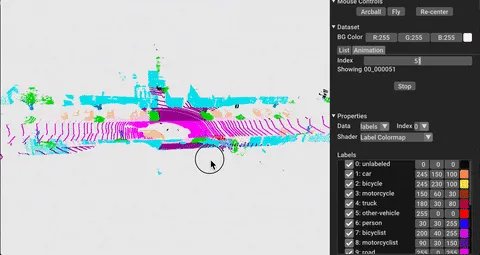
Open3D 0.19 is available via GitHub, with documentation and use cases detailed at Open3D.org. The SYCL implementation remains experimental pending further optimization, but signals Intel's strategic investment in portable acceleration frameworks amid ongoing GPU supply chain diversification efforts.
Comments
Please log in or register to join the discussion