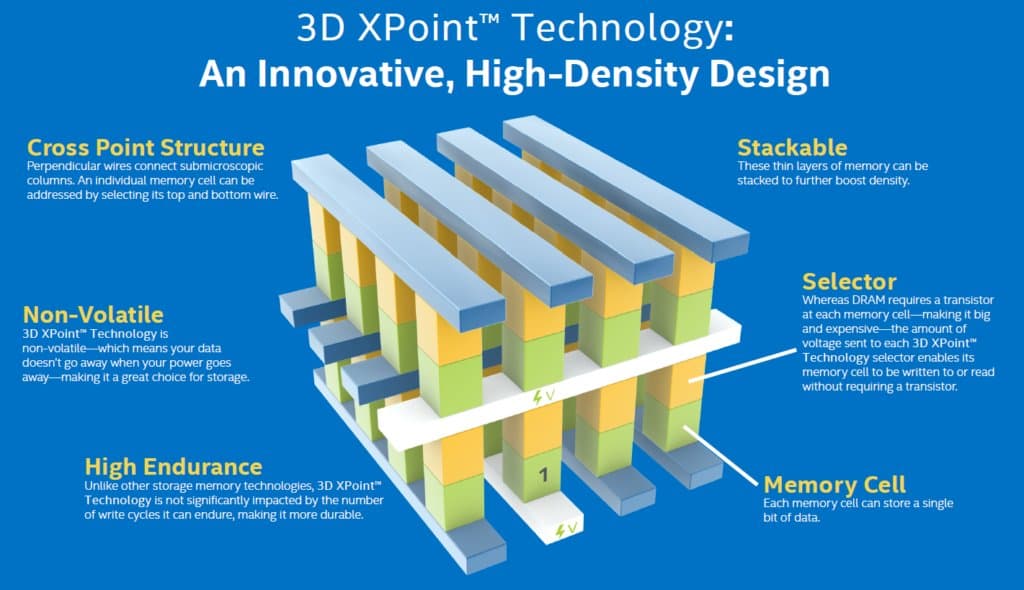
Despite Intel's discontinuation of Optane technology in 2022, the 3D XPoint-based storage solution remains a standout in professional computing for its unmatched low latency, exceptional durability, and consistent performance. This article examines what made Optane unique, its technical advantages over traditional NAND SSDs, and its current status in the market.
Intel Optane storage technology represented a significant leap forward in storage performance when it was introduced in late 2017. Based on the revolutionary 3D XPoint memory technology co-developed by Intel and Micron, Optane SSDs like the P4800X and P5800X offered characteristics that bridged the gap between traditional DRAM and NAND flash storage.
The technology's unique architecture provided several key advantages that made it stand out in a crowded storage market. Unlike conventional NAND-based SSDs, Optane drives delivered ultra-low latency, exceptional durability, and consistent performance even under heavy workloads. These characteristics made Optane particularly valuable for professional applications where performance and reliability were critical.
One of Optane's most impressive features was its durability. While consumer NAND SSDs typically offered 0.1-0.35 drive writes per day (DWPD), and professional NAND drives ranged from 1-10 DWPD, Optane drives delivered 30 DWPD for the first generation and an astonishing 100 DWPD for the P5800X. This made them ideal for high-write environments where other drives would quickly degrade.
Performance-wise, Optane excelled in latency measurements. The P5800X achieved read latencies around 25 microseconds for 4K random reads, compared to 90-110 microseconds for competing NAND drives. This represented more than a 300% improvement in response time, allowing data to reach the CPU significantly faster while reducing processor wait times.
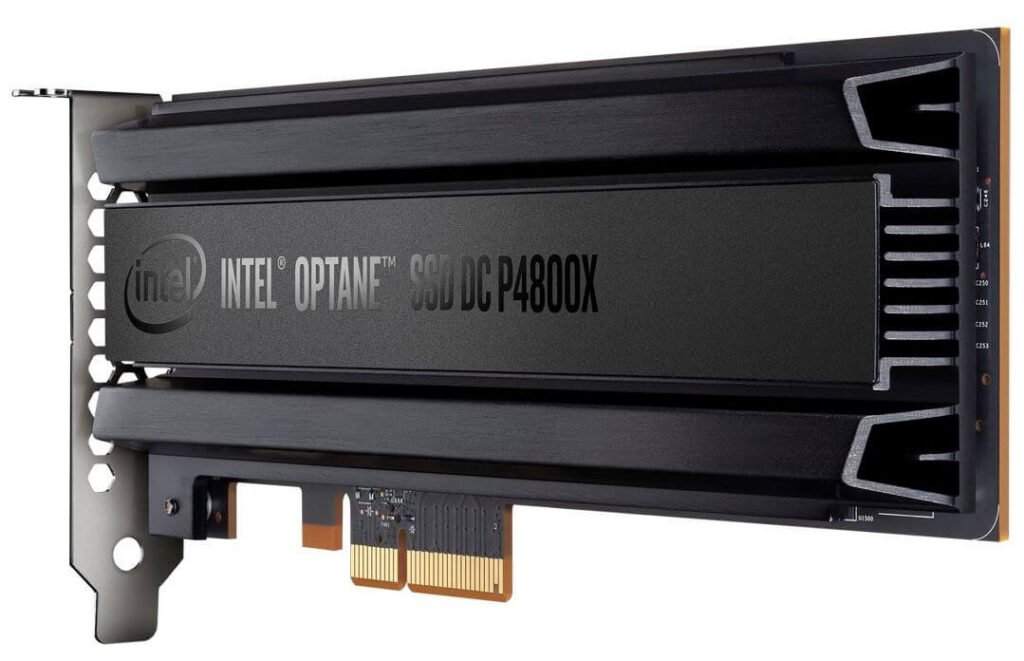
Another key advantage was write consistency. Traditional NAND SSDs rely on DRAM cache and additional fast flash to manage writes, as they can only write to empty 4K pages. When these resources fill up, write performance degrades until garbage collection frees up space. Optane, being byte-addressable rather than page-based, could overwrite data directly, maintaining maximum write performance even under continuous heavy loads.
Despite these advantages, Optane faced challenges including high cost, limited capacity compared to NAND drives, and rapid improvements in NAND technology. The introduction of Compute eXpress Link (CXL) also promised to change the storage landscape by providing alternative high-performance memory solutions.
In July 2022, Intel announced it would discontinue further development of Optane technology as part of its IDM 2.0 strategy shift, effectively exiting the memory business. This decision marked the end of an era for a technology that had pushed the boundaries of what was possible in storage.
However, Optane products remain available in both SSD and NV-DIMM (PMEM) form factors. Notably, Intel released the Optane Persistent Memory NV-DIMM series 300 in early 2023 to support the 4th generation of Intel Scalable CPUs, codenamed Sapphire Rapids. This indicates that while innovation has ceased, the technology will continue to serve specialized markets for the foreseeable future.

For organizations with workloads that benefit from Optane's characteristics—such as Ceph (WAL and Caching), ZFS (ZIL and SLOG), high-performance databases, VDI environments, and vSAN caching—the technology remains a compelling option despite the discontinuation of new development.
The story of Intel Optane serves as a reminder that not all revolutionary technologies achieve long-term commercial success, even when they offer genuine technical advantages. As NAND technology continues to improve and prices fall, the market for specialized memory solutions like Optane will likely shrink, but its impact on pushing the boundaries of storage performance will be remembered.
For more information on Optane technology and its specifications, you can visit Intel's 3D XPoint technology page or check the Intel Optane SSD specifications. For insights into the future of memory technology, explore information about Compute eXpress Link (CXL).
Comments
Please log in or register to join the discussion