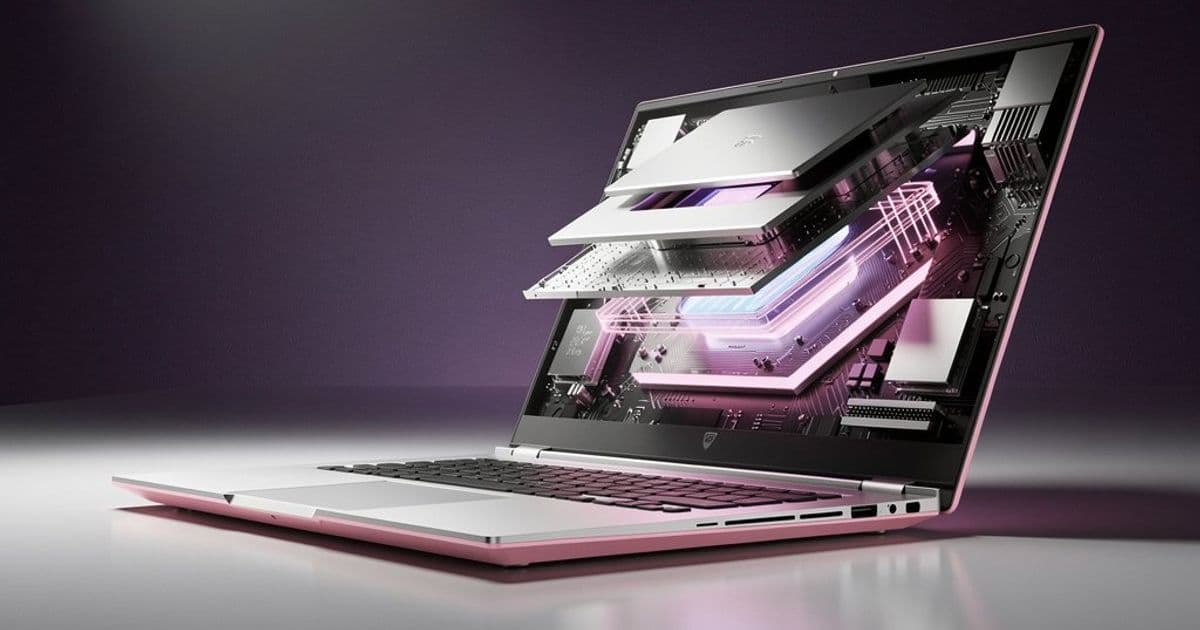
Intel has upstreamed the missing Graphics System Controller firmware for Panther Lake, completing the Linux firmware puzzle for the upcoming Core Ultra Series 3 laptops.
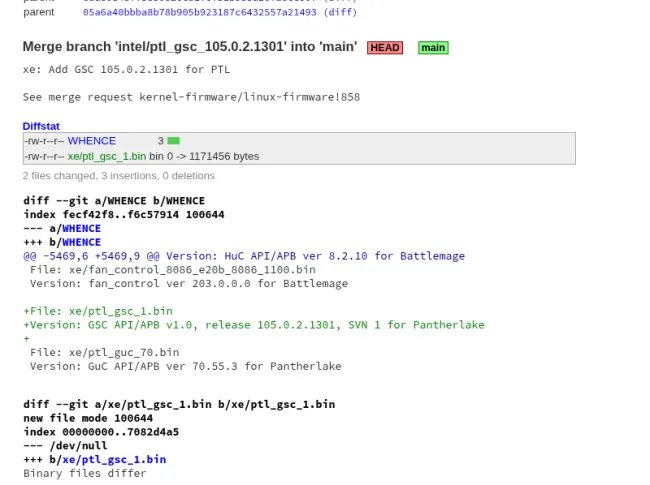
Intel has finally published the GSC (Graphics System Controller) firmware for Panther Lake to the linux-firmware.git repository, filling a critical gap in Linux support for their upcoming Core Ultra Series 3 mobile platform. This firmware blob is essential for the Intel Graphics System Controller, which manages various low-level graphics and system functions on the die.
The Firmware Puzzle Pieces
Panther Lake represents Intel's next-generation mobile silicon, and getting Linux support ready for launch requires multiple firmware components working in concert. The GSC firmware joins previously released GuC (Graphics Microcontroller) and DMC (Display Microcontroller) firmware that Intel had already pushed upstream. The GSC itself handles critical system-level graphics tasks, including power management, display initialization, and hardware state management that must be initialized before the main graphics driver can take over.
Without this firmware, the Intel graphics driver on Linux cannot properly initialize the display subsystem or manage power states on Panther Lake hardware. The linux-firmware repository serves as the canonical source that distributions like Ubuntu, Fedora, and Arch pull from to provide the necessary microcode and firmware files their drivers need.
Why This Matters for Linux Users
The timing is crucial because Core Ultra Series 3 laptops with Panther Lake are expected to begin shipping later this month. Intel has been working to get all necessary firmware upstreamed ahead of hardware availability, which shows good foresight for Linux compatibility. The commit that added Panther Lake GSC support was merged this morning, meaning the firmware is now available for distribution maintainers to package.
However, there's a practical catch for early adopters. While the firmware is now in the repository, individual Linux distributions may take days or weeks to update their packages and push them through testing channels. Users buying laptops immediately at launch may need to manually install the latest linux-firmware package or even fetch the specific firmware files directly from the repository to get full graphics functionality working.
The Current State of Review Hardware
Despite the firmware being ready, Intel hasn't provided review units to the Linux community yet. No Panther Lake hardware has been sent for testing, which creates some uncertainty about launch-day Linux support beyond the firmware layer. The author has pre-ordered a Core Ultra X7 358H laptop to conduct Linux performance benchmarking once hardware becomes available, with testing expected to begin before the end of January.

What Linux Users Should Expect
For the Arc Graphics B390 integrated graphics that Panther Lake will feature, the firmware stack is now complete:
- GuC firmware: Handles command scheduling and workload distribution
- DMC firmware: Manages display power states and panel initialization
- GSC firmware: Controls system-level graphics functions and hardware initialization
Early adopters should be prepared to:
- Update to the latest linux-firmware package from their distribution
- Potentially manually install firmware if their distro hasn't updated yet
- Use kernel 6.12 or newer for best Panther Lake support
- Expect some initial teething issues as the full driver stack matures
The upstreaming of this firmware demonstrates Intel's continued commitment to Linux support on day-one hardware availability, even if the actual testing hardware hasn't reached the Linux community yet. Once review units do arrive, we'll get concrete data on how well Panther Lake's graphics perform on Linux compared to Windows, power consumption characteristics, and any remaining driver issues that need addressing.
For now, the firmware foundation is laid, and Linux users eyeing Core Ultra Series 3 laptops can be reasonably confident that the basic building blocks for graphics support will be available when the hardware hits store shelves.
Comments
Please log in or register to join the discussion