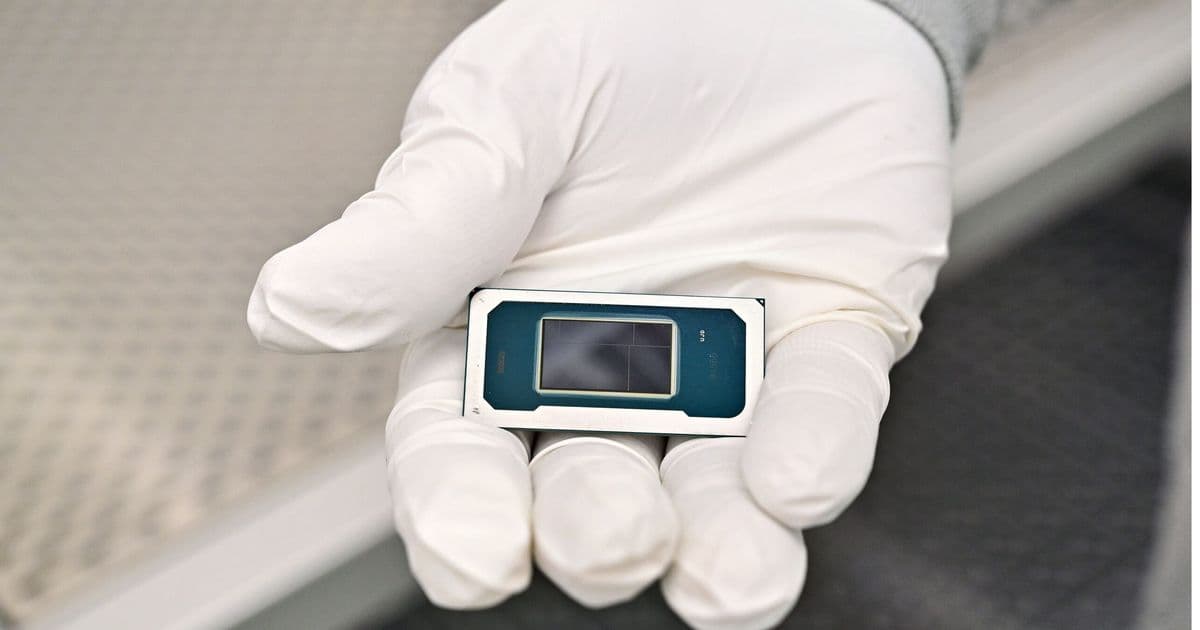
Intel's Panther Lake processors for gaming handhelds, codenamed Core G3, face a quarter delay to Q2 2026 as the company develops custom variants to challenge AMD's Ryzen Z2 series, with new Arc B-series iGPUs launching concurrently.
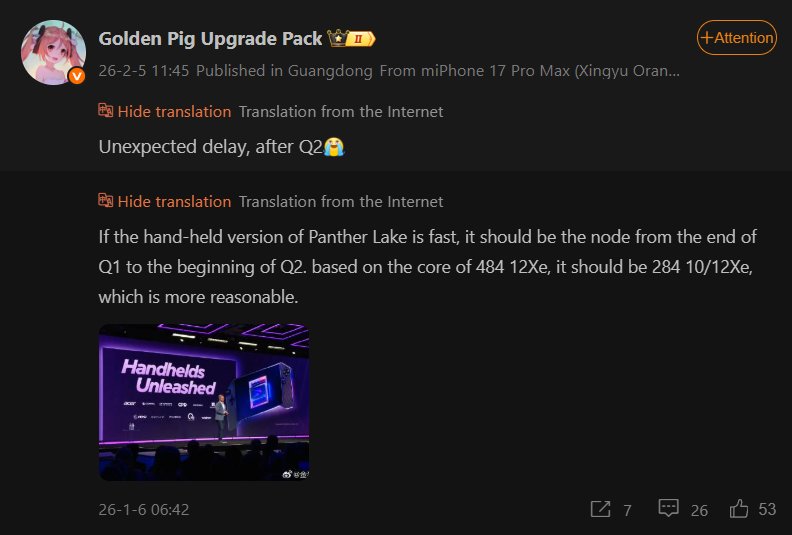
Intel has shifted the launch window for its Panther Lake processors targeting gaming handhelds from late Q1 2026 to Q2 2026, according to industry sources. The chips, marketed as Core G3 series, represent Intel's second-generation dedicated silicon for portable gaming devices following 2025's Lunar Lake architecture. This quarter-long delay coincides with Intel's development of semi-custom chip configurations for OEM partners.
The Core G3 series utilizes Intel's advanced 18A process node and features the "484" silicon design, with at least two midrange SKUs planned. Unlike standard mobile processors, these chips incorporate handheld-specific power optimizations including:
- Reduced base TDP configurations between 15-28W
- Enhanced low-power state responsiveness
- Hardware-accelerated XeSS upscaling support
Concurrently, Intel will debut new Arc B-series integrated GPUs including the B360 and B380 models. Preliminary specifications indicate:
| iGPU Model | Execution Units | Clock Speed | Memory Bandwidth |
|---|---|---|---|
| Arc B360 | 64 EUs | 1.8 GHz | 102 GB/s |
| Arc B380 | 96 EUs | 2.1 GHz | 136 GB/s |
These iGPUs represent a 40-60% generational improvement over Lunar Lake's integrated graphics, targeting 1080p medium settings at 60 FPS in AAA titles.
Intel's customization strategy positions Panther Lake against AMD's Ryzen Z2 series, which Intel executives have termed "ancient silicon" due to its 4nm process node versus Panther Lake's 18A. However, AMD counters that its segmented mobile approach (Strix Point, Strix Halo, Fire Range) allows deeper optimization than Intel's unified architecture. Industry testing shows Intel maintains a 15-20% efficiency advantage at sub-20W power envelopes, but AMD scales better above 30W.
MSI, Acer, GPD, and OneXPlayer have committed to Panther Lake devices, with production ramps scheduled for late Q1 2026. The delay potentially stems from yield optimization for the customized variants and synchronization with Arc B-series validation. Current Lunar Lake handhelds command approximately 25% of the Windows handheld market, with Panther Lake projected to capture 35-40% by 2027 according to Jon Peddie Research estimates.
This strategic delay reflects Intel's commitment to tailored solutions in the rapidly expanding $3.2B handheld market, though it risks ceding early momentum to AMD's rumored Q1 2026 refresh. Production volumes remain on track with Intel's Oregon D1X fab allocating 15% of 18A capacity to Panther Lake through 2026.
Comments
Please log in or register to join the discussion