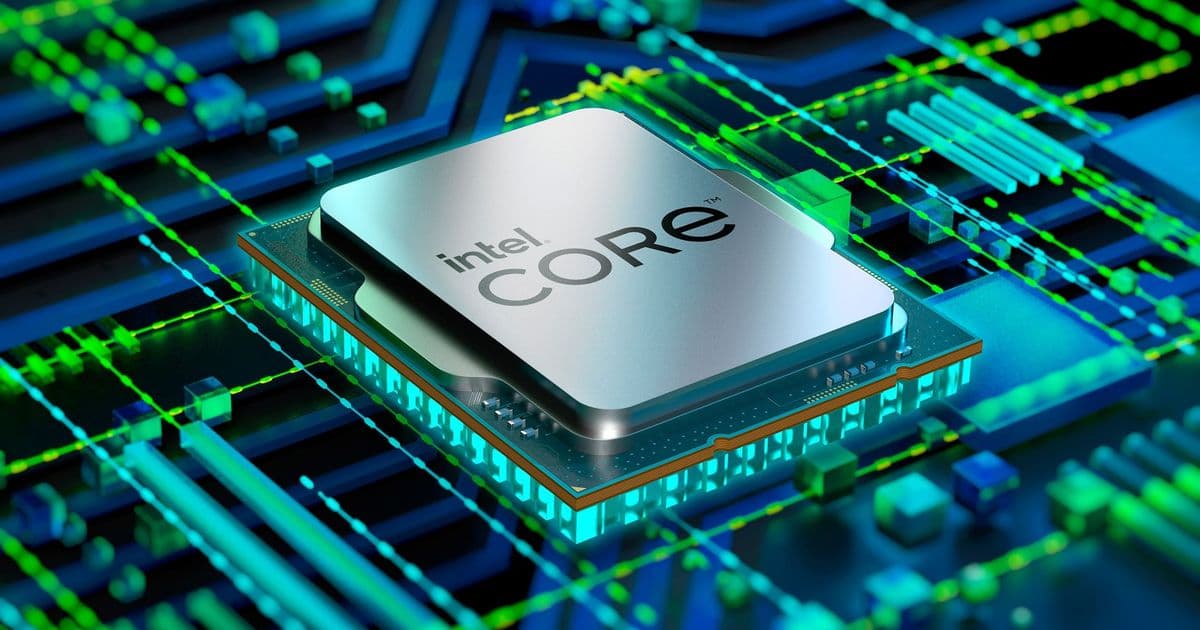
Intel has officially designated its pioneering 12th Generation Alder Lake consumer processors and 4th Generation Xeon Sapphire Rapids server chips as end-of-life, marking the conclusion of the company's first hybrid CPU architectures. The timeline extends to 2027 for final shipments, signaling a strategic shift toward newer designs like Arrow Lake.
Intel has formally ended production for its 12th Generation Alder Lake and 4th Generation Xeon Sapphire Rapids Scalable processors, two product lines that introduced the company's first hybrid CPU architecture to both consumer and data center markets. The discontinuation, effective immediately, represents a significant milestone in Intel's product lifecycle management as it prepares for next-generation designs.

The end-of-life designation covers the entire Alder Lake desktop lineup, from budget Celeron models to flagship Core i9 processors, in both boxed and tray configurations. Despite launching only four years ago, Alder Lake remains architecturally relevant, having established Intel's performance hybrid architecture that combines Performance-cores (P-cores) with Efficient-cores (E-cores). This design philosophy has since been adopted across subsequent generations, including Raptor Lake and the upcoming Arrow Lake.
Transition Timeline and Market Implications
Retailers have until July 25, 2026, to place final orders for Alder Lake processors, with Intel's last shipment scheduled for January 22, 2027. This 18-month window provides system integrators and OEMs ample opportunity to stock inventory for existing product lines, particularly in commercial and industrial applications where platform stability is critical.
The discontinuation follows Intel's earlier retirement of mobile Alder Lake variants in 2024, suggesting a coordinated effort to streamline the product portfolio ahead of Arrow Lake's market introduction. Arrow Lake Refresh, expected in late 2025 or early 2026, will likely inherit Alder Lake's hybrid architecture while incorporating manufacturing improvements and architectural refinements.
Sapphire Rapids: A Rocky Road to Retirement

Sapphire Rapids Scalable processors, which launched in 2023 after significant delays, face a more complex discontinuation timeline. Originally unveiled in 2019 with a planned 2021 release, Sapphire Rapids didn't ship until early 2023—by which time AMD's EPYC 9004 series had already captured significant market share in the data center.
The server-focused Sapphire Rapids Scalable variants are being retired, while workstation processors (Xeon W-2400, W-3400, W-2500, and W-3500 series) remain in active production. Intel stopped accepting new orders for Sapphire Rapids Scalable on September 26, 2025, with final shipments scheduled for March 31, 2028. Notably, the Xeon Gold 6414U has been excluded from the discontinuation list and remains available.
Architectural Significance and Legacy
Alder Lake's hybrid architecture represented a fundamental shift in Intel's design philosophy. By integrating high-performance P-cores for single-threaded workloads with power-efficient E-cores for multi-threaded tasks, Intel created a flexible architecture that could optimize for both performance and power consumption. This approach required significant software optimization, including the Windows Thread Director, to properly schedule workloads across the different core types.
Sapphire Rapids brought this hybrid architecture to the data center, introducing features like DDR5 memory support, PCIe 5.0 connectivity, and Intel's Advanced Matrix Extensions (AMX) for AI acceleration. However, the processor's delayed launch and competitive pressure from AMD's EPYC processors limited its market penetration.
Support Transition and Long-Term Viability
Both processor families will transition from Intel Architecture to Intel Embedded Architecture support. This change typically means reduced driver updates and feature development, though security patches and critical bug fixes may continue for extended periods. For enterprise customers, this transition requires careful planning for system upgrades and platform migrations.
The extended discontinuation timeline reflects Intel's recognition that these processors remain viable in many applications. Alder Lake's hybrid architecture, while now mature, still delivers competitive performance in gaming, content creation, and productivity workloads. Similarly, Sapphire Rapids processors continue to serve in data center deployments where platform stability and predictable performance are prioritized over cutting-edge specifications.
Market Context and Future Outlook
The retirement of these first-generation hybrid processors coincides with Intel's broader manufacturing and product strategy shifts. The company is transitioning to more advanced process nodes and preparing for its Intel 18A manufacturing process, which will underpin future processor generations. This manufacturing evolution, combined with architectural refinements, suggests that Intel's next wave of processors will offer improved performance-per-watt and more sophisticated hybrid core implementations.
For system builders and IT departments, the discontinuation timeline provides a clear roadmap for platform transitions. Alder Lake systems will remain supported and available through at least early 2027, giving organizations time to evaluate Arrow Lake and other upcoming alternatives. The extended availability of Sapphire Rapids Scalable through 2028 offers similar flexibility for data center upgrades.
The end of Alder Lake and Sapphire Rapids production marks the conclusion of Intel's first hybrid architecture chapter, but the architectural principles they established will continue to influence processor design for years to come. As Intel prepares for its next generation of chips, the lessons learned from these pioneering products will inform future innovations in core architecture, power management, and heterogeneous computing.
For more information on Intel's product lifecycle and discontinuation notices, visit the Intel Product Lifecycle page.
Comments
Please log in or register to join the discussion