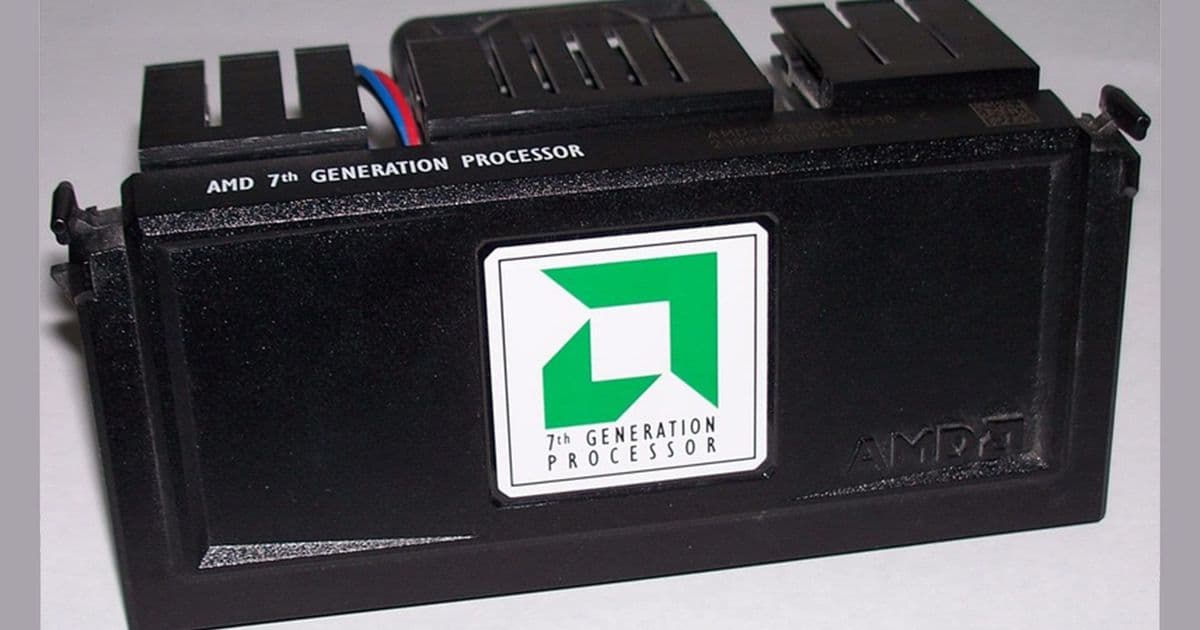
In 2000, AMD's 1 GHz Athlon processor marked a pivotal moment in PC history, beating Intel to market and ushering in the gigahertz era despite the marketing hype.
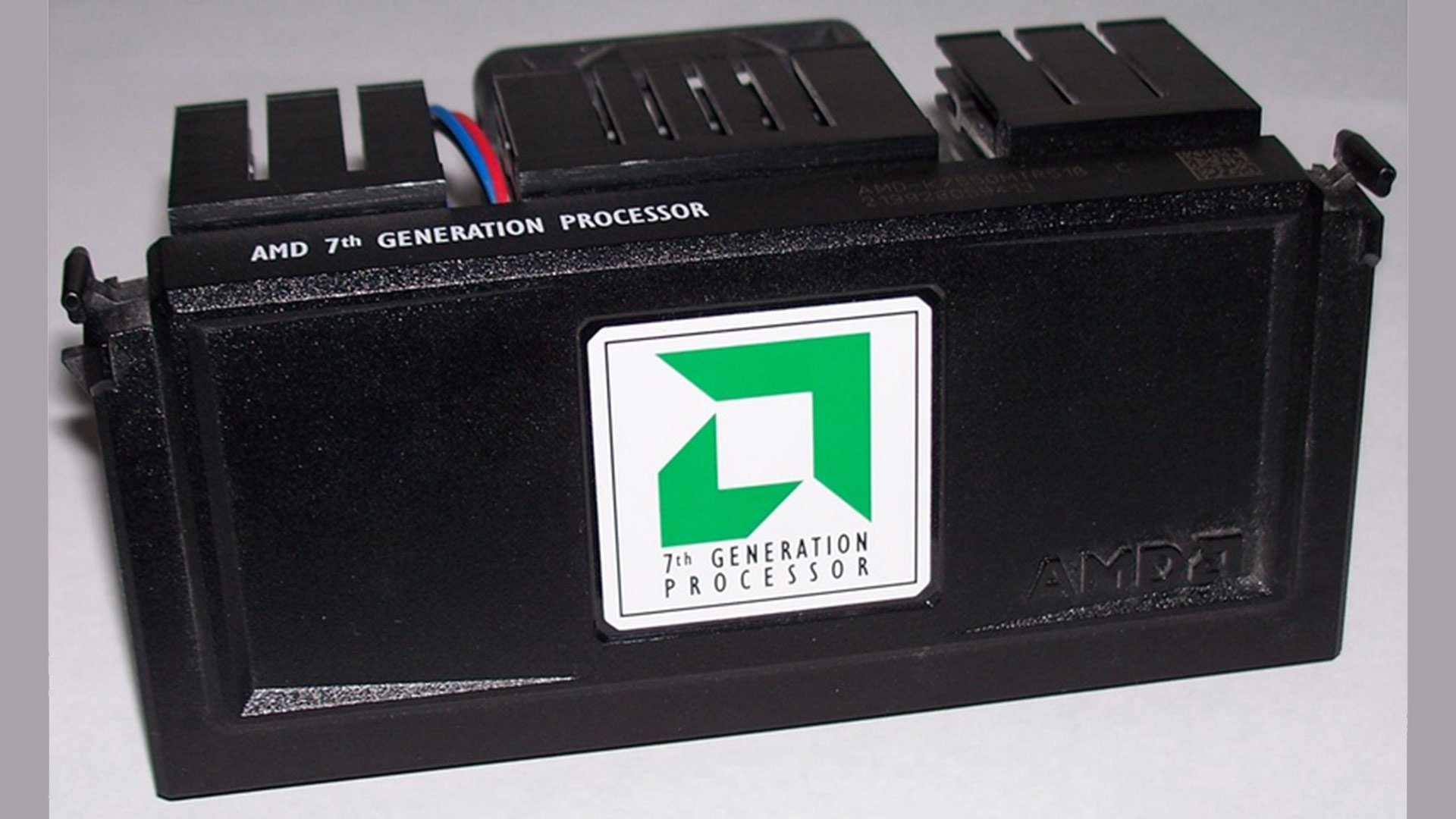
On this day in 2000, AMD achieved a milestone that would reshape the PC industry: the shipment of its 1 GHz Athlon processor, officially launching the gigahertz era of computing. The achievement wasn't just a technical feat—it was a marketing coup that caught Intel off guard and established AMD as a serious competitor in the processor wars.
The Marketing Triumph
The launch of AMD's 1 GHz Athlon was accompanied by the kind of bombastic rhetoric that defined tech marketing at the turn of the millennium. AMD's then-CEO W.J. Sanders III compared breaking the gigahertz barrier to Chuck Yeager breaking the sound barrier, declaring it "the beginning of a new era in information technology." Industry analysts were quoted likening the achievement to landing on the moon, breaking the four-minute mile, and conquering Everest.
This wasn't just AMD being AMD. The gigahertz milestone had become a symbolic threshold in consumer computing, with clock speed serving as the primary (and often misleading) metric for processor performance. AMD's ability to ship a 1 GHz processor before Intel gave it a crucial marketing advantage at a time when raw megahertz still mattered to consumers.
Technical Specifications
The specific chip that broke the barrier was a Slot A model built on AMD's 180 nm process, containing 22 million transistors. It operated at 1,000 MHz with a 100 MHz base clock and 10.0x multiplier, drawing 1.8V for a TDP of 65W. The processor featured a 128KB L1 cache and 512KB L2 cache—substantial for the time, though modest by today's standards.
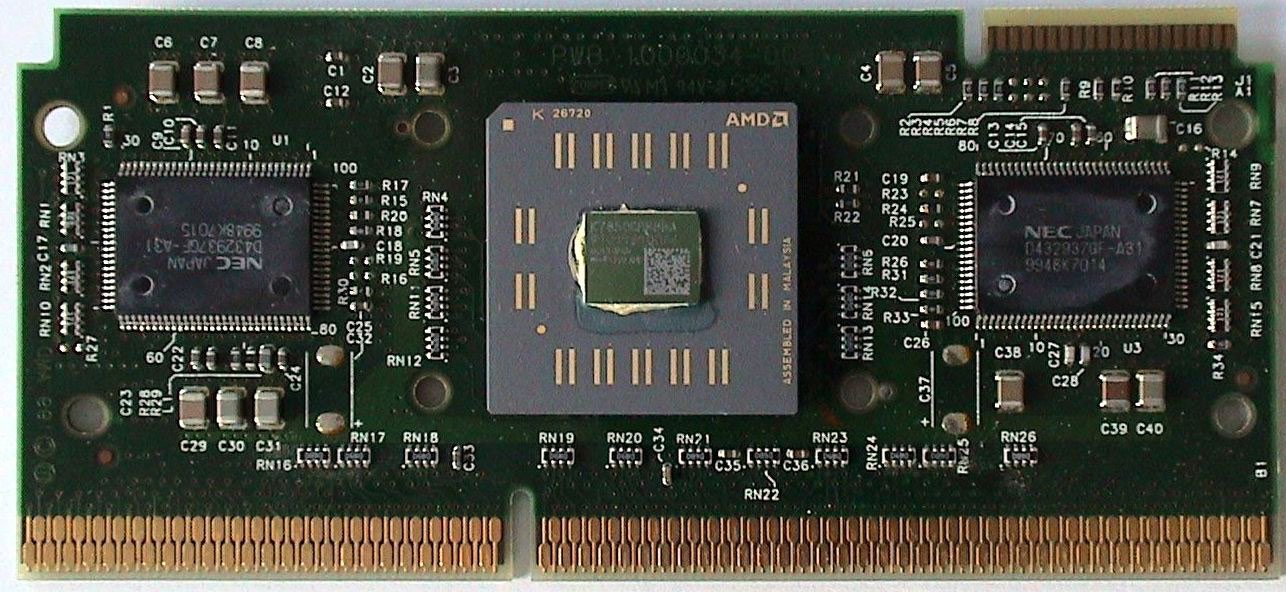
What's particularly notable is that this was a single-core processor in the pre-hyperthreading era. The concept of multi-core processors was still years away, and most consumers equated higher clock speeds with better performance. AMD priced the 1 GHz Athlon at $1,299 in tray form—a premium price reflecting its status as a flagship product.
Intel's Response
Intel found itself in an awkward position. The company had been demonstrating 1 GHz Pentium III processors in public demos for over a year, confidently predicting it would be first to market. AMD's announcement forced Intel into a hasty paper launch of its own 1 GHz Pentium III just two days later, priced at $990 in tray form.
However, Intel's launch was plagued by supply issues. Reports from the time suggest Intel planned to ramp up volume production in Q3 2000, giving AMD a significant window to capitalize on its first-to-market advantage. This delay highlighted the challenges of semiconductor manufacturing, where theoretical capabilities don't always translate to commercial availability.
Historical Context
The Athlon's launch came during a pivotal period in PC history. The late 1990s and early 2000s represented the height of the "megahertz myth," where consumers and even many industry observers equated clock speed with overall performance. This simplistic view would persist until the mid-2000s when processor manufacturers hit thermal and power limitations that made simply increasing clock speeds unsustainable.
AMD's Athlon architecture, codenamed K7, represented a significant technical achievement. It introduced AMD's 3DNow! technology and competed effectively against Intel's Pentium III, particularly in floating-point performance. The architecture would evolve through various iterations, with the 1 GHz model representing a crucial milestone in its development.
Legacy
While the 1 GHz Athlon may not have made it into lists of AMD's best CPUs of all time, its historical significance is undeniable. It demonstrated that AMD could compete with—and occasionally surpass—Intel in both technology and market execution. The chip's launch marked the beginning of a more competitive processor market that would benefit consumers through innovation and competitive pricing.
Today, as we look back from an era of multi-core processors running at much lower clock speeds but delivering vastly superior performance, the gigahertz race of the early 2000s seems almost quaint. Yet it represented a crucial phase in computing history, and AMD's 1 GHz Athlon was the chip that defined it.

The milestone also highlighted the importance of manufacturing capability in the semiconductor industry. AMD's ability to bring the 1 GHz Athlon to market before Intel, despite Intel's technological leadership, demonstrated that execution and timing could be as important as raw technological capability—a lesson that remains relevant in today's competitive chip market.
Comments
Please log in or register to join the discussion