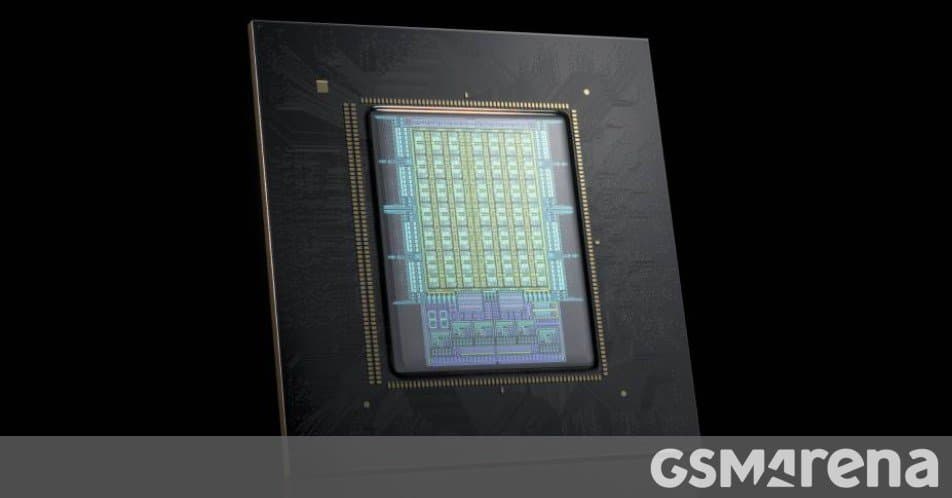
Nvidia unveiled the Vera ARM processor, a 88‑core, 176‑thread silicon that it says delivers a 1.8× performance uplift versus top x86 CPUs. The chip targets AI inference, reinforcement‑learning workloads and data‑center analytics, and will ship in rack‑scale systems alongside the Rubin GPU.
Nvidia announces the Vera ARM CPU
Nvidia’s latest silicon push is the Vera ARM‑based CPU, the compute half of the Vera Rubin platform. In a press release the company claims Vera provides a 1.8× average speedup (about an 80 % boost) compared with the “leading x86 CPUs” used in today’s AI servers. While Nvidia did not name the competing chips, the claim puts Vera squarely against high‑end Intel Xeon Scalable and AMD EPYC Genoa processors that dominate the data‑center market.
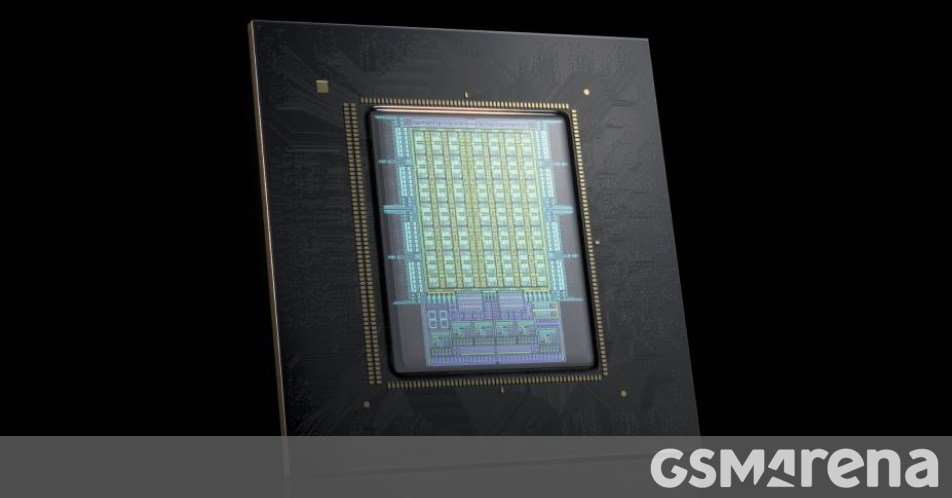
Key specifications
- Core count: 88 custom "Olympus" cores built on the ARM instruction set. Each core supports Spatial Multithreading, giving 176 hardware threads per socket.
- Memory subsystem: Up to 1.5 TB of LPDDR5X with a peak bandwidth of 1.2 TB/s. The bandwidth is designed to keep AI inference pipelines fed without stalls.
- Threading model: Spatial Multithreading allows a single core to execute two independent instruction streams, improving utilization for workloads that mix dense matrix ops with control‑heavy code.
- Interconnect: The Vera CPU talks to the companion Rubin GPU over Nvidia’s NVLink‑C2C link, rated at 1.8 TB/s bidirectional bandwidth. This tight coupling is meant to eliminate the PCIe bottleneck that still hampers many current AI servers.
- Scalability: Nvidia ships the CPU in a Vera CPU Rack that houses 256 sockets, totaling 22,528 cores and 45,056 threads. For mixed CPU‑GPU configurations, the Vera Rubin NVL72 module combines 36 Vera CPUs with 72 Rubin GPUs.
Intended workloads
Vera is positioned as a stand‑alone processor for agentic AI, reinforcement learning, and high‑throughput data analytics. The massive thread count and high memory bandwidth make it well‑suited for:
- Real‑time inference on large language models where latency is critical.
- Training‑time reinforcement‑learning loops that require rapid environment simulation.
- Large‑scale graph analytics and streaming data pipelines that benefit from many lightweight threads.
Ecosystem and early adopters
Nvidia has already announced several high‑profile customers:
- Anthropic (Claude), OpenAI (ChatGPT) and SpaceXAI (Grok) will run inference workloads on Vera.
- Cloud providers ByteDance, CoreWeave, and Oracle Cloud Infrastructure have signed up for early access.
- OEMs such as Dell, HP, Lenovo, and Supermicro will offer bare‑metal Vera servers, while system integrators Asus, Foxconn, Gigabyte, Quanta, Wistron, and Wiwynn will build custom solutions.
- The New York Stock Exchange is evaluating Vera for its market‑data processing pipeline, which handles over a trillion messages per day.
How Vera fits into Nvidia’s broader strategy
The Vera launch follows the RTX Spark announcement, which introduced a consumer‑grade AI server chip (Grace CPU + Blackwell GPU). By separating the CPU and GPU into distinct products, Nvidia can tailor each silicon block to its strongest use case. Vera’s ARM foundation aligns with Nvidia’s long‑term push to move AI workloads away from traditional x86 servers, where power efficiency and thread density are harder to improve.
What this means for the data‑center market
- Performance per watt: ARM designs typically consume less power than comparable x86 cores. If Nvidia’s performance claims hold up in independent benchmarks, operators could see lower electricity bills for the same AI throughput.
- Software compatibility: Nvidia is bundling a customized Linux distribution and a set of libraries that expose the Spatial Multithreading model to existing AI frameworks (TensorFlow, PyTorch). Early adopters will need to validate that their models compile cleanly, but Nvidia’s track record with the Grace platform suggests a relatively smooth transition.
- Vendor lock‑in considerations: Deploying Vera ties the server stack to Nvidia’s ecosystem—NVLink‑C2C, the Rubin GPU line, and the associated driver stack. Companies already invested in Nvidia GPUs will find the integration attractive, while those with a mixed‑vendor environment may need to weigh the benefits against potential vendor concentration.
Looking ahead
Nvidia plans to start shipping Vera‑based systems in Q4 2026, with a roadmap that includes higher‑density racks and a lower‑power variant aimed at edge data centers. If the performance and efficiency numbers hold up, Vera could become a compelling alternative for AI‑first workloads that currently rely on large x86 clusters.
For more details, see Nvidia’s official announcement page and the technical brief on the Vera CPU architecture.
Comments
Please log in or register to join the discussion