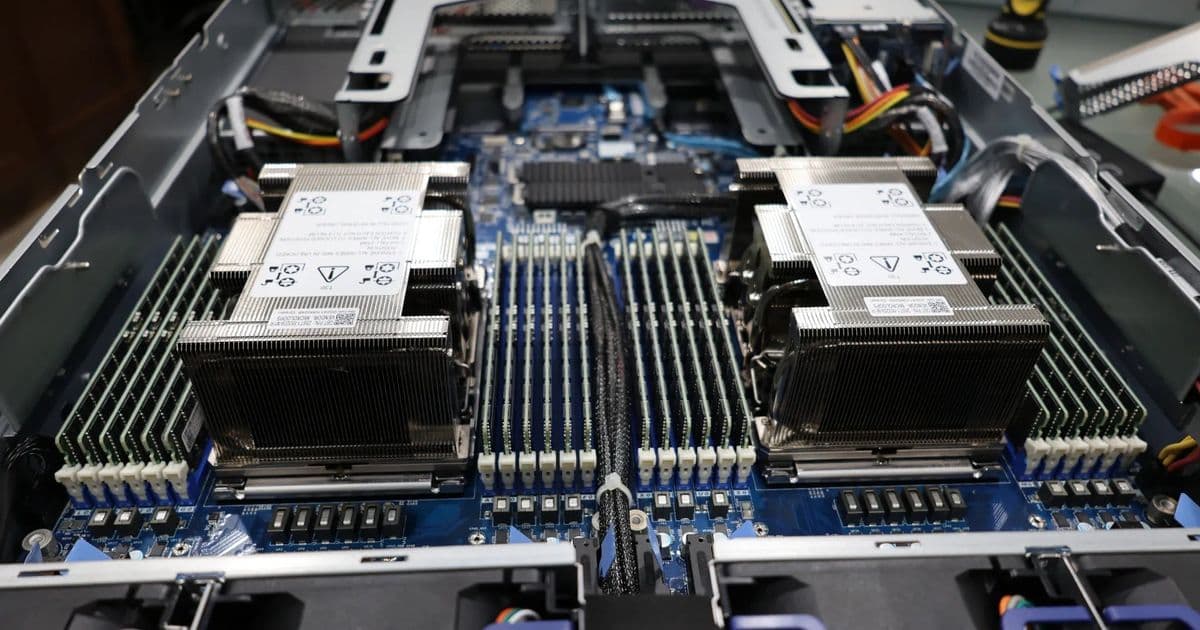
Intel has posted updated Cache Aware Scheduling patches for Linux 6.19, introducing performance optimizations that benefit both Intel and AMD processors by improving cache locality and reducing cache misses.
Intel has returned with a fresh set of Cache Aware Scheduling patches for Linux, posting v3 updates that have been re-based against the upcoming Linux 6.19 kernel. The work, which first gained attention in late 2024, continues to evolve with optimizations that could significantly impact performance on modern multi-cache domain processors from both Intel and AMD.
What is Cache Aware Scheduling?
Cache Aware Scheduling is a kernel optimization designed to improve performance by keeping tasks that share data within the same cache domain. The fundamental principle is straightforward: when multiple tasks access the same data, keeping them on CPUs that share cache levels reduces cache misses and eliminates cache bouncing between different cache domains.
This becomes increasingly important as modern processors feature complex cache hierarchies. For example, AMD's EPYC processors with their chiplet designs and Intel's Xeon processors with multiple cache domains can benefit significantly when the scheduler understands and optimizes for these cache topologies.
What's New in v3?
The latest v3 patches introduce several key improvements:
- Failure-aware scheduling: The system now skips cache-aware scheduling behavior after repeated load balancing failures, preventing unnecessary overhead when the optimization isn't beneficial
- Reduced sorting overhead: Eliminates some costly sorting operations that were impacting performance
- Improved accounting: Tracks the number of tasks preferring each last-level cache (LLC) at the lowest-level scheduling domain per CPU, providing more granular control
- General optimizations: Various other updates to improve stability and performance
Cross-Platform Benefits
While Intel originated this work, testing has shown that AMD EPYC processors can also see "very nice gains" from Cache Aware Scheduling. This cross-platform benefit makes the feature particularly interesting for heterogeneous data center environments that may run both Intel and AMD hardware.
Recent benchmarks have demonstrated the potential impact. Testing on AMD EPYC Turin processors showed significant performance improvements, while Intel Xeon 6 Granite Rapids systems also benefited from the scheduling optimizations.
Current Status and Future Prospects
The patches are currently posted for review and are not expected to make it into the Linux 7.0 cycle that's currently underway. However, Intel is hoping that Cache Aware Scheduling will make it into the mainline Linux kernel at some point in 2026.
The v3 patch series is available on the Linux kernel mailing list for those interested in testing or reviewing the implementation. The patches have been carefully re-based against Linux 6.19 to ensure compatibility with the latest kernel developments.
Why This Matters
As processors continue to evolve with more complex cache hierarchies and heterogeneous architectures, scheduler awareness of cache topology becomes increasingly critical for performance optimization. Cache Aware Scheduling represents a significant step toward making the Linux kernel more intelligent about how it places tasks relative to data access patterns.
For data center operators, HPC workloads, and even desktop users running demanding applications, these optimizations could translate to measurable performance gains without requiring any application-level changes. The scheduler simply becomes smarter about keeping related tasks together in cache-friendly configurations.
The fact that both Intel and AMD systems benefit from this work also suggests it addresses fundamental scheduling challenges rather than vendor-specific optimizations, making it a strong candidate for mainline inclusion if the performance benefits hold up under broader testing.
The Linux kernel community will be watching closely as these patches undergo review, with many hoping that 2026 will finally see Cache Aware Scheduling become a standard part of the kernel's scheduling arsenal.

Comments
Please log in or register to join the discussion