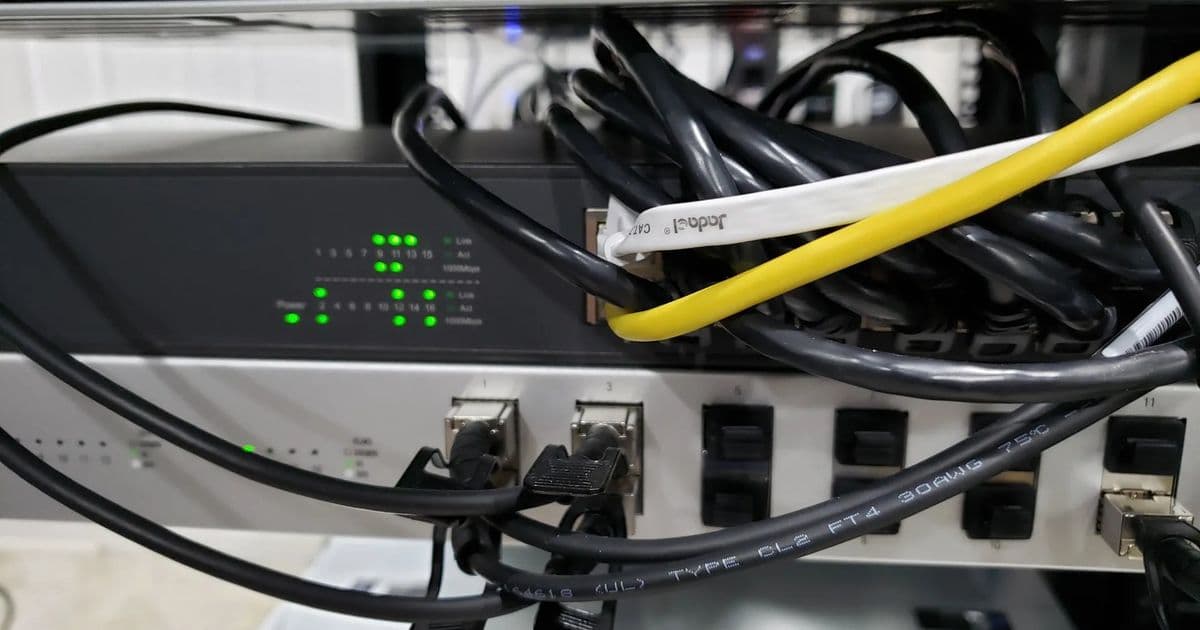
Linux 7.0 brings WiFi 8 Ultra-High Reliability support while removing the final parallel port Ethernet driver, showcasing the kernel's evolution from legacy hardware to cutting-edge wireless technology.
The Linux 7.0 networking subsystem pull request represents a fascinating snapshot of kernel evolution, simultaneously preparing for next-generation wireless technology while finally retiring decades-old hardware support. This release embodies the open-source kernel's ability to balance forward-looking innovation with the practical need to shed legacy cruft.
Compiler Optimizations and Core Networking Improvements
The most significant under-the-hood change in Linux 7.0's networking stack involves extensive compiler optimization work. The core networking code has undergone a comprehensive overhaul to better guide the compiler's inlining decisions. This isn't just theoretical optimization - the result is demonstrably faster code execution with minimal to no increase in binary size. For system administrators and performance-sensitive applications, this translates to measurable improvements in packet processing throughput and reduced CPU overhead.
Multi-Queue Scaling with CAKE_MQ
Network traffic management gets a substantial boost with the addition of CAKE_MQ, a multi-queue aware variant of the popular sch_cake queueing discipline. Traditional CAKE implementations can become bottlenecks on multi-CPU systems, but CAKE_MQ intelligently distributes traffic across available CPU cores. This enhancement is particularly relevant for high-throughput servers and network appliances handling thousands of concurrent connections.
Enhanced Netconsole Capabilities
System administrators monitoring kernel messages over the network will appreciate two significant Netconsole improvements. The addition of NCON buffer console support enables lock-free, priority-based console operations - critical for maintaining system stability during debugging sessions. Additionally, automatic target recovery support means Netconsole can now gracefully handle network interruptions without manual intervention, making remote kernel debugging more reliable than ever.
TCP Stack Optimizations
Several TCP improvements target both performance and resource efficiency. The IPv6 output path now caches flow information, reducing CPU cycles and cache line misses while also decreasing stack usage. Perhaps more significantly, TCP socket size has been reduced by one entire cache line - a seemingly small change that can yield substantial memory savings when multiplied across thousands of concurrent connections on busy servers.
WiFi 8 Ultra-High Reliability Support
The most forward-looking feature in Linux 7.0 is undoubtedly the initial support for WiFi 8 Ultra-High Reliability (UHR). This technology promises to revolutionize wireless networking in environments where reliability is paramount - think industrial automation, medical devices, and mission-critical infrastructure. The groundwork laid in cfg80211 and mac80211 provides the foundation for future hardware support as WiFi 8 devices begin appearing in the market.
Driver Updates and New Hardware Support
Linux 7.0 expands hardware compatibility across multiple vendors and technologies:
- Atheros Ath12k: Added support for Qualcomm QCC2072 chipset and refactored for next-generation hardware
- Realtek R8169: Now supports RTL8127ATF 10G Fiber SFP for high-speed networking
- Airoha AN8811HB: 2.5 Gbps PHY support for faster wired connections
- Huawei Hinic3 PF: New Ethernet driver for Huawei's networking hardware
- MaxLinear MxL862xx: Driver for new switch hardware
- Intel ICE: Synchronous Ethernet (SyncE) support for precise timing applications
- Intel IWLWIFI: Initial Neighbor Awareness Networking (NAN) support plus U-NII-9 and IEEE 802.11bn (WiFi 8) capabilities
- Realtek RTW89: Preparing for RTL8922DE chipset support
- Bluetooth USB: Added support for MediaTek7920, Realtek RTL8761BU, and 8851BE hardware
The End of an Era: Parallel Port Ethernet Removal
Perhaps the most symbolic change in Linux 7.0 is the removal of the final parallel port Ethernet driver. The ATP driver, which supported AT-LAN-TEC/RealTek pocket adapters, has been purged from the kernel after lingering for years as the last remaining parallel port networking support.
This removal marks the definitive end of an era that began in the 1990s when parallel port Ethernet adapters provided a way to network PCs before built-in Ethernet became standard. Other parallel port Ethernet drivers were removed back in 2013, but the ATP driver survived until now on the assumption that someone, somewhere might still be using these ancient adapters.
The decision to finally remove this driver reflects both practical reality and kernel maintenance philosophy. Parallel printer port networking has been obsolete for decades, and the code complexity wasn't justified by any realistic use case. This cleanup allows kernel developers to focus on modern networking technologies rather than maintaining compatibility with hardware that hasn't been manufactured in decades.
Performance Impact and System Requirements
For most users, the performance improvements in Linux 7.0 will be subtle but meaningful. The compiler optimizations and TCP stack improvements provide measurable benefits, particularly on high-throughput systems. The multi-queue scaling improvements with CAKE_MQ become noticeable when pushing multiple gigabits of traffic through multi-core systems.
System requirements remain largely unchanged, though the removal of parallel port support means systems relying on these ancient adapters will need to upgrade their networking hardware. For everyone else, Linux 7.0 represents a performance-optimized foundation for both current and next-generation networking technologies.
Looking Forward
Linux 7.0's networking stack demonstrates the kernel's unique position at the intersection of cutting-edge technology and practical system maintenance. While laying the groundwork for WiFi 8 UHR and supporting the latest 10G and 2.5G networking hardware, it simultaneously sheds the last vestiges of 1990s networking technology.
The removal of parallel port Ethernet support might seem like a minor housekeeping task, but it symbolizes something larger: the kernel's ongoing evolution and its developers' willingness to make difficult decisions about legacy support. As networking technology continues advancing at breakneck speed, Linux 7.0 provides a solid foundation for both current deployments and future innovations.
For system administrators, network engineers, and developers, Linux 7.0 offers a compelling mix of performance improvements, new hardware support, and forward-looking features. Whether you're managing a data center, building embedded systems, or simply running a home network, these networking enhancements provide tangible benefits while preparing for the wireless technologies of tomorrow.
The full list of networking patches merged for Linux 7.0 is available in the official pull request, providing detailed technical information for those interested in the specific implementation details of these changes.
Comments
Please log in or register to join the discussion