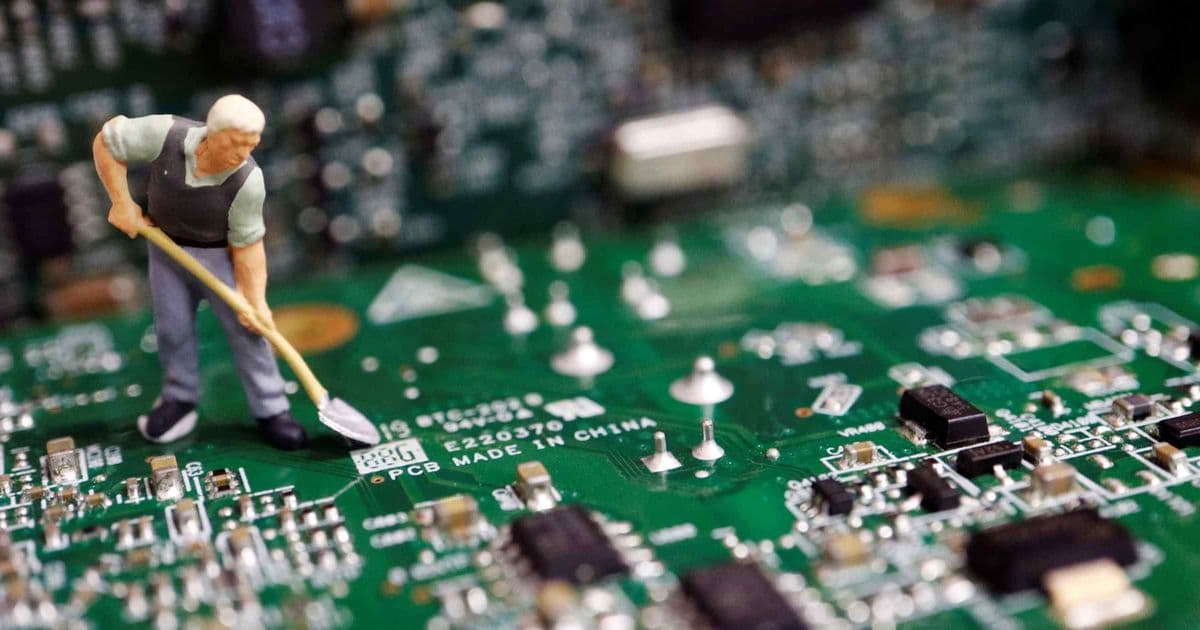
Chinese equity markets are witnessing a strategic pivot as investors channel capital into niche technology sectors including satellite chips and brain-computer interfaces, betting that scientific breakthroughs will deliver returns despite broader economic headwinds.
Investors are aggressively positioning themselves in lesser-known Chinese technology companies, signaling a shift in market sentiment that prioritizes scientific advancement over macroeconomic stability. The investment focus has narrowed onto high-speculation, high-potential sectors such as satellite semiconductors and neural interface technology, driven by expectations of substantial government support in the upcoming five-year plan.
The Chinese government is preparing to finalize its 14th five-year plan in March, with technological self-sufficiency identified as a core pillar. According to market participants, this policy direction is creating a favorable environment for companies operating in strategic technology verticals. Satellite chip manufacturers and brain-computer interface developers have seen notable stock price appreciation as investors anticipate direct fiscal incentives and regulatory tailwinds.
Market Dynamics and Investment Thesis
The current investment thesis rests on two primary factors: policy alignment and scientific capability. Unlike previous investment cycles that favored consumer internet platforms, the current wave targets hardware-level innovation. Satellite chips represent a critical component in China's space infrastructure ambitions, while brain-computer interfaces align with long-term goals in medical technology and human-machine integration.
Market data indicates that these sectors are attracting venture capital and institutional investment despite broader concerns about China's economic deceleration. The divergence between macro indicators and sector-specific performance suggests that investors are operating on a thesis of technological exceptionalism—betting that breakthrough capabilities in these fields will generate returns independent of GDP growth trends.
Strategic Implications
This investment pattern reveals a maturing understanding of China's industrial policy. Rather than chasing scale in consumer-facing applications, capital is flowing toward foundational technologies where China faces supply chain vulnerabilities or seeks global leadership. The satellite chip sector, for example, addresses both commercial opportunity and national security imperatives.
Brain-computer interface companies represent a longer-term bet. While commercial applications remain nascent, investors appear willing to fund early-stage development in anticipation of future medical and consumer use cases. This mirrors investment strategies in other markets where speculative capital funds research and development phases before product commercialization.
Policy Context
The upcoming five-year plan is expected to formalize support mechanisms for these sectors. Historically, Chinese industrial policy has utilized a combination of direct subsidies, state-directed investment, and procurement preferences to accelerate domestic capabilities. Investors are positioning ahead of these policy announcements, creating a forward-looking premium on equity valuations.
The emphasis on technological self-sufficiency reflects broader geopolitical tensions and supply chain concerns. Companies that can demonstrate indigenous innovation in critical technologies are viewed as strategic assets. This policy framework creates a protected market environment where domestic champions can develop capabilities with reduced foreign competition.
Risk Considerations
The investment enthusiasm is not without risks. Many of these companies operate at early stages of technology development, with significant technical and commercial uncertainty. Brain-computer interfaces, in particular, face substantial regulatory hurdles and ethical considerations that could delay market entry.
Satellite chip manufacturers must navigate complex semiconductor supply chains and compete against established international players. While government support provides a buffer, it does not eliminate fundamental technology challenges or market competition.
Sector Analysis
Satellite Chips: Companies in this space are developing integrated circuits specifically designed for satellite communications and positioning systems. The investment logic centers on China's expanding space infrastructure and the need for domestic component supply. Success requires achieving performance parity with international competitors while maintaining cost advantages.
Brain-Computer Interfaces: This sector encompasses companies working on neural signal interpretation, non-invasive recording technologies, and therapeutic applications. The investment horizon extends beyond current revenue generation toward potential breakthrough applications in medical treatment and human augmentation.
Market Outlook
The current investment trend reflects a calculated shift toward strategic technology sectors where China can leverage scale, policy support, and scientific talent. While economic indicators suggest headwinds, the targeted nature of this investment activity indicates sophisticated understanding of policy-driven market opportunities.
Success in these sectors will depend on execution capability, regulatory navigation, and sustained government support. Investors are effectively betting that the combination of policy tailwinds and scientific advancement will create defensible market positions and substantial returns, even if broader economic conditions remain challenging.
The months following the five-year plan finalization will provide clarity on the specific support mechanisms and implementation timelines. Market participants are positioning accordingly, with the expectation that policy details will catalyze further investment and potentially create a new generation of Chinese technology champions in these specialized verticals.
Comments
Please log in or register to join the discussion