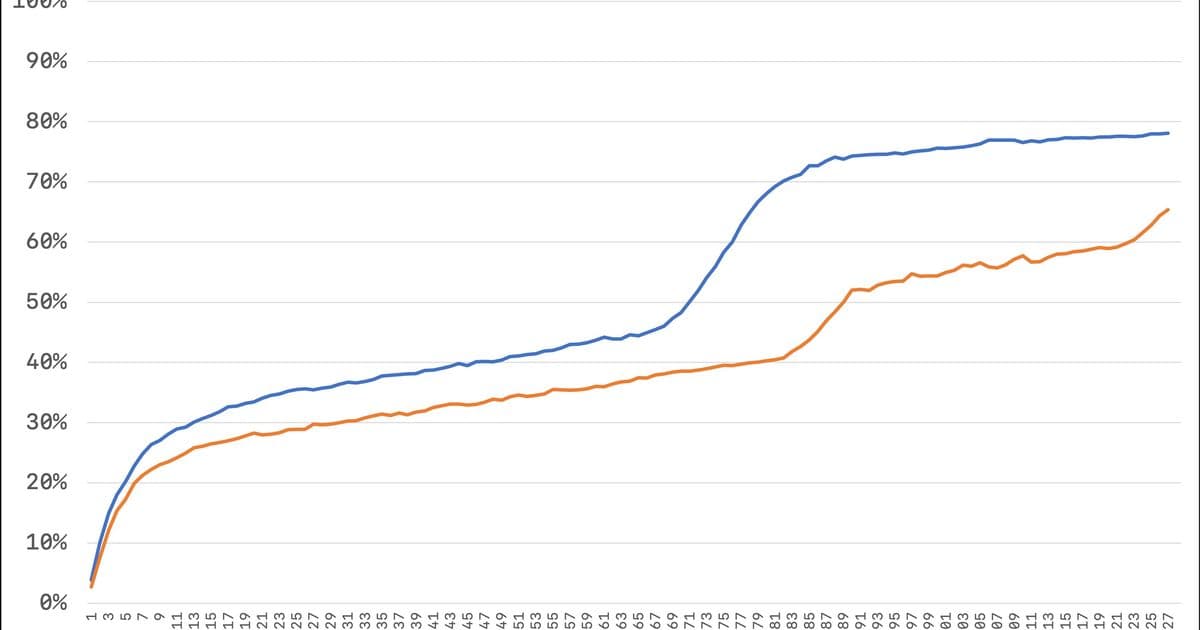
Wikimedia data shows iOS 26 running on ~50% of iPhones in January 2026 compared to iOS 18's 72% adoption at the same point last year, exposing how Apple's deliberate slowdown of automatic updates creates new measurement challenges and user experience tradeoffs.
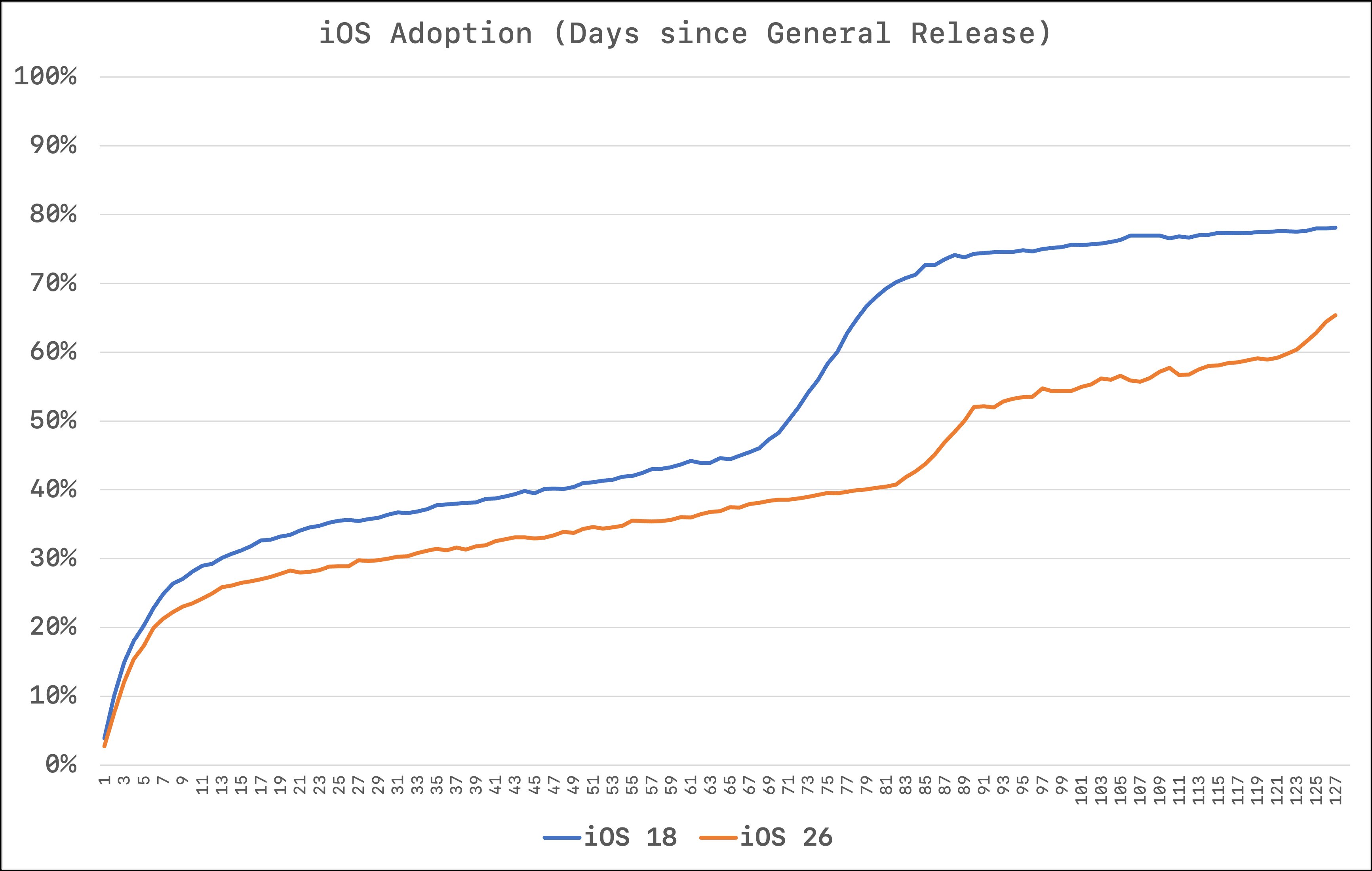
The latest iOS adoption statistics reveal a curious divergence: While Wikimedia Foundation data shows iOS 26 running on approximately 50% of iPhones as of January 2026, third-party analytics firm Statcounter initially reported just 15% adoption - a discrepancy that exposes fundamental shifts in how Apple manages software updates and how we measure them.
The Measurement Gap
When Statcounter's early January report showed unusually low iOS 26 adoption, developers immediately questioned the numbers. As John Gruber notes, the analytics firm failed to account for changes in Safari's user agent string that masked iOS 26 usage. After adjusting their methodology, Statcounter's revised figures aligned more closely with Wikimedia's real-world traffic data from Wikipedia and related sites.
This measurement challenge stems directly from Apple's evolving update strategy:
- Slower rollout: Apple now stages automatic updates over 60-90 days rather than the previous 30-day window
- User agency: The company has made manual update checks more prominent while reducing background update prompts
- Enterprise controls: New MDM options allow organizations to delay updates by up to 90 days
The Adoption Calculus
Comparing year-over-year data reveals significant changes:
| iOS Version | January Adoption | Measurement Source |
|---|---|---|
| iOS 18 (2025) | 72% | Wikimedia |
| iOS 26 (2026) | ~50% | Wikimedia |
| iOS 26 (2026) | 15% (initial) → ~45% (adjusted) | Statcounter |
Developers like David Smith note this creates new support challenges: "We're seeing about 45% iOS 26 usage in our apps, but the variance between services makes feature rollouts harder to plan."
The Auto-Update Tradeoff
Apple's slower rollout strategy presents competing priorities:
Arguments for slower updates
- Reduced server load during rollout waves
- Fewer "update bomb" scenarios where multiple apps require simultaneous updates
- More time for enterprise IT teams to validate compatibility
Emerging drawbacks
- Security patches reach devices more slowly
- Developers must maintain compatibility with multiple iOS versions longer
- Feature adoption curves lengthen, potentially slowing ecosystem innovation
Developer Adaptations
The measurement challenges have spurred new best practices:
- Multi-source validation: Cross-referencing first-party analytics with Apple's official stats and platform-specific sources
- Progressive enablement: Using feature flags rather than OS version checks for new capabilities
- User education: More prominent in-app update prompts with clear security benefits
As the iOS platform matures, Apple's balancing act between user control and ecosystem coherence grows more complex. The iOS 26 adoption story isn't just about measurement quirks - it's a signal of how software update strategies must evolve in an era where 1.5 billion active devices can't all move at the same pace.
Comments
Please log in or register to join the discussion