
Early testing of iOS 26's Adaptive Power feature shows significant battery life improvements during intensive tasks like GPS navigation, with minimal performance impact. However, the current public beta's instability raises questions about deployment readiness for daily drivers.
iOS 26's Adaptive Power: Promising Battery Savings Meet Beta Reality
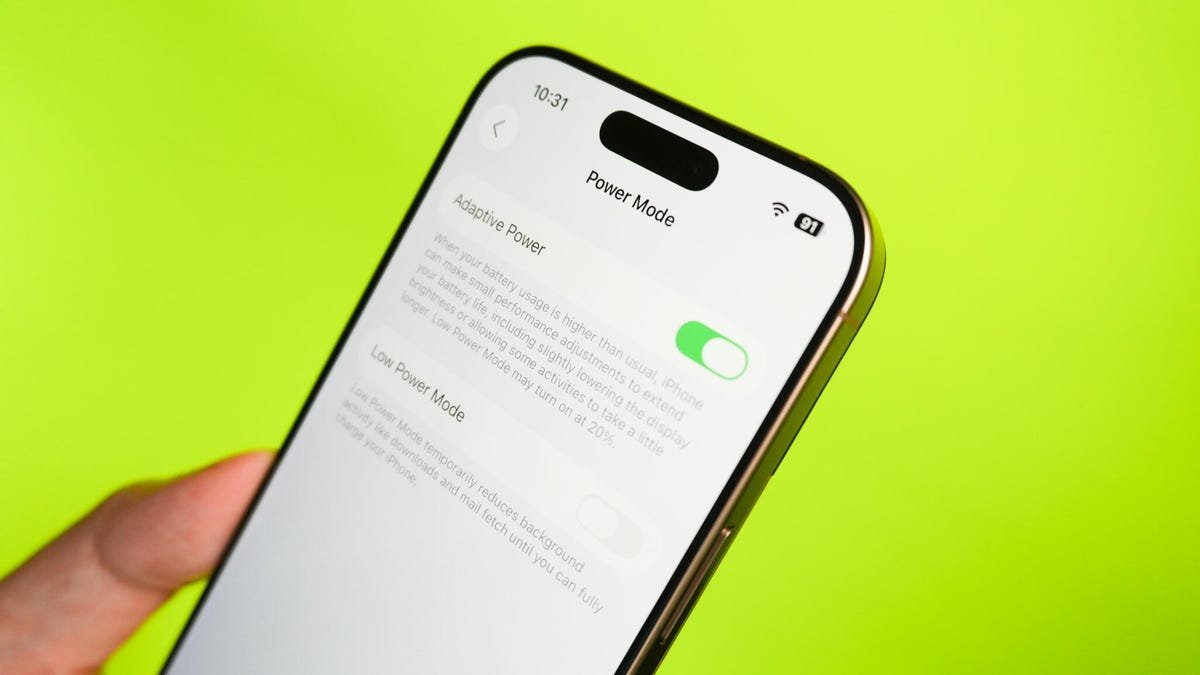
Apple's latest iOS 26 public beta introduces Adaptive Power Mode—a dynamic system that tweaks performance parameters during periods of high battery drain to extend runtime. Unlike the blunt instrument of Low Power Mode, Adaptive Power aims for surgical adjustments. Senior ZDNET contributor Adrian Kingsley-Hughes subjected the feature to real-world stress testing during demanding 11-mile hikes, providing rare field data ahead of the official release.
 Does iOS 26's Adaptive Power Mode work? (Credit: Adrian Kingsley-Hughes/ZDNET)
The Hike Test: Mapping Apps Under Scrutiny
Kingsley-Hughes simulated extreme user scenarios using GPS-intensive mapping applications like AllTrails and OS Maps in the UK's Peak District. Without external power sources, his iPhone 15 Pro Max started at 80% charge (custom charge limit enabled). After seven hours of continuous navigation, photo capture, and satellite location pings:
"My iPhone went from 80% down to 35%... I wouldn't have been surprised if it had fallen to around 20%"
This 45% drain under heavy load suggests Adaptive Power delivered tangible gains. Crucially, Kingsley-Hughes noted no perceptible performance degradation during map rendering, camera operation, or notification handling—addressing core user concerns about throttling.
The Beta Compromise: Power Gains vs. System Stability
Despite promising battery results, the public beta's instability emerged as a critical caveat:
- Multiple daily crashes occurred across applications
- System reliability dipped significantly compared to stable iOS builds
- Performance consistency fluctuated outside power management scenarios
 GPS navigation during hikes provides rigorous battery testing conditions (Credit: Adrian Kingsley-Hughes/ZDNET)
Developer Implications and Upgrade Timing
For engineers and power users, Adaptive Power demonstrates Apple's nuanced approach to power management—likely leveraging:
- Background process throttling
- GPU/CPU clock modulation
- Location service optimization
However, the beta's instability highlights the risks of early adoption. Kingsley-Hughes advises:
"Wait a while for more bugs to be squashed before hitting download"
The feature's ultimate value depends on Apple refining the beta's crash issues before fall's anticipated public release. For now, it represents a promising—but fragile—step toward intelligent battery preservation without drastic performance penalties.
Source: ZDNET
Comments
Please log in or register to join the discussion