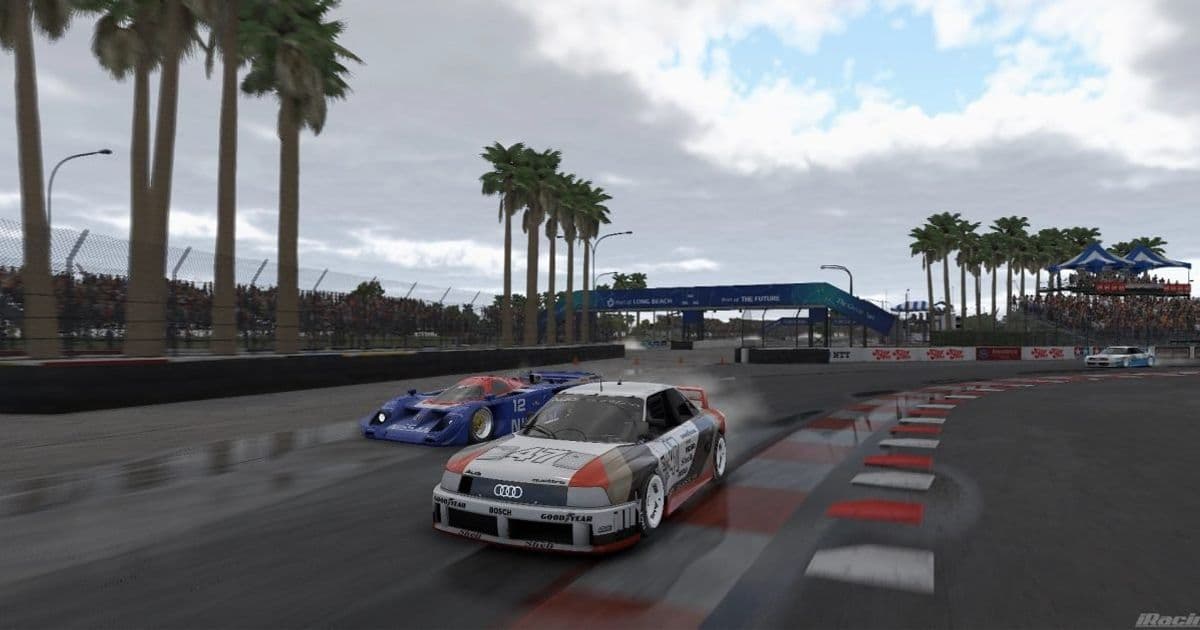
iRacing launches on Apple Vision Pro with foveated streaming and ARKit integration, delivering a uniquely immersive racing experience that blends virtual cockpits with real-world hardware.
iRacing on Apple Vision Pro will bring a "level of immersion and fidelity never before seen in sim racing," says iRacing president Tony Gardner. The popular racing simulation platform is launching on Apple's spatial computing headset this week as part of the visionOS 26.4 software update, marking a significant milestone for both platforms.
Foveated Streaming Powers Next-Generation Racing Experience
The breakthrough comes through a new "foveated streaming" feature in visionOS 26.4, which leverages Nvidia's CloudXR technology. This approach renders the sharpest content only where the user is directly looking, optimizing performance while maintaining visual quality where it matters most.
For iRacing, this means physics calculations and high-fidelity graphics rendering occur on a PC equipped with Nvidia's RTX GPU. The system then encodes frames and streams them wirelessly over Wi-Fi to iRacing Connect on visionOS. This architecture allows the Apple Vision Pro to deliver complex racing simulations without the need for onboard processing of the most demanding graphics workloads.
ARKit Integration Blends Virtual and Physical Worlds
Apple's ARKit technology plays a crucial role in creating the seamless experience. The system blends the racing simulator with real-world elements, allowing users to see their physical hands on the steering wheel while immersed in the virtual cockpit. This visual connection to physical racing hardware produces an "unparalleled experience" that keeps racers connected to their setup.
The integration works by aligning the physical steering wheel with its in-game counterpart, creating a coherent spatial relationship between the real and virtual environments. Users can glance down and see their actual hands interacting with the virtual controls, maintaining situational awareness while enjoying the benefits of full immersion.
Technical Implementation Details
The iRacing team detailed their Apple Vision Pro compatibility in a blog post, explaining the deep technical integration required. The foveated streaming approach is particularly clever - by focusing rendering resources on the user's focal point, it achieves high visual fidelity without overwhelming the wireless streaming pipeline or the Vision Pro's processing capabilities.
This implementation represents a significant achievement in cloud gaming technology, demonstrating how complex PC-based simulations can be effectively delivered to standalone headsets. The wireless streaming approach eliminates the need for tethering, preserving the Vision Pro's mobility while still providing the computational power of a dedicated gaming PC.
Expanding Vision Pro's Simulation Capabilities
Beyond iRacing, Apple Vision Pro users can expect X-Plane compatibility for the first time, bringing flight simulation to the platform. Nvidia has also detailed additional experiences coming with visionOS 26.4 that extend to manufacturing, design, and healthcare applications.
These additions signal Apple's commitment to positioning Vision Pro as a serious tool for professional simulation and training applications, not just entertainment. The ability to blend virtual environments with physical hardware opens up new possibilities for training scenarios where tactile feedback and real-world interaction are essential.
Release Timeline and Availability
Apple released the first visionOS 26.4 Release Candidate last Wednesday, suggesting the official version will arrive this Wednesday. This update will unlock the new foveated streaming capabilities and enable the iRacing and X-Plane experiences for Vision Pro users.
The timing is strategic, coming as Apple continues to expand the Vision Pro's software ecosystem and demonstrate practical applications for the technology. For sim racing enthusiasts, this represents a significant upgrade in immersion without requiring new hardware investments in their existing racing setups.
The Future of Mixed Reality Simulation
This implementation points toward a future where high-end simulations can be experienced through lightweight headsets while maintaining the physical hardware that provides tactile feedback. The combination of foveated streaming, ARKit integration, and cloud rendering creates a template for other simulation developers to follow.
As spatial computing technology matures, we can expect to see more applications that blend virtual content with physical environments in sophisticated ways. iRacing's Vision Pro implementation demonstrates that the technology is ready for demanding, latency-sensitive applications when properly engineered.
For now, sim racing enthusiasts with Apple Vision Pro headsets and compatible racing hardware can look forward to a dramatically enhanced experience that bridges the gap between virtual and physical racing in ways that weren't possible before.
Comments
Please log in or register to join the discussion