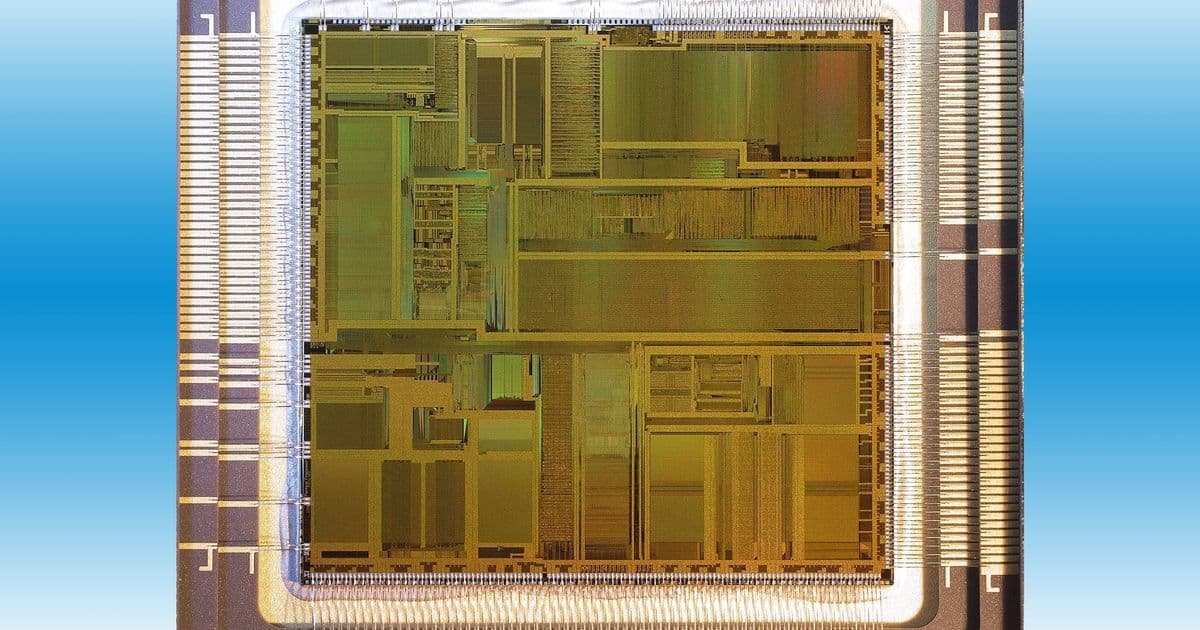
On March 22, 1993, Intel launched the Pentium processor, introducing superscalar architecture and 3.1 million transistors built on 800nm process technology, marking a pivotal moment in personal computing history.
On March 22, 1993, Intel launched the Pentium processor, introducing superscalar architecture and 3.1 million transistors built on 800nm process technology, marking a pivotal moment in personal computing history.
The Birth of a Computing Era
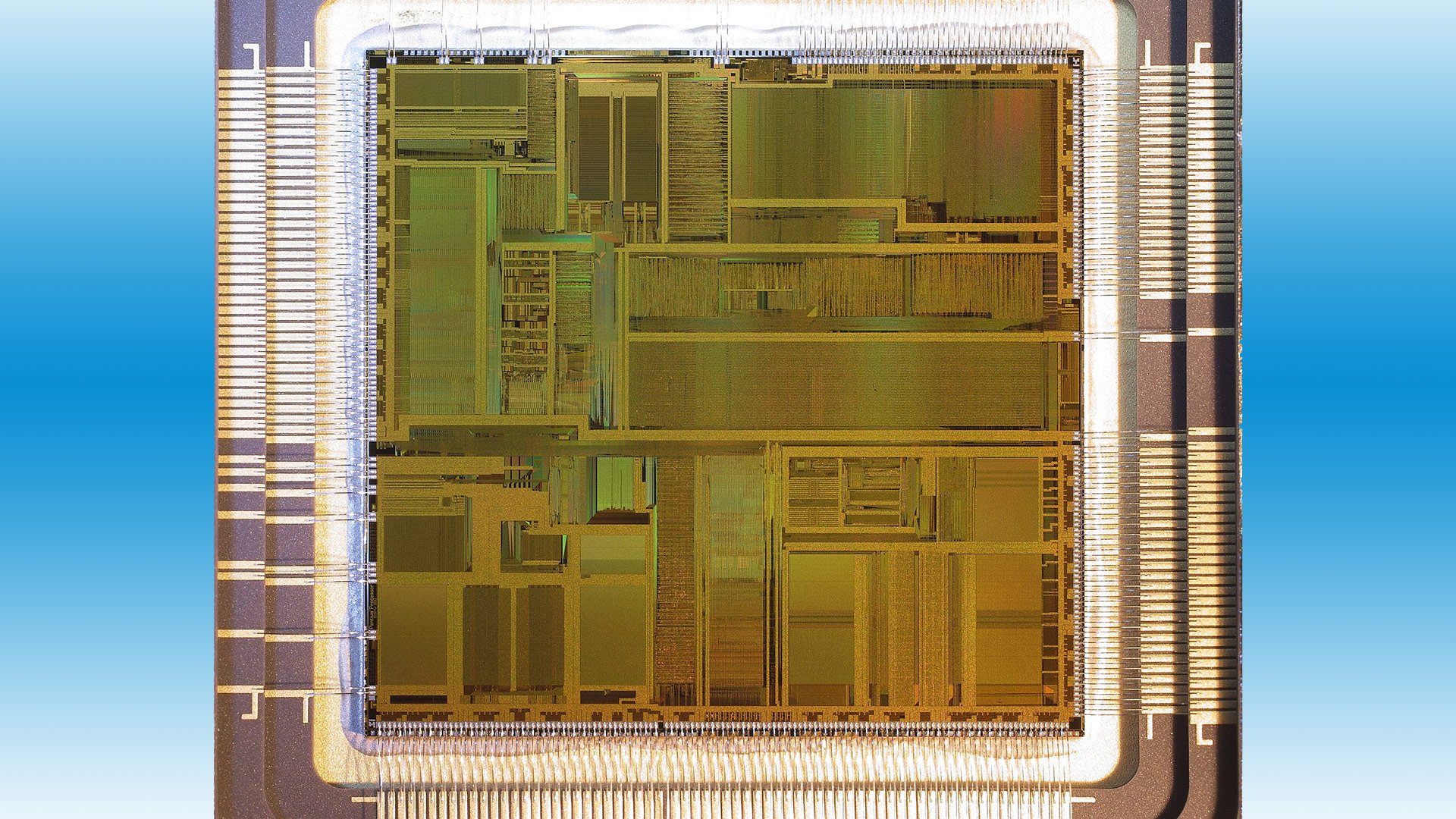
Thirty-three years ago today, Intel unveiled the Pentium processor, a chip that would define personal computing for decades to come. The Pentium represented Intel's first superscalar design, an architectural breakthrough that allowed the execution of multiple instructions per cycle. This innovation provided a significant performance boost over its predecessors, despite the seemingly modest launch clock speeds of 60 and 66 MHz.
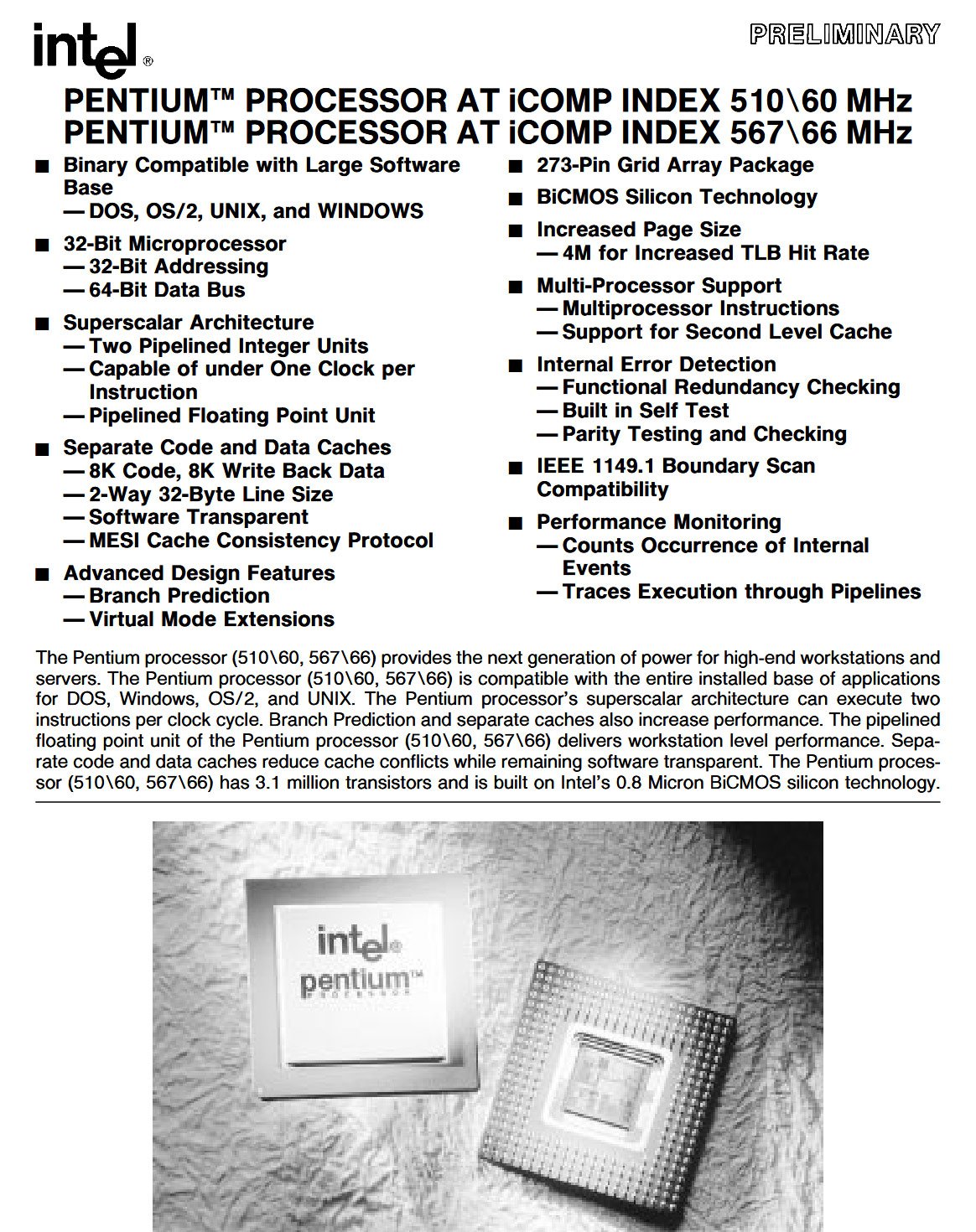
The development journey began in June 1989, when the same team that created the Intel 386 and 486 processors embarked on designing the company's fifth-generation x86 chip. The project aimed to merge RISC and CISC technologies, incorporating features that were revolutionary for the time: on-chip cache, a 64-bit burst-mode external data bus, a fully hardware multiplier, and dynamic branch prediction.
Technical Specifications That Shaped the Future
The Pentium's architecture was built on an 800nm process node, packing 3.1 million transistors onto the silicon die. This represented a massive leap in complexity compared to earlier processors. The chip's floating-point unit was particularly noteworthy, delivering performance that was three to five times faster than the i486 FPU.
Intel had initially planned to launch the Pentium in September 1992, but design challenges pushed the release to March 22, 1993. The launch included two models: the Pentium 60 and Pentium 66, with the latter offering a modest but meaningful clock speed advantage.
The Infamous FDIV Bug
However, the Pentium's legacy includes one of the most significant hardware failures in computing history. Just a year after launch, in October 1994, the Pentium FDIV bug was discovered. This mathematical error in the chip's floating-point division unit caused incorrect calculations in certain rare circumstances.
The bug became Intel's first CPU recall, costing the company $475 million to replace defective processors. Beyond the financial impact, the incident left a lasting stain on Intel's reputation and fundamentally changed how the semiconductor industry approaches quality assurance and customer communication.
Evolution and Refinement
Intel quickly iterated on the Pentium design. The following year saw the introduction of the P54C series, available in 75, 90, and 100 MHz variants. These chips featured several improvements: a new 80502 FPU, fabrication at 600nm (later refined to 350nm), and a switch from 5V to approximately 3V core voltage for better power efficiency.
The platform also evolved, transitioning from Socket 4 to Socket 5, reflecting the ongoing changes in processor design and motherboard compatibility.
Historical Context and Legacy
The Pentium's launch occurred during a transformative period in computing. Personal computers were becoming mainstream, and the demand for more powerful processors was accelerating rapidly. The Pentium's superscalar architecture and improved performance characteristics helped drive the development of more sophisticated software applications and operating systems.
Interestingly, the 30th anniversary year of the FDIV bug also marked another significant Intel challenge: the acknowledgment that Raptor Lake CPUs were experiencing failures due to excessive voltage. This parallel highlights how even decades later, Intel continues to grapple with the complexities of pushing processor technology to its limits.
Impact on the Industry
The Pentium's success established Intel as the dominant force in the processor market, a position it would maintain for years. The chip's architecture influenced subsequent processor designs across the industry, with superscalar execution becoming a standard feature in modern CPUs.
For consumers, the Pentium represented a tangible improvement in computing experience. Applications loaded faster, multitasking became more practical, and the foundation was laid for the multimedia-rich computing environment we take for granted today.
Looking Back
As we mark 33 years since the Pentium's debut, it's worth reflecting on how far processor technology has advanced. Today's chips contain billions of transistors, operate at clock speeds measured in gigahertz rather than megahertz, and incorporate architectural features that would have been unimaginable in 1993.
Yet the fundamental principles established by the Pentium—parallel execution, on-chip cache, sophisticated branch prediction—remain at the core of modern processor design. The Pentium wasn't just a product; it was a foundation upon which the entire computing industry would build for decades to come.
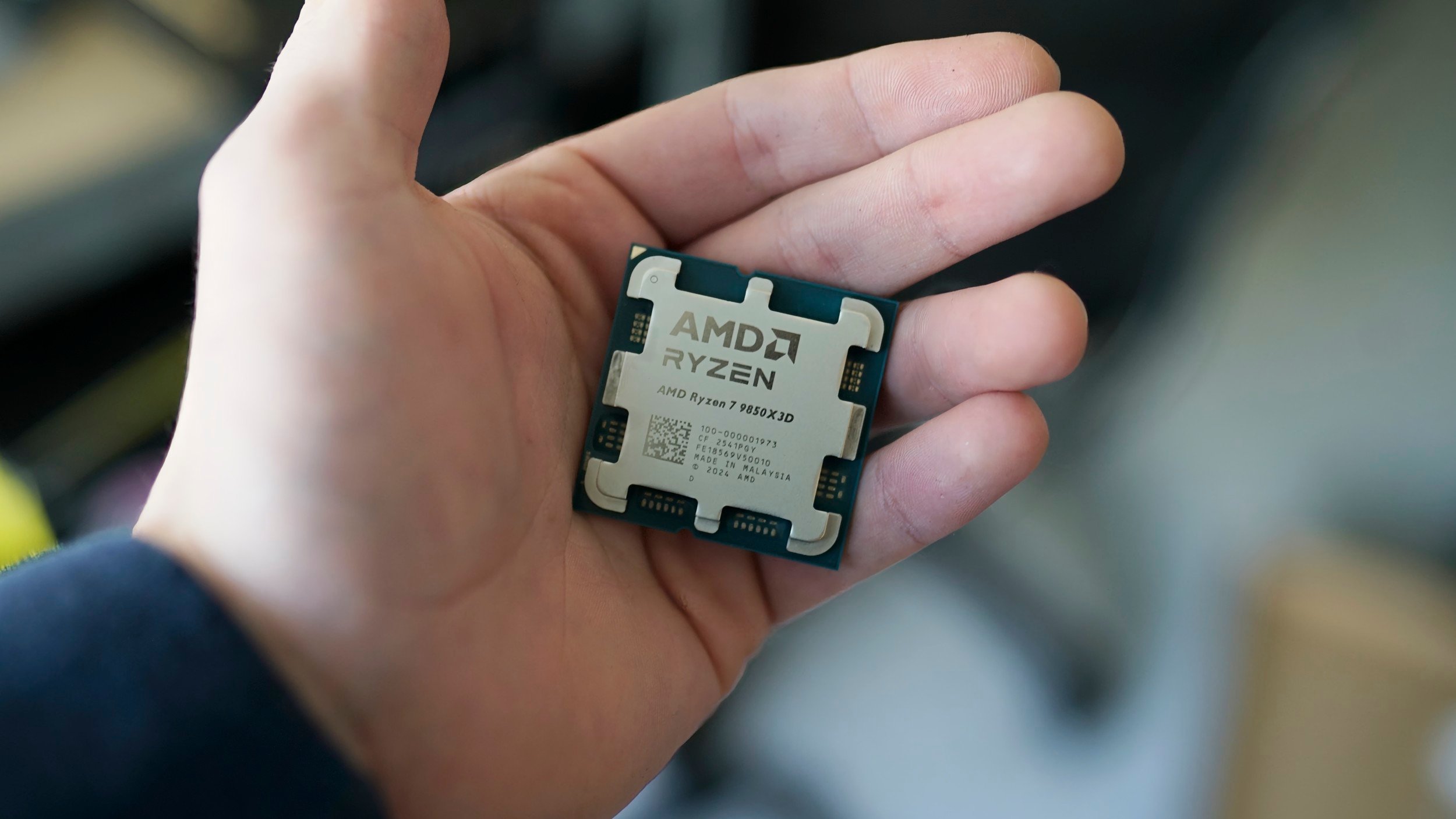
The story of the Pentium is ultimately one of innovation, challenge, and evolution. From its groundbreaking architecture to its infamous bugs, from its market dominance to its lasting influence, the Pentium processor remains a pivotal chapter in the history of personal computing.
Comments
Please log in or register to join the discussion