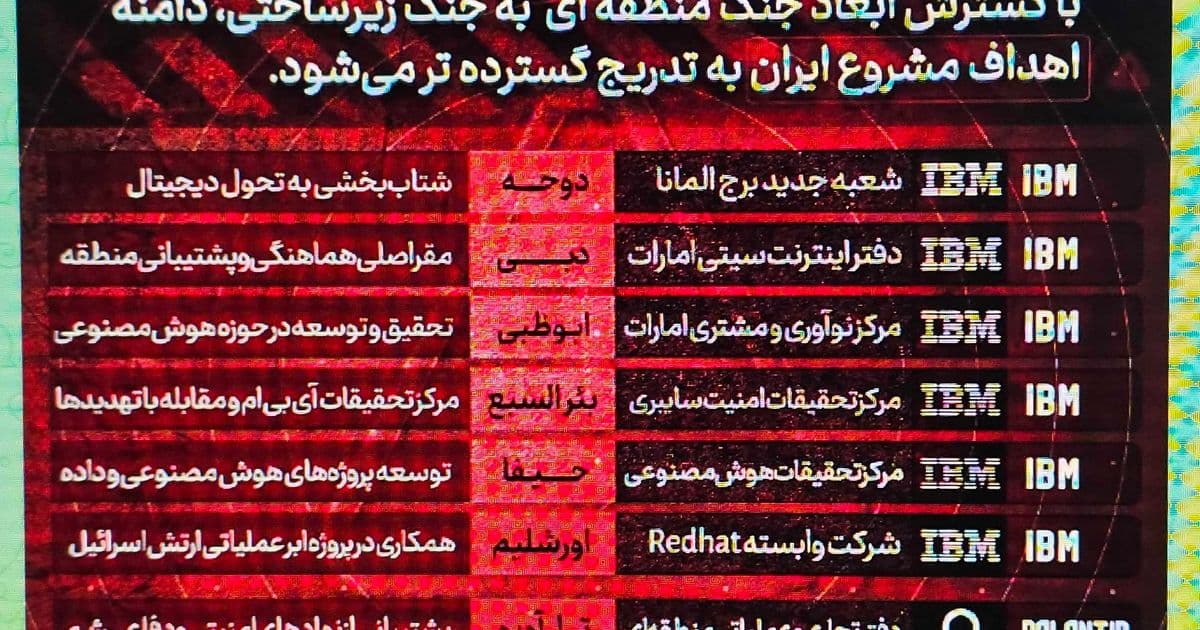
Iran's Revolutionary Guard has publicly identified 29 US tech company facilities across the Middle East as legitimate military targets, escalating from previous drone strikes on AWS datacenters to a broader campaign of 'infrastructure warfare' against American technology companies.
Iran has dramatically escalated its conflict with the United States by publicly designating nearly 30 facilities belonging to major American technology companies as legitimate military targets, marking a dangerous shift toward what state media calls "infrastructure warfare." The Islamic Revolutionary Guard Corps (IRGC) published a detailed list of targets including Amazon, Google, IBM, Microsoft, Nvidia, Oracle, and Palantir facilities across Bahrain, Israel, Qatar, and the United Arab Emirates.
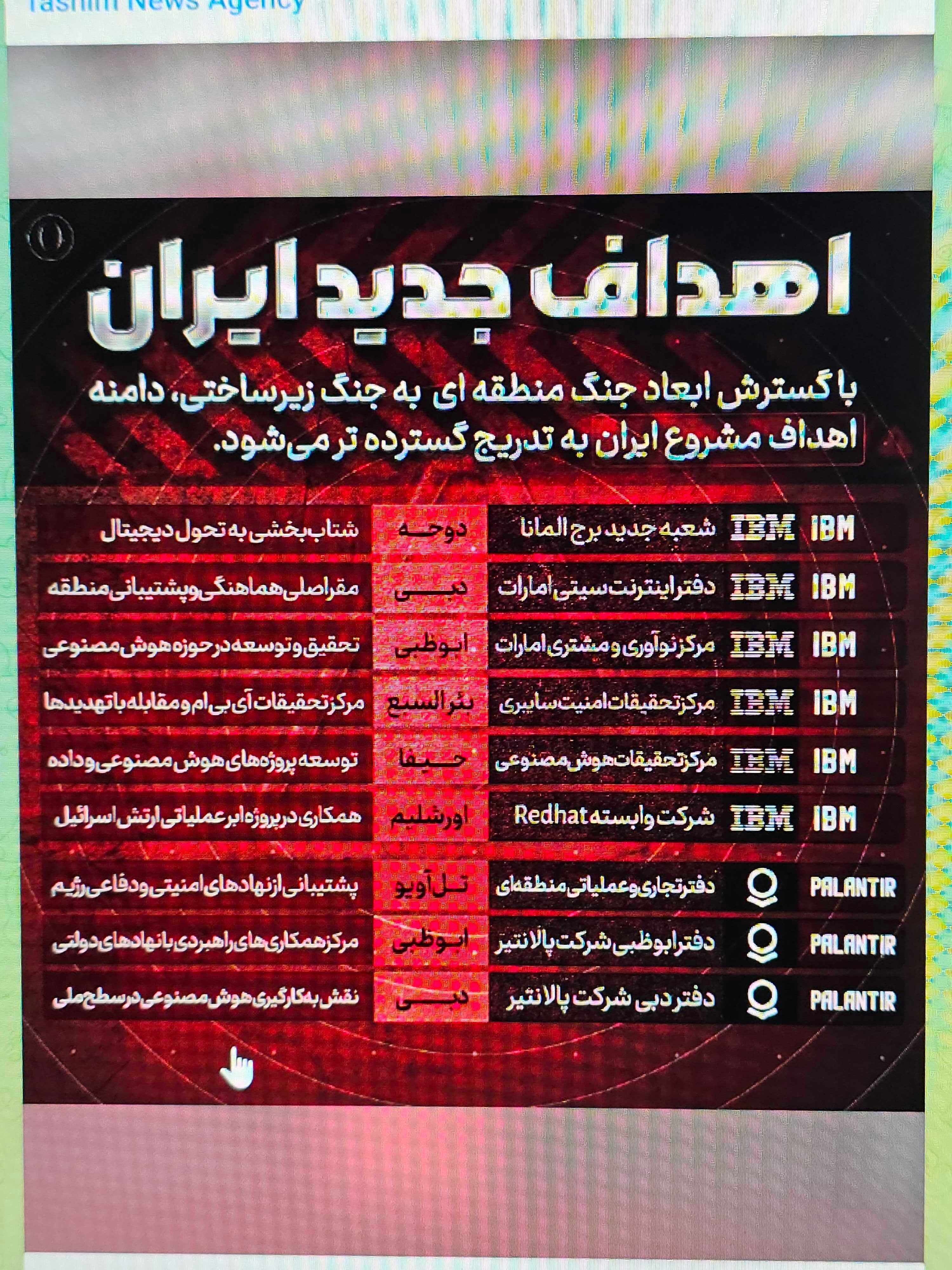
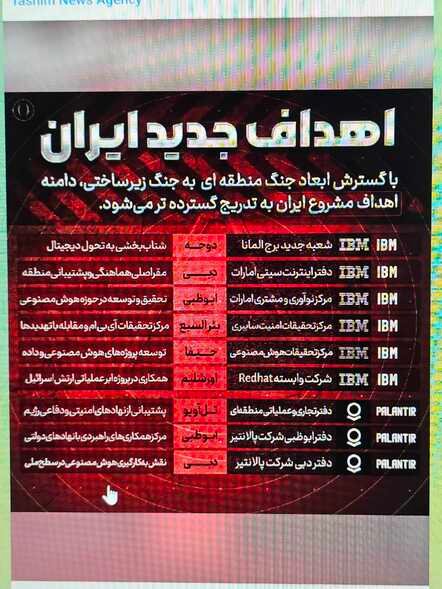
The targets were revealed through Iran's state-affiliated Tasnim news agency on its Telegram channel under the ominous title "Iran's New Targets." The list specifically identifies five Amazon facilities, five Microsoft locations, six IBM sites, three Palantir offices, four Google buildings, three Nvidia centers, and three Oracle facilities. Each target includes the vendor name, facility type, precise location, and a description of their operations.
This escalation follows Iran's recent drone strikes against three AWS datacenters in the region, which the country claims were deliberate attacks aimed at probing US datacenter dependencies. The IRGC has framed these actions as legitimate retaliation for what it describes as American "terrorist" actions, specifically citing attacks on Iranian banking infrastructure.
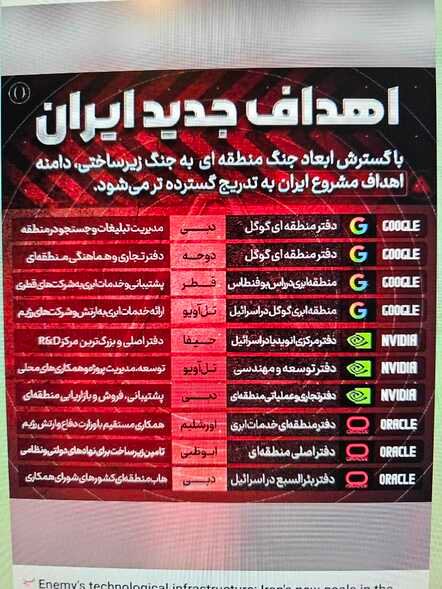
The scope of Iran's targeting extends beyond mere datacenters to include research and development facilities critical to US technological dominance. The list encompasses Google's regional Dubai office handling advertising and search operations, its Qatar office for cloud support services, Nvidia's "main and largest R&D center" in Haifa, IBM's AI research and threat response operations in Be'er Sheva, Palantir's strategic collaboration center in Abu Dhabi and regional office in Tel Aviv, Oracle's regional cloud service office in Jerusalem, and Amazon offices in Tel Aviv and Haifa.

Hours after the target list was published, a spokesperson for Iran's central military command, Khatam al-Anbiya, issued a stark warning through Tasnim's Telegram channel. "Americans should expect our painful response," the spokesperson declared, framing the attacks as retaliation for what Iran characterizes as illegitimate and unconventional warfare tactics by the United States and Israel.
The military spokesperson specifically referenced attacks on Iranian banking infrastructure, stating: "Last night the American terrorist army and the brutal Zionist regime targeted one of the country's banks after failing in their military objectives. With this illegitimate and unconventional action in war, the enemy left our hands open to targeting economic centers and banks belonging to the United States and the Zionist regime in the region."
Iran's campaign has already demonstrated its capability to disrupt cloud services across the Middle East. The drone strikes on AWS datacenters knocked numerous cloud providers offline, forcing companies like Snowflake, Red Hat, and IoT platform EMQX to urgently advise customers to implement disaster recovery procedures and migrate resources to alternative regions.
The targeting of technology infrastructure represents a significant evolution in modern warfare, where digital services and physical datacenters become legitimate military objectives. This approach blurs the lines between cyber warfare and conventional military action, potentially setting a dangerous precedent for future conflicts.
For the technology industry, this development raises serious questions about the security of critical infrastructure in conflict zones. Companies operating in the Middle East now face the unprecedented challenge of protecting facilities that have been publicly identified as military targets by a hostile state actor.
The international community has yet to issue a unified response to Iran's actions, though the targeting of civilian technology infrastructure by state military forces represents a concerning escalation that could have far-reaching implications for global technology operations and international law regarding the protection of civilian infrastructure during conflicts.
As tensions continue to escalate, the technology sector finds itself increasingly caught in the crossfire of geopolitical conflicts, with the physical security of datacenters and research facilities becoming as critical as their cybersecurity defenses.
Comments
Please log in or register to join the discussion