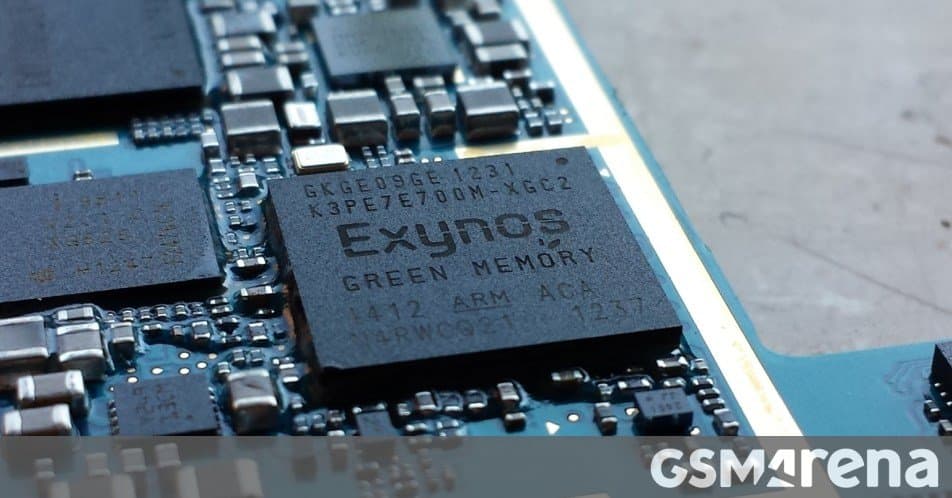
A brief labor protest at Samsung's critical Pyeongtaek chip manufacturing facility caused significant production disruptions, highlighting the vulnerabilities in global semiconductor supply chains.
Samsung's chip manufacturing operations in South Korea faced unexpected disruption when workers at the company's Pyeongtaek facility staged a protest that skipped night shifts on April 23 and 24, 2026. The demonstration, which reportedly centered around wage demands, led to substantial drops in production at one of Samsung's most critical semiconductor manufacturing sites.
The Pyeongtaek complex represents a cornerstone of Samsung's semiconductor manufacturing capabilities, operating on a continuous 24/7 schedule across three shifts to meet global demand. During the affected night shifts (10 p.m. to 6 a.m.), production of chipsets plummeted by 58%, while memory production decreased by 18%. While these figures might seem modest at first glance, they carry significant implications for an industry where production tolerances are measured in nanometers and schedules are planned months in advance.
"Even small interruptions in chip manufacturing can throw off orders and deliveries in potentially major ways since those operations have extremely tight schedules and tolerances," explains industry analyst Mark Johnson. "When you're producing components that go into everything from smartphones to automobiles, a 20% production dip can create ripple effects throughout entire supply chains."
Samsung's Pyeongtaek facility is particularly crucial as it produces both logic chips (chipsets) and memory chips, making it a vital link in the company's vertically integrated manufacturing strategy. The company's ability to produce both types of components in-house gives it a competitive advantage but also means that disruptions at this facility impact multiple product lines simultaneously.
The protest comes at a time when Samsung is facing increased competition in the semiconductor space. According to recent market analysis, Samsung's memory division has been struggling with pricing pressures, while its foundry services face stiff competition from TSMC and other manufacturers. Samsung's latest financial results show these challenges are impacting the company's overall performance.
Labor relations in South Korea's tech industry have historically been complex, with Samsung having faced unionization efforts in the past. The current protest appears to be part of broader demands for better compensation in an industry that has seen significant growth but uneven distribution of those gains. South Korea's tech labor market has been evolving as companies face increasing pressure to improve worker conditions.
The timing of this disruption is particularly noteworthy as the global semiconductor industry continues to recover from pandemic-era supply chain issues. Companies like Apple, Qualcomm, and others who rely on Samsung's components have been working to build more resilient supply chains, but events like this demonstrate that physical manufacturing remains vulnerable to local disruptions.
According to Samsung's response to the incident, production returned to normal levels after the protest concluded. However, the incident raises questions about how Samsung might prevent similar disruptions in the future. The company has historically maintained a non-union workforce, but as labor movements gain momentum globally, Samsung may need to reconsider its approach to labor relations.
"The semiconductor industry has learned that diversification is key to supply chain resilience," noted tech industry researcher Sarah Chen. "This includes not just geographic diversification but also having multiple suppliers and production technologies. Samsung's situation highlights why companies like Intel and others are investing heavily in new manufacturing facilities in different regions."
For consumers, the immediate impact may be minimal, as Samsung likely has inventory buffers to absorb short-term production disruptions. However, if similar protests become more frequent or prolonged, we could see delays in product launches or increased costs that eventually get passed to consumers.
Samsung has not commented on whether the workers' wage demands were met, but the company has emphasized its commitment to maintaining stable production. As the industry continues to grapple with balancing efficiency with worker satisfaction, this incident may serve as a case study in managing labor relations within high-tech manufacturing environments.
The broader context of this protest includes the ongoing global chip shortage recovery efforts and increasing geopolitical tensions that are reshaping semiconductor manufacturing. Companies worldwide are reassessing their supply chain strategies, with many prioritizing domestic or allied production to reduce vulnerability to regional disruptions.
As Samsung and other manufacturers navigate these challenges, the incident serves as a reminder that even the most advanced manufacturing operations remain dependent on human labor and the complex social dynamics that come with it. In an industry where precision and consistency are paramount, maintaining labor harmony has become as critical as technological innovation.
Comments
Please log in or register to join the discussion