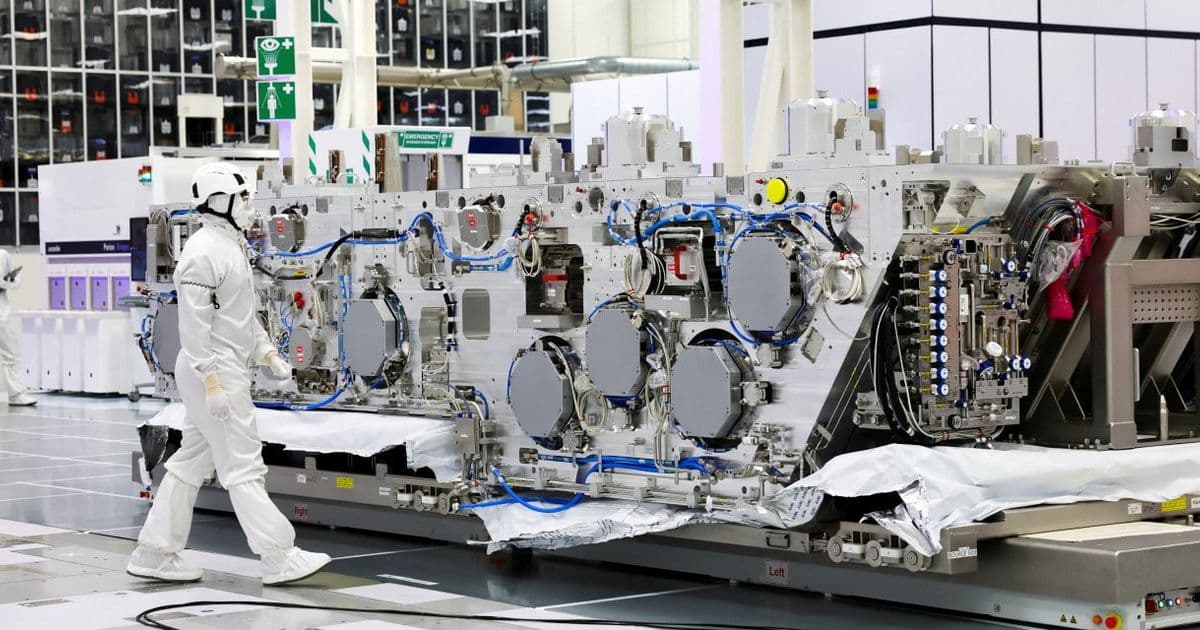
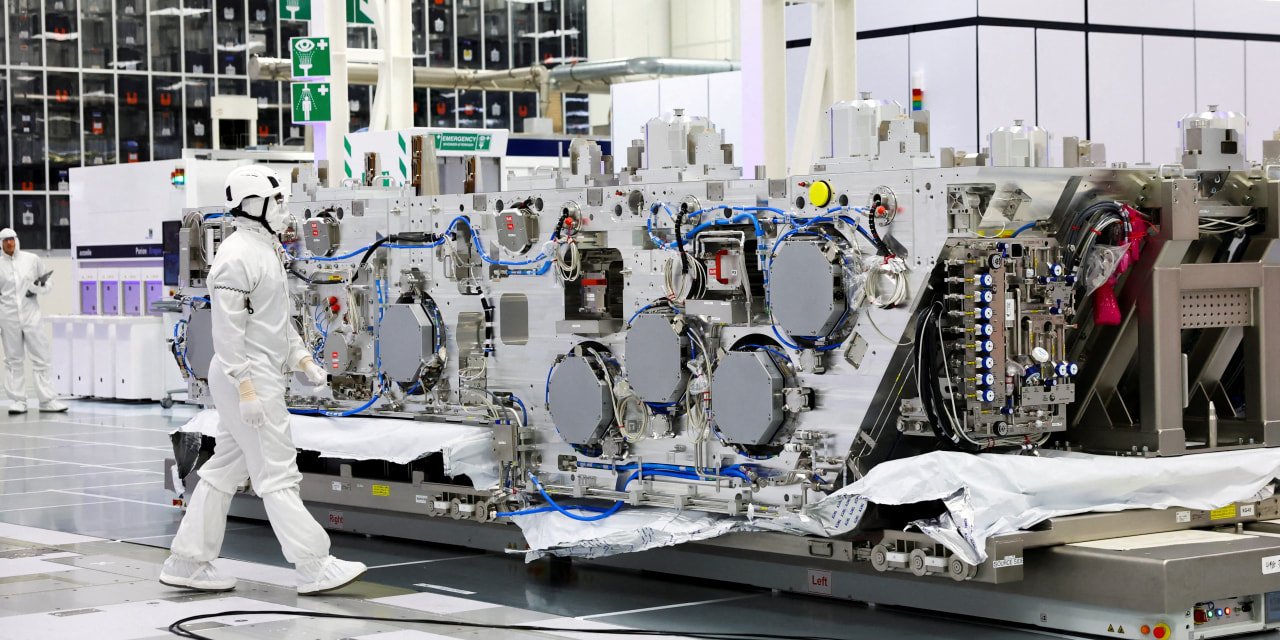
The Dutch semiconductor equipment giant ASML plans to increase production of its critical EUV lithography machines by 36% this year, reflecting the intensifying global race to manufacture advanced AI chips and highlighting the bottleneck in semiconductor manufacturing capacity.
In a significant development for the semiconductor industry, ASML has announced plans to manufacture at least 60 of its extreme ultraviolet (EUV) lithography machines in 2026, representing a 36% increase from the units sold in 2025. This production ramp comes as the company races to meet surging demand for the equipment needed to manufacture cutting-edge AI chips.
ASML holds a unique and critical position in the global semiconductor supply chain as the only manufacturer of EUV machines, which are essential for producing the most advanced semiconductors. These machines use extreme ultraviolet light to print microscopic circuit patterns onto silicon wafers with precision that older technology cannot achieve. The ability to manufacture increasingly smaller and more complex transistors is fundamental to developing more powerful AI chips, which require billions of transistors operating in concert.
The production increase reflects several intersecting trends in the technology landscape. First, the global AI boom has created unprecedented demand for advanced processors, from companies like NVIDIA, AMD, and Intel, as well as cloud providers and AI startups. Second, geopolitical tensions have prompted governments and companies to seek greater semiconductor self-sufficiency, with the U.S., EU, China, and Japan all investing heavily in domestic semiconductor manufacturing capabilities.
Industry analysts have noted that ASML's production capacity has become a key constraint in the semiconductor industry's ability to meet demand. "EUV machines represent the pinnacle of semiconductor manufacturing technology, and ASML's ability to produce them is a critical bottleneck," noted semiconductor analyst Sarah Johnson in a recent industry report. "Their production ramp is a necessary response to the AI chip arms race."
The company's announcement also comes amid significant investments in semiconductor manufacturing infrastructure. The CHIPS Act in the United States, the European Chips Act, and similar initiatives in Japan and South Korea have collectively allocated hundreds of billions of dollars to boost semiconductor production capacity. These initiatives often include provisions specifically for acquiring EUV machines, which can cost upwards of $150 million each.
However, the semiconductor manufacturing community has expressed mixed reactions to ASML's production plans. While some view the increased capacity as a positive development that will help alleviate supply constraints, others caution that the production ramp may not be sufficient to meet demand. "Even with this increase, lead times for EUV machines remain extended, and the fundamental constraint remains ASML's ability to manufacture the precision optics and other components that go into these machines," noted Mark Chen, chief technology officer at a major Asian foundry.
The broader implications of ASML's production plans extend beyond the semiconductor industry. Advanced AI chips are essential for developments in artificial intelligence, quantum computing, and other emerging technologies. The ability to manufacture these chips at scale will influence the pace of innovation across multiple sectors, from healthcare and climate modeling to autonomous systems and scientific research.
Geopolitical factors also play a significant role in the EUV market. ASML operates under export restrictions imposed by the Netherlands, following agreements with the United States, limiting the sale of the most advanced EUV machines to China. This has created a complex dynamic where Chinese semiconductor manufacturers are seeking alternative approaches while global demand from other regions continues to grow.
The semiconductor industry has also seen increased scrutiny of ASML's dominant position. As the sole supplier of EUV machines, the company holds significant leverage over the entire semiconductor manufacturing ecosystem. Some industry voices have called for greater diversity in semiconductor equipment suppliers, though technological barriers make this challenging in the near term.
Looking ahead, ASML faces the challenge of not only increasing production but also maintaining the quality and precision that its machines are known for. The company has indicated that it is investing in automation and process improvements to boost output while maintaining the exacting standards required for EUV manufacturing.
The production increase also reflects the longer-term trajectory of semiconductor manufacturing. As AI and other advanced applications demand increasingly powerful chips, the industry will continue to push the boundaries of what's technologically possible. EUV lithography represents a critical enabler of this progress, and ASML's ability to scale production will play a key role in determining the pace of innovation in the years to come.
In conclusion, ASML's decision to increase EUV machine production by 36% highlights the critical role that semiconductor manufacturing equipment plays in the global technology landscape. As the AI revolution continues to unfold, the ability to produce increasingly advanced chips will remain a key differentiator for companies and nations alike. While the production increase is a positive step, the semiconductor industry will likely continue to grapple with supply constraints as demand for advanced AI chips continues to grow at an unprecedented pace.
For more information on ASML and EUV technology, visit ASML's official website or explore their EUV lithography technology page.
Comments
Please log in or register to join the discussion