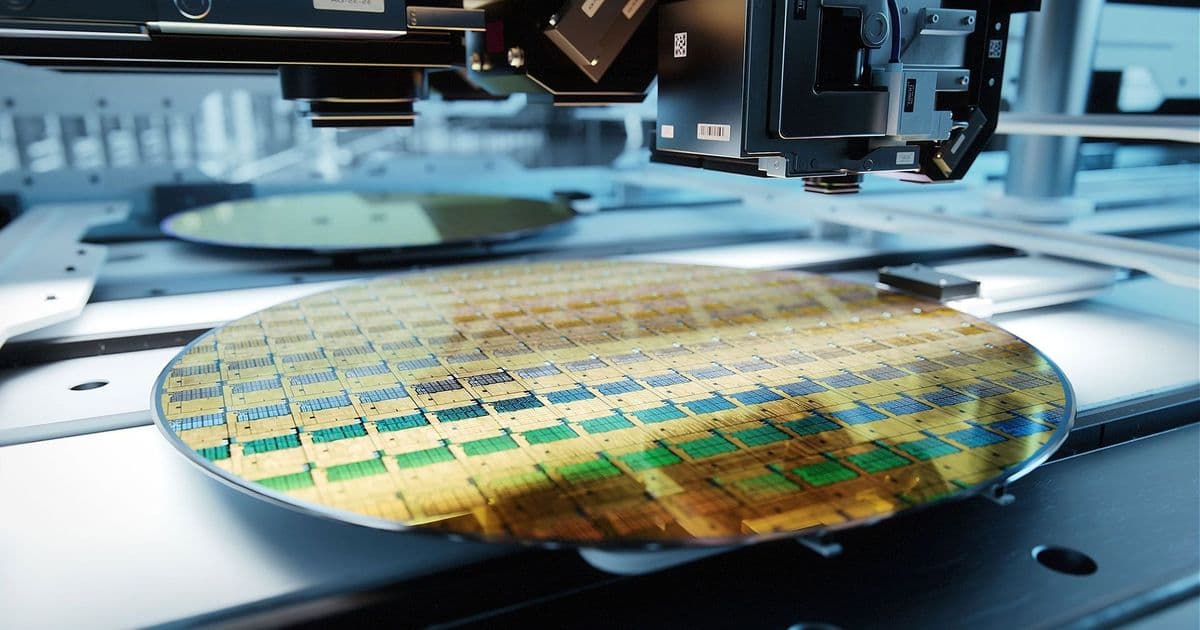
Intel leveraged unprecedented CPU demand to monetize chips that would normally be discarded, revealing a unique supply chain adaptation in the current semiconductor market.
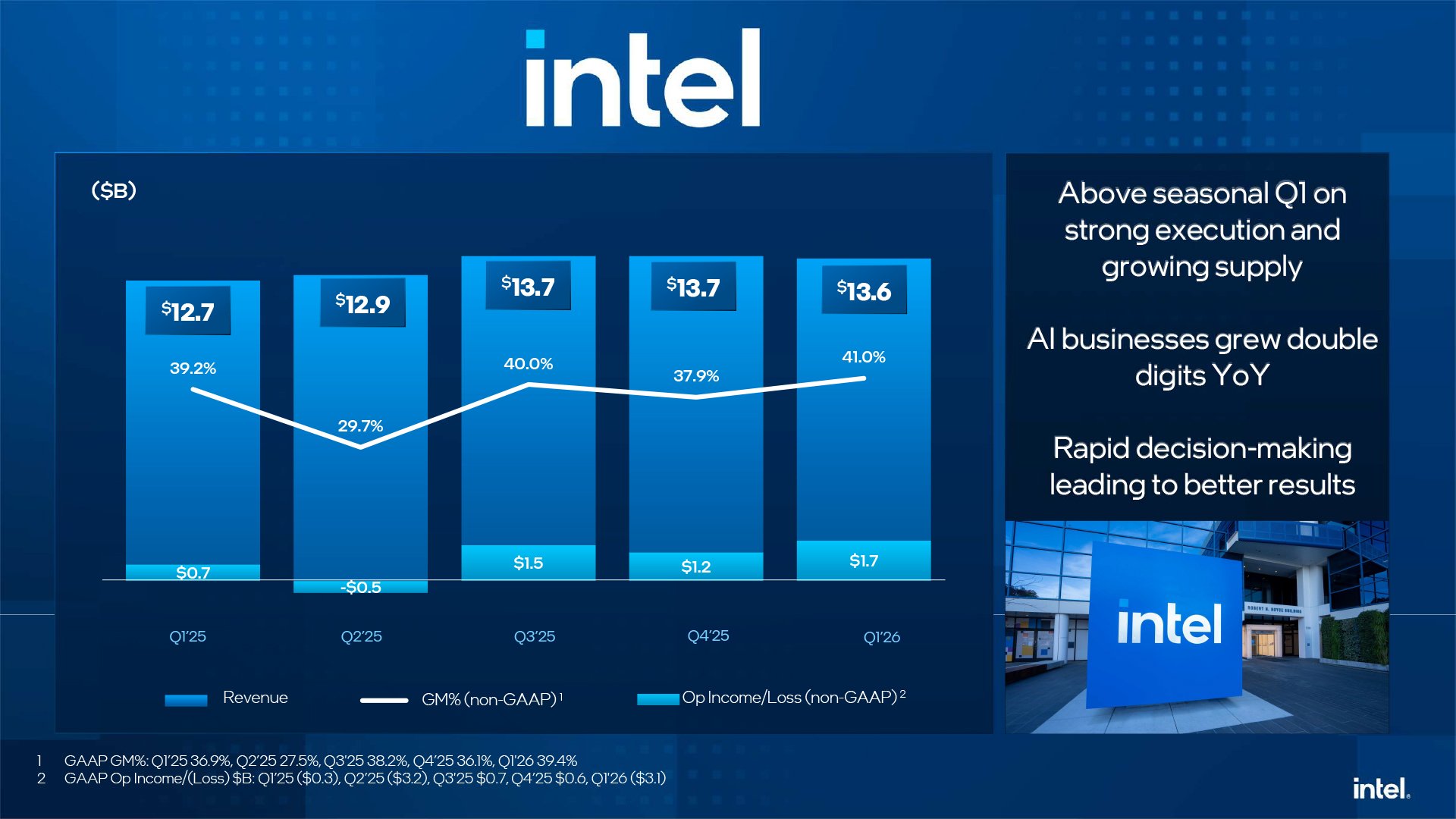
Intel's Q1 2026 earnings report revealed a significant financial surprise that has industry analysts reevaluating the current semiconductor supply dynamics. The company reported $13.6 billion in revenue, substantially exceeding analyst expectations of $12.36 billion, while achieving Non-GAAP gross margins of 41%—650 basis points above its own guidance of 34.5%. The earnings per performance beat expectations by an extraordinary 3000%, prompting questions about what drove such exceptional results.
According to tech industry analyst Ben Bajarin, who received direct confirmation from Intel's Investor Relations team, part of the margin improvement came from an unexpected source: selling chips that would normally be considered scrap or low-expectation output. "Chips that would normally have been lower-value edge-die on the wafer were binned down and still sold into usable SKUs, turning what may have been scrap into revenue," Bajarin explained in an April 24 post.
This strategy reveals a fascinating adaptation in Intel's manufacturing and sales approach. During semiconductor manufacturing, not all chips produced on a wafer meet the same quality standards. Dies cut from the edges of a wafer typically exhibit more defects and lower performance characteristics compared to those from the center. Historically, these edge-die chips either couldn't meet specifications for high-end products or were discarded entirely if they couldn't even qualify as lower-tier SKUs.
The current market conditions, however, have changed this calculus. Intel's ability to monetize these chips stems directly from the unprecedented demand for processors, particularly those used in AI infrastructure. The company's Xeon CPUs, which power data center servers running AI workloads, have maintained sustained high demand with no signs of abating. This demand is being fueled by major OEMs including Dell, HP, and Lenovo, alongside hyperscalers such as Microsoft, Google, and Amazon, all purchasing Intel processors in massive volumes to expand data center capabilities.
From a technical perspective, this strategy highlights the economic value that can be extracted from semiconductor manufacturing processes that might otherwise be considered inefficient. When a wafer is processed, the yield of high-performance chips from the center versus the edges can vary significantly. By leveraging strong market demand, Intel can effectively increase its overall wafer utilization rate, improving the economic efficiency of its manufacturing process.
The practice of "binning" processors—sorting them by performance and assigning them to appropriate product tiers—is standard in the industry. What makes Intel's current approach noteworthy is the extent to which they're pushing this practice. Chips that might have been discarded in previous market conditions are now finding buyers, effectively expanding the total addressable market for Intel's manufacturing output.
This strategy also speaks to the current supply-demand imbalance in the semiconductor industry. The AI-driven infrastructure buildout is consuming compute capacity at a pace that the supply chain was not originally designed to accommodate. This voracious appetite for server processors has created a situation where buyers are accepting lower-grade chips simply to secure any available processing power.
From a financial perspective, Intel's approach demonstrates how market conditions can fundamentally change the economics of semiconductor manufacturing. The company didn't necessarily need to improve its process technology or reduce manufacturing costs to achieve these margin improvements; instead, it capitalized on the willingness of customers to purchase chips that would previously have been unsellable.
Looking ahead, this strategy may have implications for Intel's competitors and the broader semiconductor market. If demand remains strong, other manufacturers may also find ways to maximize yields by monetizing chips that would previously have been discarded. However, this approach is inherently dependent on maintaining current demand levels—a situation that could change as supply capacity expands or AI infrastructure buildout matures.
The revelation also raises questions about how Intel's financial performance might be affected if market conditions normalize. While the company has clearly benefited from the current demand environment, investors will be watching to see whether Intel can sustain these margin improvements through genuine technological advancements and manufacturing efficiencies rather than temporary market conditions.
Intel's ability to turn what would have been scrap into revenue underscores the complex interplay between manufacturing processes, product binning strategies, and market dynamics in the semiconductor industry. As the company continues to navigate a challenging competitive landscape and technological transitions, this approach represents a pragmatic adaptation to current market realities—one that may provide short-term financial benefits while the industry continues to grapple with unprecedented demand for compute capacity.
Comments
Please log in or register to join the discussion