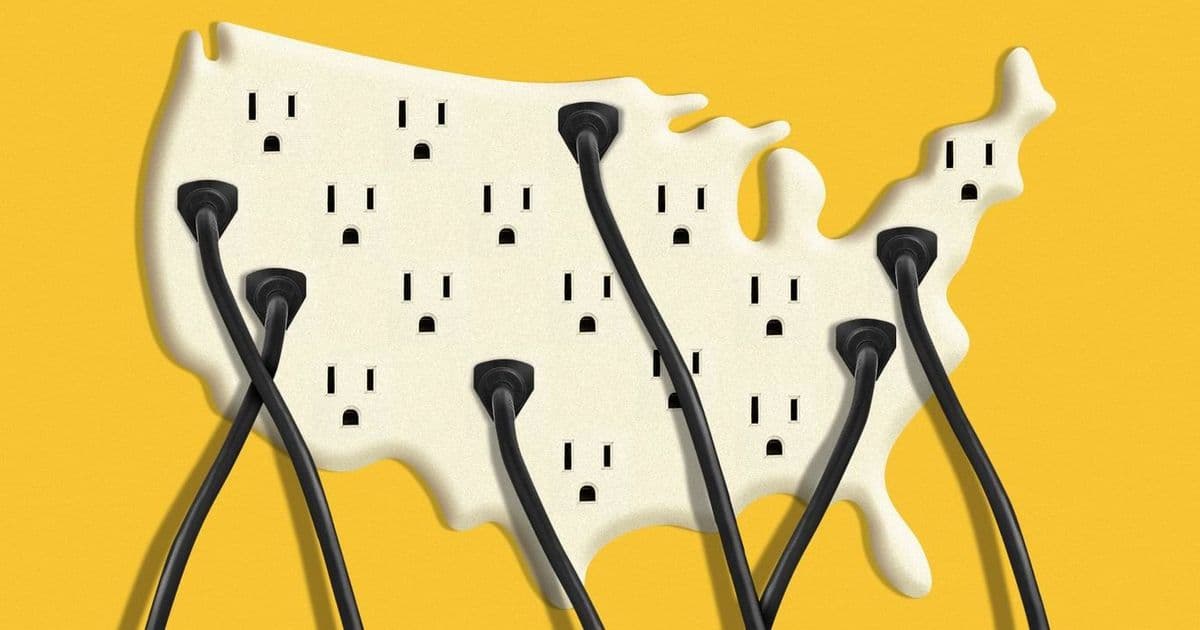
The U.S. economy's reduced dependence on energy makes it more resilient to oil price shocks from Middle East conflicts compared to previous crises.
The United States economy faces a potential test of resilience as tensions with Iran threaten to disrupt global oil markets, but economists say the country is better positioned to weather such shocks than during previous Middle East crises.
Unlike the 1970s oil embargoes or even the 2008 price spikes, America's economy today requires significantly less energy to produce the same amount of economic output. This structural shift means that while oil price volatility could still cause economic pain, the impact would likely be more muted than in past conflicts.
Energy intensity - the amount of energy required to generate one dollar of GDP - has fallen dramatically over the past four decades. In 1980, the U.S. economy needed about 14,000 British thermal units of energy to produce $1 of GDP. By 2023, that figure had dropped to roughly 5,500 BTUs per dollar, a decline of more than 60%.
This transformation stems from multiple factors. Manufacturing has become more energy-efficient, with industries adopting better processes and technologies. The service sector now dominates the economy, and services generally require less energy per dollar of output than manufacturing. Buildings use less energy for heating and cooling thanks to improved insulation and HVAC systems. Perhaps most significantly, the shale revolution has made the United States a major oil and natural gas producer, reducing dependence on volatile Middle Eastern supplies.
When oil prices spiked to nearly $150 per barrel in 2008, many economists estimated that every $10 increase in oil prices reduced U.S. GDP growth by about 0.2 percentage points. Today, that same $10 price increase might shave only 0.05 to 0.1 percentage points off growth, according to recent analyses.
However, the reduced energy intensity doesn't eliminate vulnerability entirely. Transportation remains a major energy consumer, and higher fuel costs still flow through to consumers via increased shipping and delivery charges. Industries that are energy-intensive - such as chemicals, metals, and paper - would still face margin pressure from higher energy costs.
There's also the question of how global markets would react. Even though the U.S. imports less oil than in the past, it remains integrated into the global economy. A severe supply disruption could still push global prices higher, affecting American consumers and businesses indirectly through imported goods and services.
The Federal Reserve would face difficult choices in such a scenario. Higher energy prices act as a tax on consumers, reducing disposable income for other purchases. This could slow economic growth, but it also creates inflationary pressure. The central bank would need to weigh whether to prioritize controlling inflation or supporting growth - a dilemma that echoes the stagflation challenges of the 1970s, though the underlying economic structure is quite different today.
Financial markets would likely respond quickly to any escalation. Energy stocks might rally while transportation and consumer discretionary sectors could face pressure. The dollar's status as the global reserve currency and the U.S. role as a major energy producer provide some insulation, but uncertainty itself can be damaging to business investment and consumer confidence.
What makes the current situation distinct from past crises is the combination of lower energy intensity with America's position as an energy exporter. The U.S. now produces roughly 13 million barrels of oil per day and about 100 billion cubic feet of natural gas. This production capacity means that while higher global prices would still hurt, domestic producers would benefit, partially offsetting the economic drag.
Additionally, the economy has developed more tools to manage energy price volatility. Many businesses use hedging strategies to lock in fuel costs. Consumers have more fuel-efficient vehicles than in previous decades. The growth of renewable energy, while still modest in the overall energy mix, provides some alternatives when fossil fuel prices spike.
The bottom line is that while an Iran-related oil shock would create economic challenges, the United States appears better equipped to handle them than during previous Middle East crises. The economy's reduced energy intensity acts as a form of built-in shock absorber, potentially limiting both the depth and duration of any downturn triggered by energy market disruptions.
Comments
Please log in or register to join the discussion