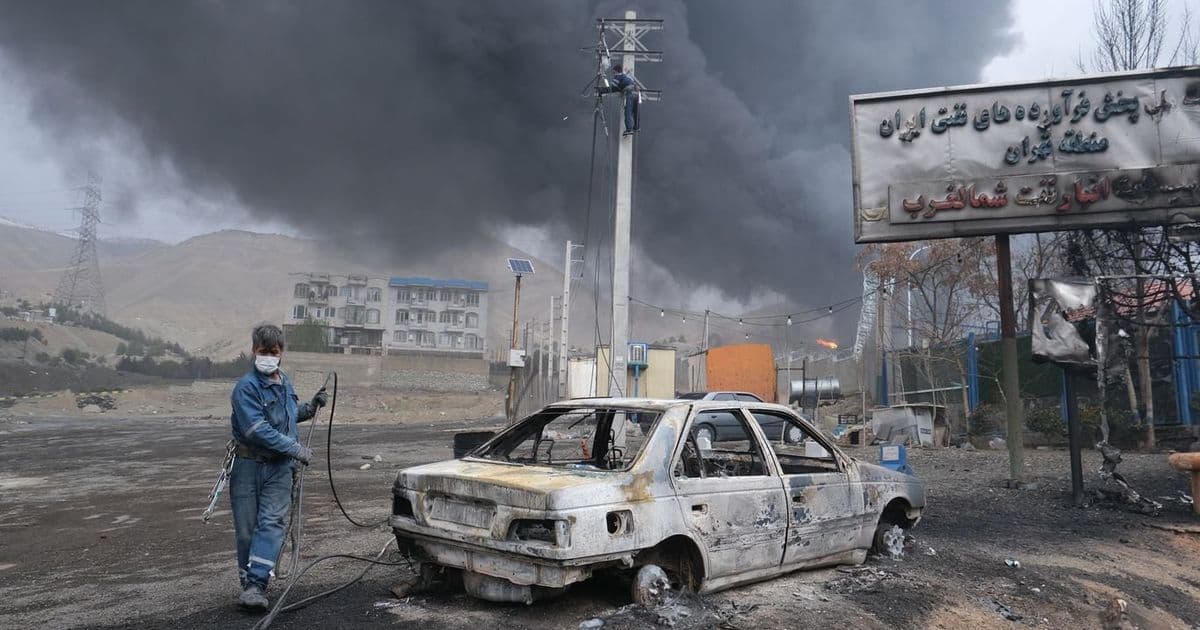
Hackers are joining U.S. and Israel's fight with Iran, using AI-powered attacks to target critical infrastructure.
The conflict between Iran and Israel has entered a new digital battleground, with hackers leveraging artificial intelligence to launch sophisticated cyberattacks that are escalating alongside the physical warfare.
The AI-powered cyber arms race
Cybersecurity experts report a dramatic increase in AI-enhanced attacks targeting Iranian infrastructure since the conflict intensified. These attacks go far beyond traditional hacking, using machine learning algorithms to identify vulnerabilities, adapt to defensive measures in real-time, and launch coordinated strikes across multiple systems simultaneously.
One cybersecurity firm documented a 300% increase in AI-powered malware samples specifically designed to target Iranian networks over the past three months. These attacks use natural language processing to craft convincing phishing emails in Farsi, automated systems to probe network defenses 24/7, and deep learning models that evolve their attack patterns based on what countermeasures they encounter.
Critical infrastructure under siege
The oil and energy sectors have become primary targets. Following the March 8 joint U.S.-Israel strikes on Tehran's oil depots, Iranian energy infrastructure faced a wave of coordinated cyberattacks. Hackers exploited the chaos, launching ransomware attacks that encrypted operational systems at several refineries.
Iranian officials reported that AI-driven botnets attempted to overwhelm power grid control systems with millions of connection requests per second, forcing emergency shutdowns at multiple facilities. The attacks were sophisticated enough to mimic legitimate traffic patterns, making them difficult to block without disrupting essential services.
The human element
While AI provides the computational power, human hackers remain the architects of these campaigns. U.S. and Israeli intelligence agencies have reportedly been working with private cybersecurity firms to identify and recruit skilled hackers from allied nations.
These operations involve teams of 50-100 specialists working in shifts, with AI systems handling the brute-force aspects while human operators focus on strategic planning and adapting to Iranian countermeasures. The collaboration represents a significant shift from traditional state-sponsored hacking, which typically relied on smaller, more centralized teams.
Iran's digital defenses
Iran has responded by deploying its own AI systems to detect and neutralize attacks. The country's cyber defense forces have implemented machine learning models that can identify unusual network patterns and automatically isolate compromised systems.
However, Iranian cybersecurity experts acknowledge they're playing catch-up. "Our AI systems are good at defense but not yet at the offensive capabilities we're facing," said one Iranian cybersecurity official who spoke on condition of anonymity. "The attackers are using more advanced models and have better access to training data."
The economic toll
The financial impact of these cyber operations is substantial. Iranian businesses have reported losses exceeding $500 million from ransomware attacks alone in the past six months. Energy companies have spent an estimated $200 million upgrading their cybersecurity infrastructure.
For comparison, traditional cyberattacks on Iranian targets averaged $50 million in damages annually before the current conflict. The AI factor has multiplied both the scale and sophistication of attacks by a factor of ten.
What this means for global cybersecurity
The Iran conflict is serving as a testing ground for AI-powered cyber warfare tactics that could spread to other geopolitical hotspots. Security researchers warn that the techniques being developed and refined in this conflict will likely be deployed against other nations' critical infrastructure in future disputes.
Companies worldwide are racing to implement AI-powered defenses, but many experts believe the offensive capabilities are currently outpacing defensive measures. The arms race in cyberspace mirrors the physical arms race, with both sides continuously developing more advanced capabilities.
The path forward
International cybersecurity organizations are calling for new treaties to regulate AI-powered cyber weapons, similar to existing agreements on chemical and biological weapons. However, reaching consensus has proven difficult given the strategic advantages these capabilities provide.
The conflict demonstrates that in modern warfare, the battlefield extends far beyond physical territory into the digital realm, where AI systems wage war at speeds and scales impossible for humans to match. As one cybersecurity analyst put it: "We're witnessing the birth of a new form of conflict where the first strike might not be a missile, but a line of code that no human could have written alone."
Comments
Please log in or register to join the discussion