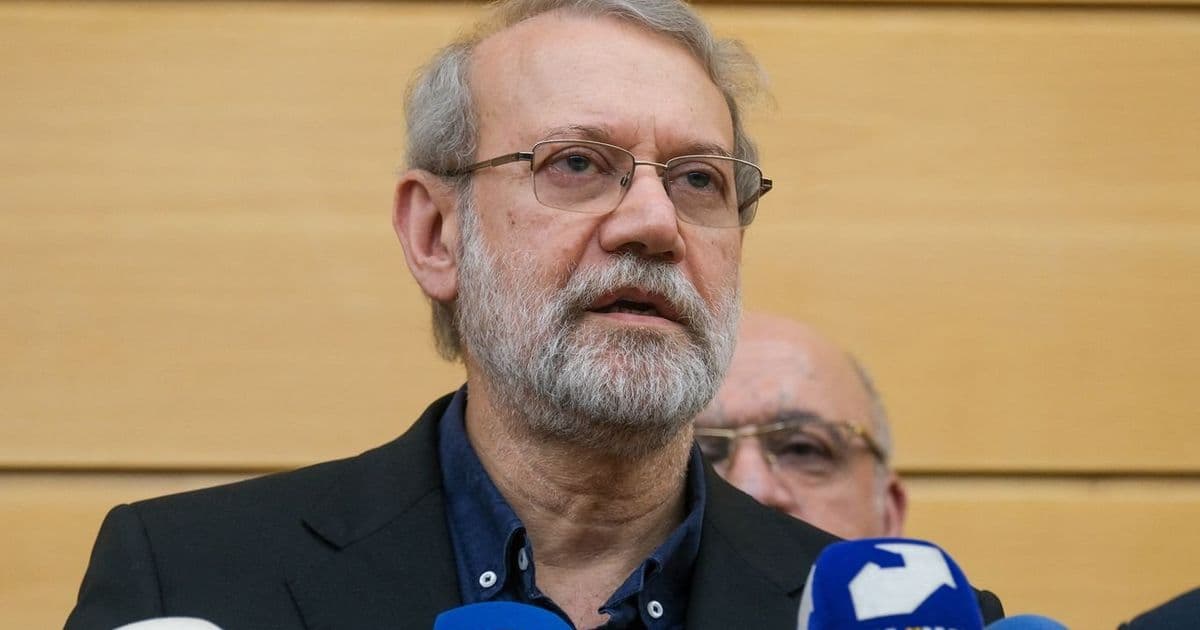
Israeli defense minister confirms killing of Ali Larijani, Iran's national security chief, in what appears to be a targeted strike amid escalating regional tensions.
Israeli Defense Minister Yoav Gallant confirmed today that Israel has killed Ali Larijani, Iran's national security chief, in what appears to be a targeted strike that marks a significant escalation in the ongoing shadow conflict between the two nations.
The killing of Larijani, a former speaker of Iran's parliament and close confidant of Supreme Leader Ayatollah Ali Khamenei, represents one of the most high-profile eliminations of an Iranian official by Israel in recent years. The strike comes amid heightened tensions following Iran's October 2024 missile barrage against Israel and subsequent Israeli counterstrikes on Iranian nuclear facilities.
Strategic implications of the strike
The elimination of Iran's national security chief carries substantial strategic weight. Larijani, 66, had served in various high-level positions within Iran's security apparatus for over two decades, making him one of the Islamic Republic's most experienced national security officials. His death creates a leadership vacuum at a critical moment when Iran is already grappling with internal dissent, economic challenges from sanctions, and the ongoing fallout from its direct confrontation with Israel.
Israeli officials have not disclosed the location or method of the strike, though intelligence sources suggest it may have occurred during Larijani's travels outside Iran. The timing appears calculated to send a message to Tehran about Israel's reach and willingness to target senior Iranian leadership.
Regional ripple effects
The killing is likely to trigger a period of heightened alert across the Middle East. Iran's network of proxy forces, including Hezbollah in Lebanon, the Houthis in Yemen, and various militias in Iraq and Syria, may feel compelled to respond to avenge Larijani's death. This could manifest in rocket attacks on Israeli territory, attempted terrorist operations, or cyber attacks on Israeli infrastructure.
Iran's leadership faces a complex decision matrix. A restrained response might be perceived as weakness by hardliners within the regime, while an aggressive retaliation risks further escalation that could draw in the United States and other regional powers. The Islamic Republic's options are further constrained by its already depleted missile stockpiles following the October exchanges.
Historical context
Israel has a long history of targeting key figures in enemy states' security and military hierarchies. The killing of Larijani follows a pattern that includes the 2020 assassination of Iranian nuclear scientist Mohsen Fakhrizadeh and the 2021 elimination of Syria's top Iranian general, Hassan Khodaei. These operations form part of what Israeli military strategists call the "campaign between wars" - a strategy of continuous pressure on adversaries to prevent them from establishing threatening capabilities.
Larijani's death is particularly significant given his role in coordinating Iran's regional activities and his involvement in nuclear negotiations. As a former nuclear negotiator himself, he understood both the technical and diplomatic dimensions of Iran's standoff with the West, making his loss a blow to Tehran's strategic planning capabilities.
The international community, particularly the United States and European powers, will be watching closely for Iran's response. Any miscalculation could trigger a wider regional conflict at a time when global energy markets remain volatile and multiple flashpoints exist from Ukraine to the Taiwan Strait.
For now, Israel has raised its alert levels and bolstered air defenses, particularly around its northern border with Lebanon, where Hezbollah maintains the largest arsenal of rockets and missiles in the region. The coming days will likely determine whether this killing remains an isolated incident or becomes the spark for a broader conflagration.
Comments
Please log in or register to join the discussion