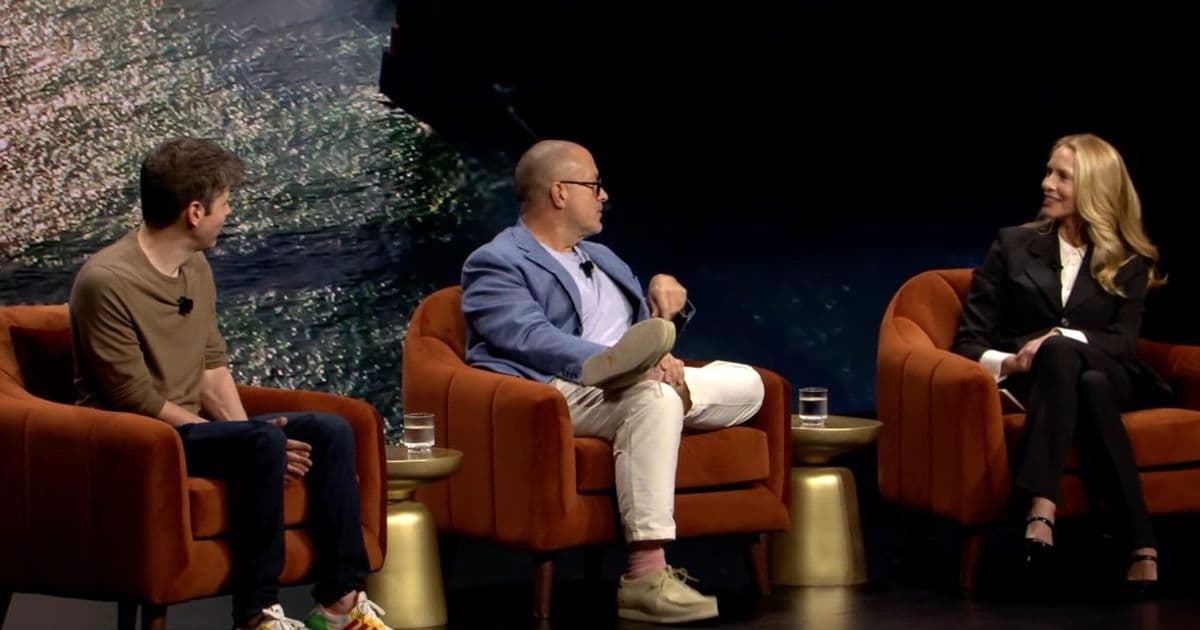
iyO has significantly escalated its legal battle with OpenAI/io by adding allegations of trade secret theft to its initial trademark infringement claim, accusing io co-founder Tang Tan of receiving confidential designs that accelerated their product development by nearly a decade.
The legal dispute between hearing device startup iyO and OpenAI/io has taken a significant turn with the amendment of iyO's lawsuit to now include allegations of trade secret theft. This development comes nearly a year after OpenAI's acquisition of io, the AI company founded by former Apple design chief Jony Ive, and marks a substantial escalation in the ongoing legal battle.
Background on the Dispute
The conflict originated in March 2025 when OpenAI announced its acquisition of io, an AI company founded by Jony Ive. Almost immediately following this announcement, iyO—a hearing device startup—filed a trademark lawsuit alleging that OpenAI was deliberately using a name similar to its own, which would cause confusion and dilute the value of its brand since both companies operate in the same market space.
iyO claimed to be developing AI-powered earpieces and asserted that its executives had met with OpenAI representatives on multiple occasions, during which they showcased their product and technology. These meetings, iyO argued, gave OpenAI access to confidential information about their business and technology.
In response, OpenAI and io presented a different narrative. According to their filings, iyO CEO Jason Rugolo voluntarily provided details about his company and its technology, and even offered to sell the company for $200 million after OpenAI rejected an unsolicited investment bid from iyO. OpenAI also maintained that their first io product would not be an AI-powered wearable device, countering iyO's claims of market overlap.
The Escalation: Trade Secret Theft Allegations
In a document filed on March 13, 2026, and made public recently, iyO has significantly expanded the scope of its lawsuit by adding allegations of trade secret misappropriation. The new claims introduce a former iyO engineer named Dan Sargent, who is accused of downloading confidential files and handing them over to io co-founder Tang Tan, who has now been named as a defendant.
According to the amended complaint, Tang Tan was given access to CAD files, physical prototypes, and internal design details—information that iyO estimates "[accelerated] io Products' product development by nearly a decade." The filing explicitly states:
"All claims asserted herein arise out of, and are based on: (i) Defendants' willful infringement of IYO's registered and common law rights in its IYO (pronounced "EYE-OH") trademark (the "IYO Mark") or contributing to or inducing such infringement; and (ii) Defendant Tang Yew Tan's and Defendant OpenAI OpCo, LLC's misappropriation of IYO's trade secrets (including confidential CAD files and proprietary design information), with the help of Dan Sargent, a former IYO engineer, to accelerate io Products' product development by nearly a decade."
The Alleged Leak Mechanism
The amended complaint provides a detailed account of how the alleged leak occurred. iyO claims that Sargent accessed internal folders, downloaded dozens of files, and renamed them with "gibberish character strings such as 'ergetght.x_t,' 'wrbb5r.x_t,' 'grege.x_t,' and 'grgrgege.x_t'" before exporting CAD data into cross-platform formats.
This activity, iyO alleges, took place just days before a June 2024 dinner in San Francisco, where Tang Tan supposedly reviewed internal materials and physical product samples alongside an engineer from LoveFrom, Jony Ive's design studio. The timing suggests a deliberate effort to transfer sensitive information to the io team before the acquisition was finalized.
Implications for Tech Companies and Acquisitions
This case highlights the increasing importance of intellectual property protection in tech acquisitions and partnerships. For companies developing innovative products, especially in competitive markets like AI and wearable technology, protecting trade secrets and confidential designs has become paramount.
The allegations suggest that even informal meetings and presentations can potentially lead to significant IP exposure. Tech companies may need to implement stricter protocols for what information can be shared with potential partners or acquirers, including non-disclosure agreements and limited access to sensitive materials.
For developers and product teams working on innovative technologies, this case serves as a reminder of the value of proper documentation and protection of intellectual property. It also underscores the potential risks when team members move between competing companies, particularly when they have access to confidential information.
What's Next in the Legal Battle
Whether the court will allow the amended claims to proceed remains to be seen. Trade secret cases can be complex, requiring clear evidence of misappropriation and damages. OpenAI will likely respond vigorously to these new allegations, potentially challenging the validity of iyO's claims or the extent of any damages.
New documents related to this amendment will likely become public in the coming weeks, potentially revealing more details about the alleged misappropriation and iyO's evidence. The case could set important precedents for trade secret protection in the tech industry, particularly in the context of acquisitions and employee mobility.
For developers and tech professionals following this case, the evolving legal battle between iyO and OpenAI/io offers valuable insights into the complexities of intellectual property protection in an increasingly competitive tech landscape. As the case progresses, it may provide guidance on how companies can better safeguard their innovations while still engaging in legitimate business partnerships and acquisitions.
The outcome of this case could have far-reaching implications for how tech companies approach confidentiality agreements, employee transitions, and the protection of proprietary designs in an era where innovation cycles are accelerating and talent mobility is high.
Comments
Please log in or register to join the discussion